
Botanical Families
Aizoaceae
Aizoaceae Martinov (1820)
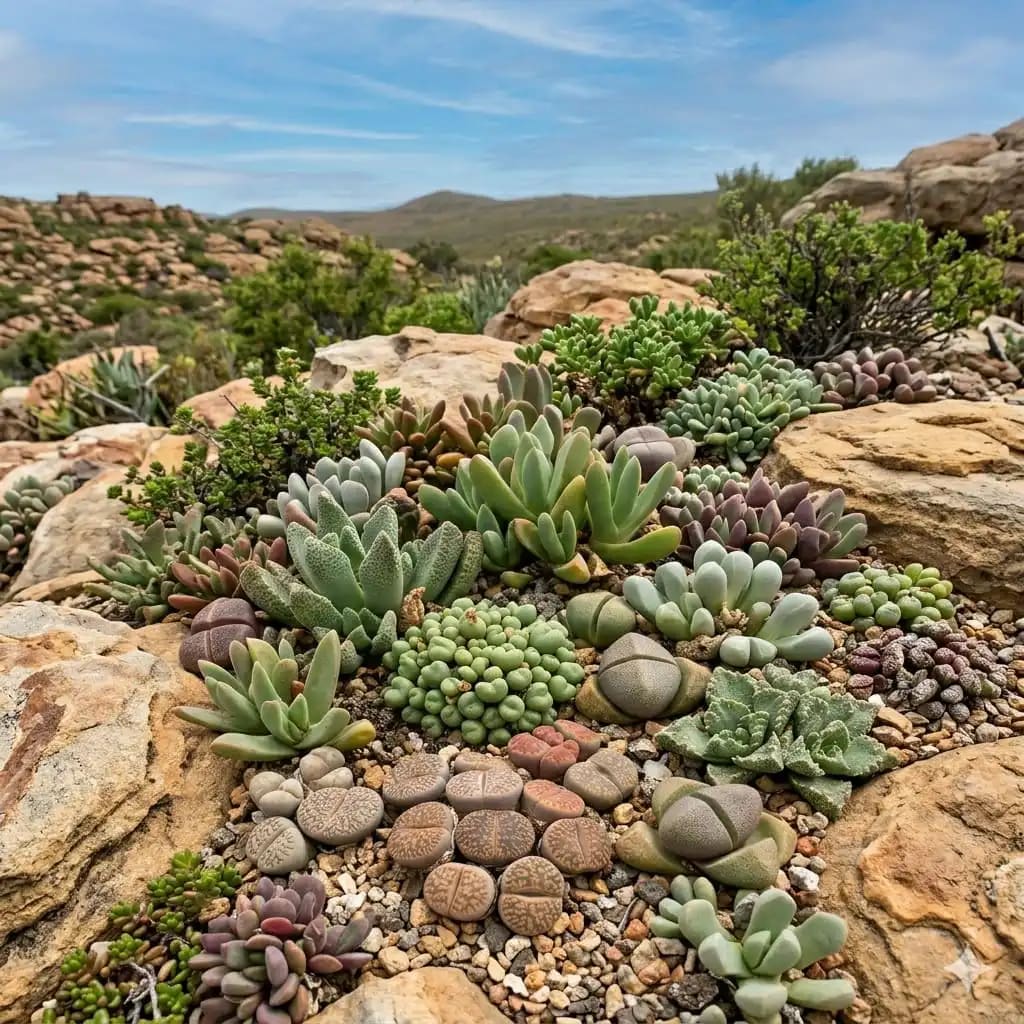
Ice Plant FamilyFamily of succulent plants with greatest diversity in southern Africa, comprising approximately 135 genera. Includes the so-called "living stones" (Lithops), "window plants" (Fenestraria), and the popular "tiger jaws" (Faucaria). They are distinguished by their highly succulent leaves, often with mimetic forms that imitate stones or pebbles of their surroundings. Flowers are generally large, showy, and open during the day.
Anacampserotaceae
Family of succulent plants from the arid regions of southern Africa and Australia, segregated from Portulacaceae. Includes the genera Anacampseros, Avonia, and Grahamia. Small plants with fleshy leaves often covered in silky hairs or papery scales, with short-lived ephemeral flowers.
Apocynaceae
Apocynaceae Juss. (1789)
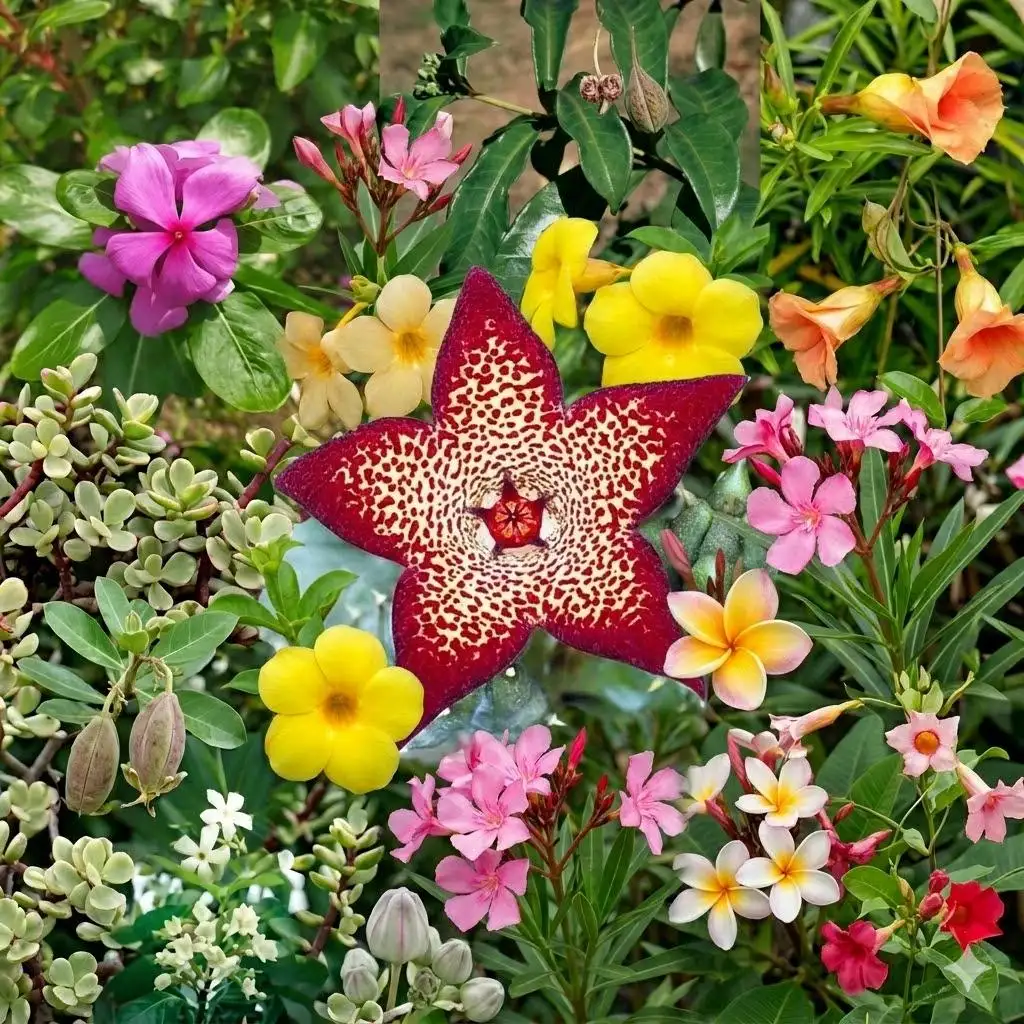
Dogbane FamilyCosmopolitan family with over 5,000 species including herbs, shrubs, trees, and vines. Characterized by milky latex present in most representatives and by flowers with fused petals forming a tube. Includes highly popular ornamental genera worldwide such as Adenium (desert rose) and Plumeria (frangipani), along with medicinal species and caudiciform plants of notable collector interest.
Asparagaceae
Asparagaceae Juss. (1789)
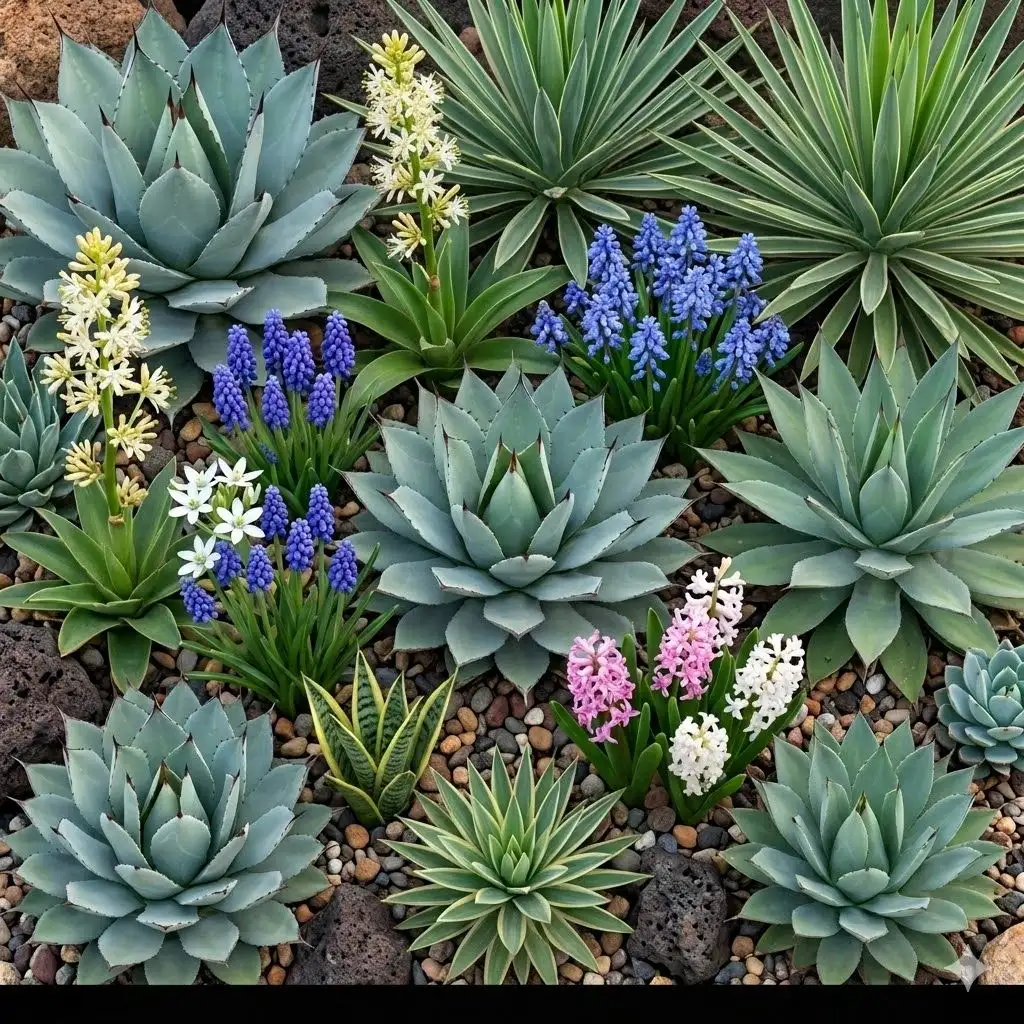
Asparagus FamilyAsparagaceae is a family of monocotyledonous flowering plants comprising over 2,900 species in 114 genera, ranging from herbs to shrubs and trees. It encompasses highly diverse groups such as agaves, yuccas, dracaenas, asparagus, and hyacinths, many of which hold significant economic, ornamental, and cultural importance. The family is characterized by generally linear or lanceolate leaves and flowers with six tepals arranged in racemes or panicles.
Asphodelaceae
Asphodelaceae Burnett (1835)
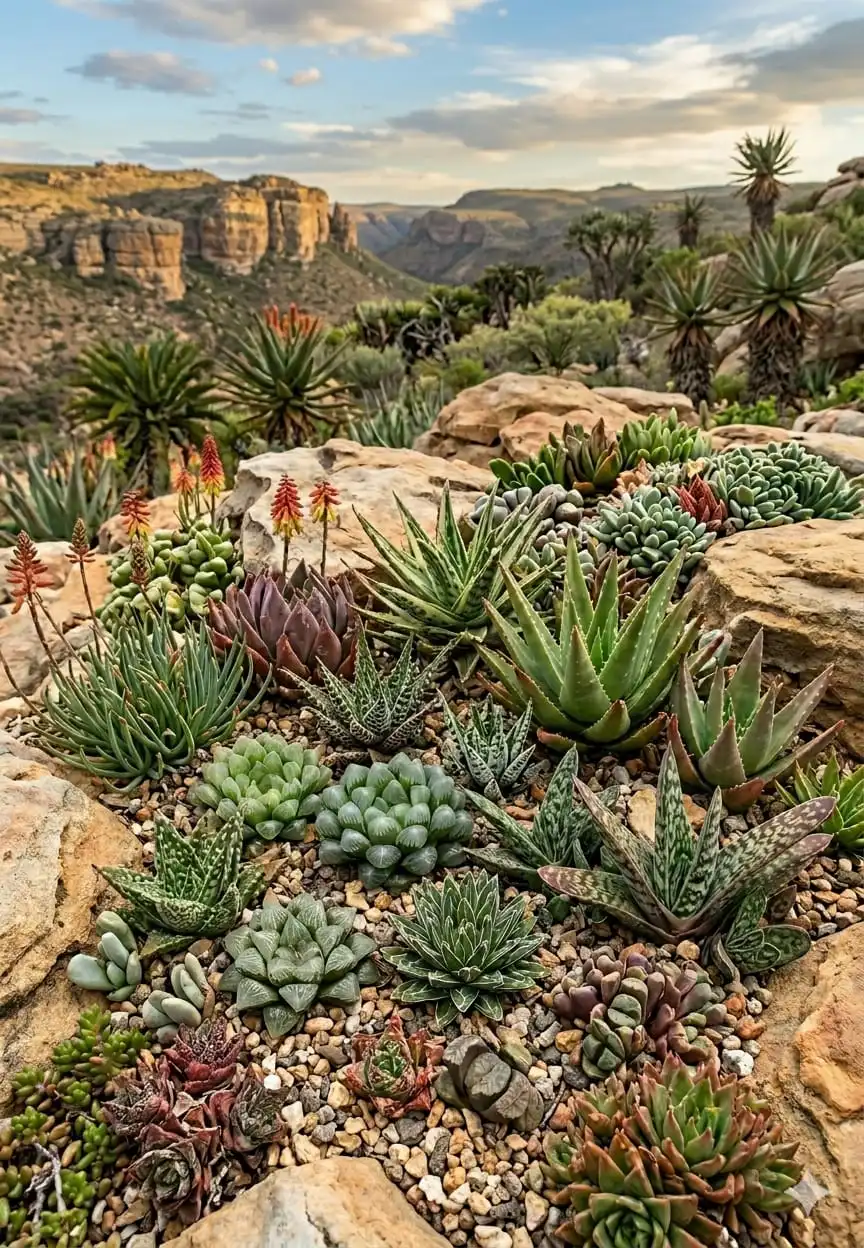
Asphodel FamilyFamily of succulent monocots distributed mainly in southern Africa, Madagascar, and the Arabian Peninsula. Includes iconic genera such as Aloe, Haworthia, and Gasteria. Plants typically form rosettes of fleshy leaves with entire or spiny margins, producing racemose inflorescences with tubular, nectar-rich flowers pollinated by birds and insects.
Asteraceae
Asteraceae Bercht. & J.Presl
AsteraceaeAsteraceae, also known as Compositae, is one of the largest and most diverse families of flowering plants. It includes numerous succulent species native to arid and semi-arid regions, especially in Africa and the Canary Islands. Succulent genera within this family — such as Kleinia, Curio, Caputia and Senecio — feature fleshy stems, reduced or glaucous leaves, and characteristic capitulate flowers.
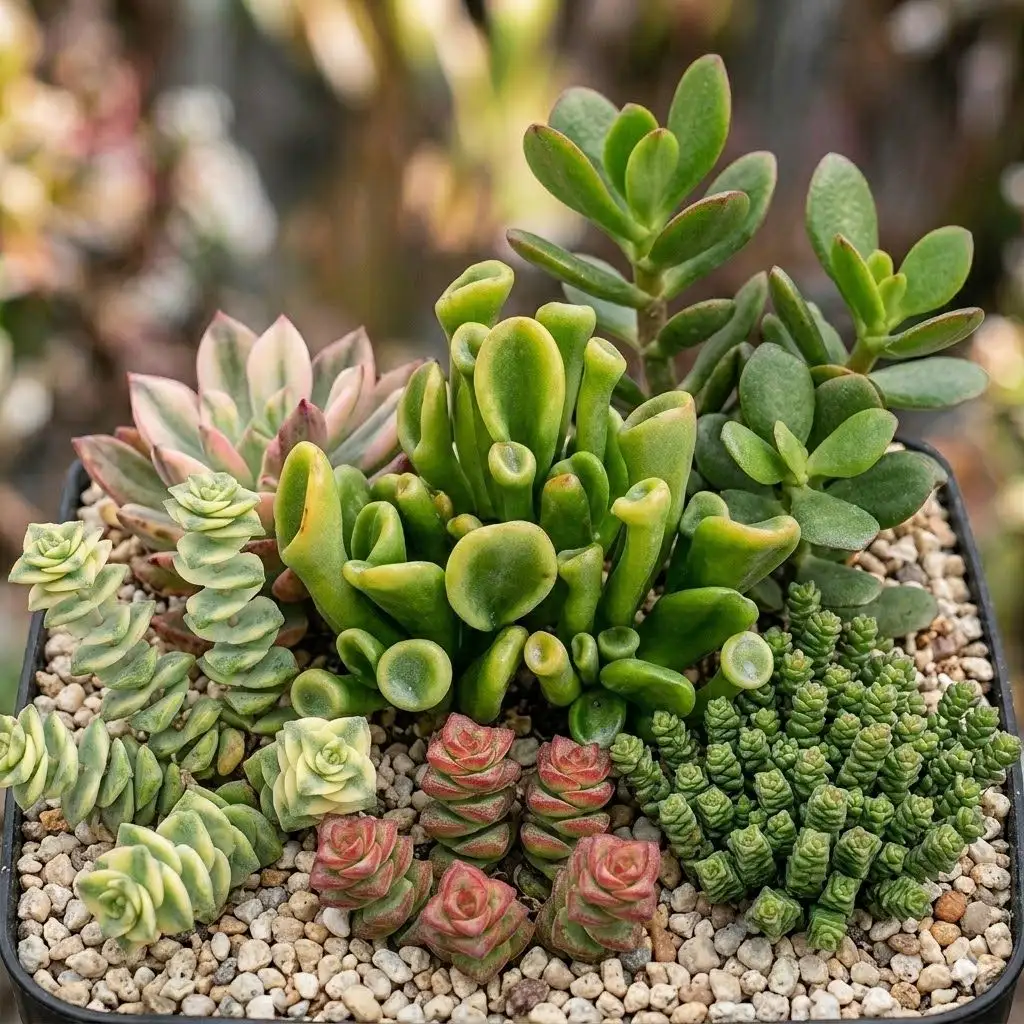
Crassulaceae
Crassulaceae J.St.-Hil. (1805)
Stonecrop FamilyCosmopolitan family comprising succulent herbaceous and subshrubby plants, distributed across temperate and subtropical regions of both hemispheres. They are characterized by fleshy leaves often arranged in rosettes, with crassulacean acid metabolism (CAM) that enables survival under drought conditions. Flowers typically exhibit radial symmetry with free or slightly fused petals.
Didiereaceae
Didiereaceae Drake del Castillo (1903)
Didierea FamilyFamily of spiny succulent plants endemic to Madagascar, especially the spiny forest (thicket) of the island's south. Didiereaceae produce columnar or arboreal stems covered with small leaves and long spines, adapted to the extreme climatic seasonality of Madagascar. They are key elements of the dry spiny forest ecosystem.
Montiaceae
Montiaceae Raf.
MontiaceaeFamily of herbaceous and succulent plants, mostly from the American and Australian hemispheres, characterized by fleshy leaves and showy petals.