
Aizoaceae
Aizoaceae Martinov (1820)
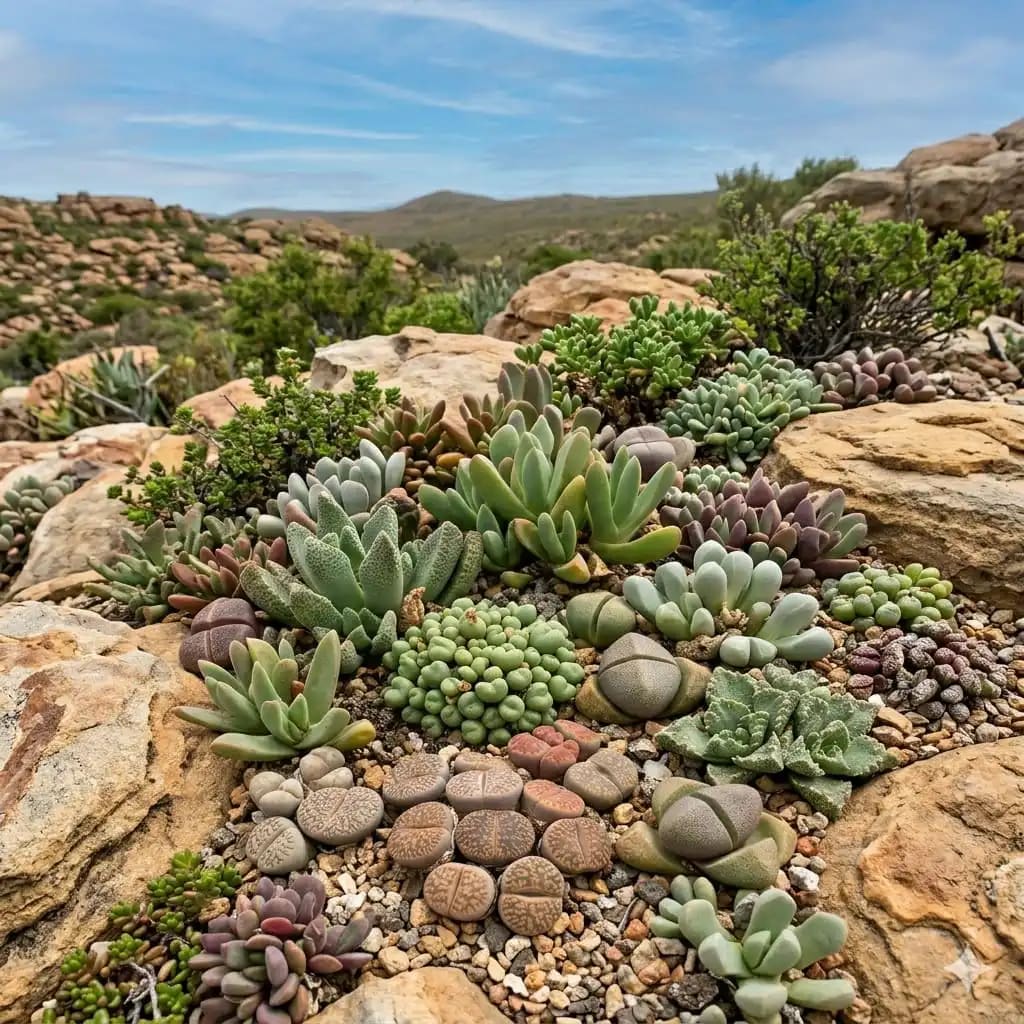
Family of succulent plants with greatest diversity in southern Africa, comprising approximately 135 genera. Includes the so-called "living stones" (Lithops), "window plants" (Fenestraria), and the popular "tiger jaws" (Faucaria). They are distinguished by their highly succulent leaves, often with mimetic forms that imitate stones or pebbles of their surroundings. Flowers are generally large, showy, and open during the day.
Acrodon
Acrodon
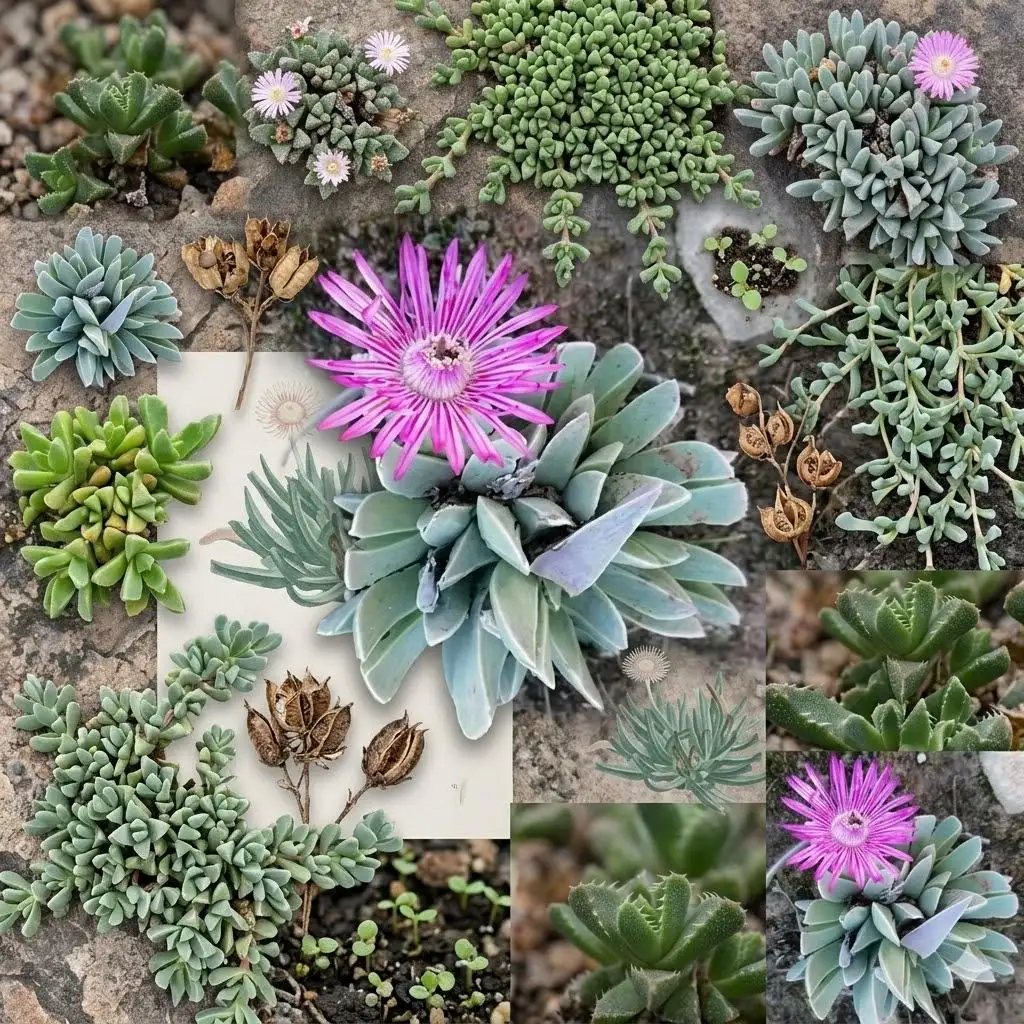
Monotypic genus of the Aizoaceae family native to the Western Cape of South Africa. Its plants are low-growing succulents forming small shrubs with triquetrous leaves. Flowers have white to pink petals very similar to daisies.

Aizoon
Aizoon
Small genus of annual and perennial succulent plants in the family Aizoaceae, native to the Mediterranean region, Macaronesia, and North Africa. Plants form prostrate or erect stems with fleshy leaves and small flowers with numerous stamens. They inhabit arid coastal zones, beaches, and saline soils.
Aloinopsis
Aloinopsis
Genus of succulent plants belonging to the family Aizoaceae, comprising about 12–15 species endemic mainly to southern Africa (Karoo and Namaqualand). They are geophytic winter-growing plants forming compact rosettes with thick, fleshy leaves, often covered in tubercles. They produce large taproot systems to store water and nutrients. The daisy-like flowers are yellow or pink with darker stripes and open only in bright sunlight.
Antegibbaeum
Antegibbaeum
Monotypic genus of succulent plants in the family Aizoaceae, endemic to the Western Cape of South Africa. Forms small clumps of paired glaucous succulent leaves with a pronounced keel, producing diurnal pink flowers in winter.
Antimima
Antimima
Genus of small succulents in the family Aizoaceae, native to the arid regions of South Africa and Namibia. Form small clumping shrublets with cylindrical or triquetrous succulent leaves, producing generally white or pink flowers. Segregated from Ruschia and related genera.
Aptenia
Aptenia
Genus of small trailing succulents in the family Aizoaceae, native to southern Africa and widely naturalized in the Mediterranean and coastal areas. Notable for their pendulous stems with fleshy heart-shaped leaves and abundant pink, red, or white flowers. Widely used as hanging plants and groundcovers.
Argyroderma
Argyroderma
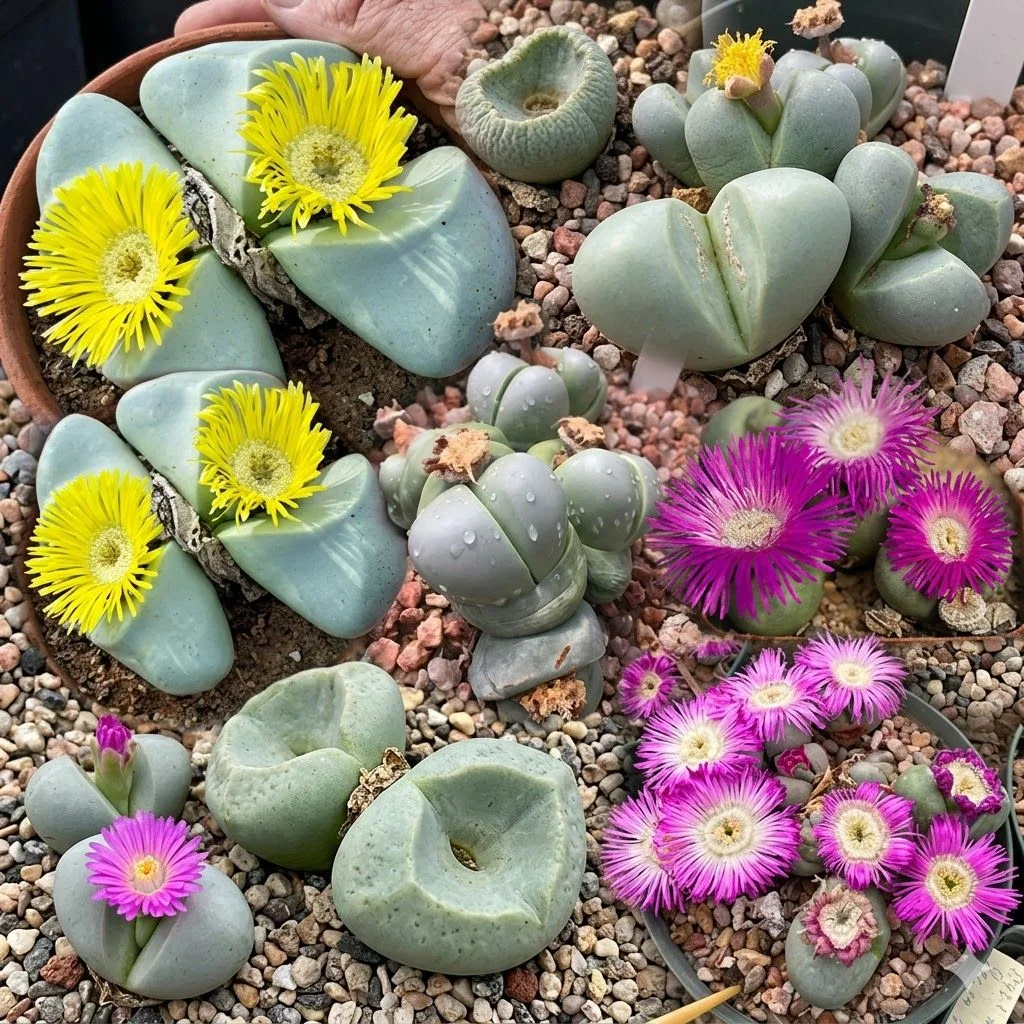
Argyroderma is a genus of highly specialized mesembs in the Aizoaceae family, characterised by plant bodies consisting of one or two pairs of very succulent, semicircular-in-section leaves in silver-grey to grey-green tones that precisely mimic the semi-translucent quartz pebbles among which they grow. The generic name derives from the Greek argyros (silver) and derma (skin), referencing the striking metallic colouration of the leaves. The flowers emerging from the central fissure are violet-pink, magenta, or white depending on the species, and represent some of the most intense floral colours in the family. The genus is strictly restricted to the quartz fields of the Western Cape Province, an ecosystem of exceptional endemic richness.
Aridaria
Aridaria
Genus of succulent mesembs in the family Aizoaceae, endemic to the arid regions of the Cape of South Africa. Characterized by long-tubed flowers, opposite fleshy leaves, and adaptations to the quartz fields of Namaqualand. Segregated from related genera.
Astridia
Astridia
Genus of succulent shrubs in the family Aizoaceae, native to Namibia and northern South Africa. Form small shrubs with triquetrous succulent leaves and pink or white multi-petalled flowers. Grow in arid rocky and sandy habitats with coastal fog.
Bergeranthus
Bergeranthus
Genus of succulent mesembs in the family Aizoaceae, endemic to the Eastern Cape of South Africa. Form rosettes of triangular or semicylindrical fleshy leaves, producing many-petalled diurnal yellow flowers. Distinguished from related genera by their characteristic fruits. Named in honour of German botanist Alwin Berger.
Bijlia
Bijlia
Genus of succulent mesembs in the family Aizoaceae, endemic to south-western South Africa. Form small clumps of glaucous triquetrous fleshy leaves and produce bright yellow flowers. Adapted to sandy soils and extreme drought conditions.
Braunsia
Braunsia
Small genus of mesemb succulents in the family Aizoaceae, subfamily Ruschioideae, endemic to the Western Cape of South Africa. They form small creeping shrublets with very fleshy, fusiform, glaucous green leaves and bright pink to magenta flowers. Typical of the Fynbos and Succulent Karoo.
Carpobrotus
Carpobrotus
Genus of creeping succulents in the family Aizoaceae, native mainly to South Africa. Known as "Hottentot fig" or "ice plant", their very fleshy triangular leaves and large showy flowers make them instantly recognisable. Several species are highly invasive on Mediterranean, Californian and Australian coastlines.
Carruanthus
Carruanthus
Conophytum
Conophytum
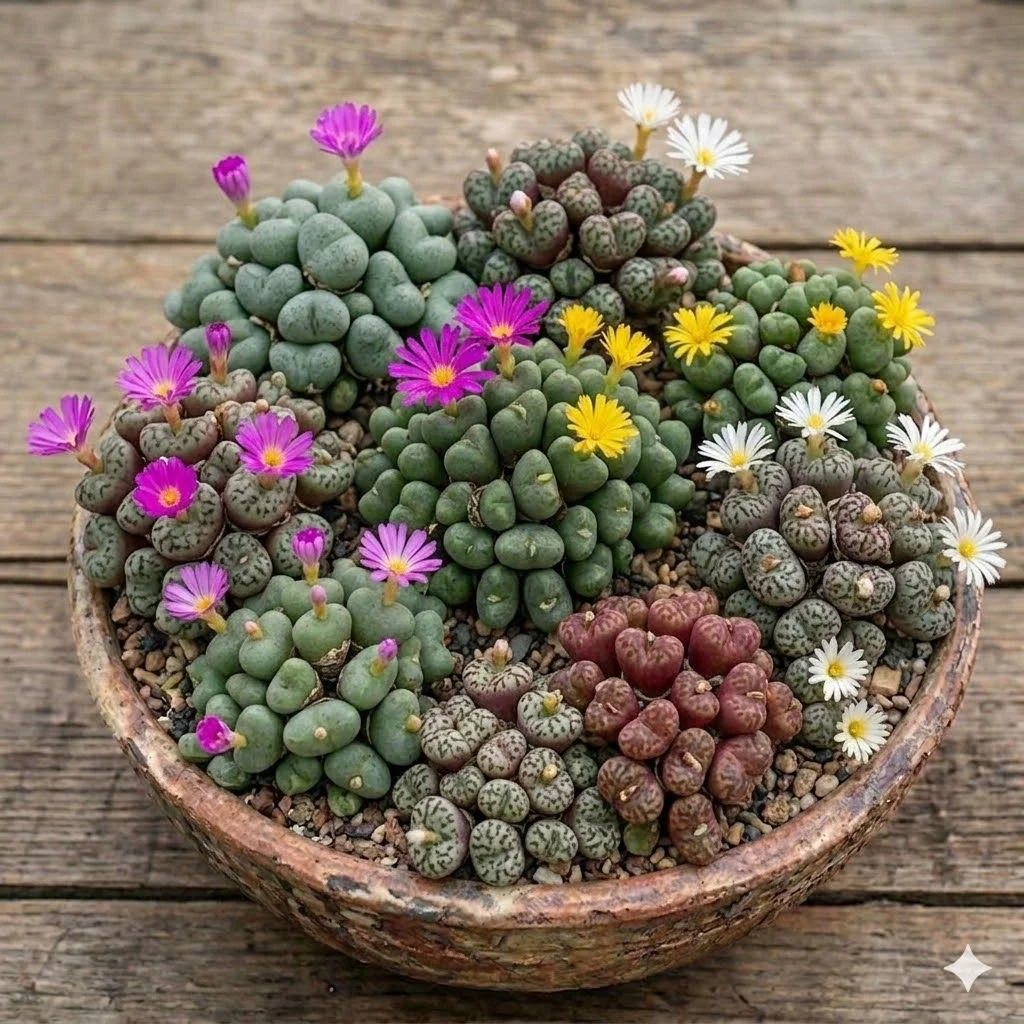
Genus of dwarf succulent plants native to southern Africa, with over 100 accepted species. Related to Lithops, it forms tiny bodies (1–5 cm) composed of pairs of fused leaves in spherical, conical, or bilobed shapes. Unlike Lithops, many species form dense clusters. They are winter-growing plants that enter summer dormancy, when the dried cover from the previous season protects new leaves.
Faucaria
Faucaria
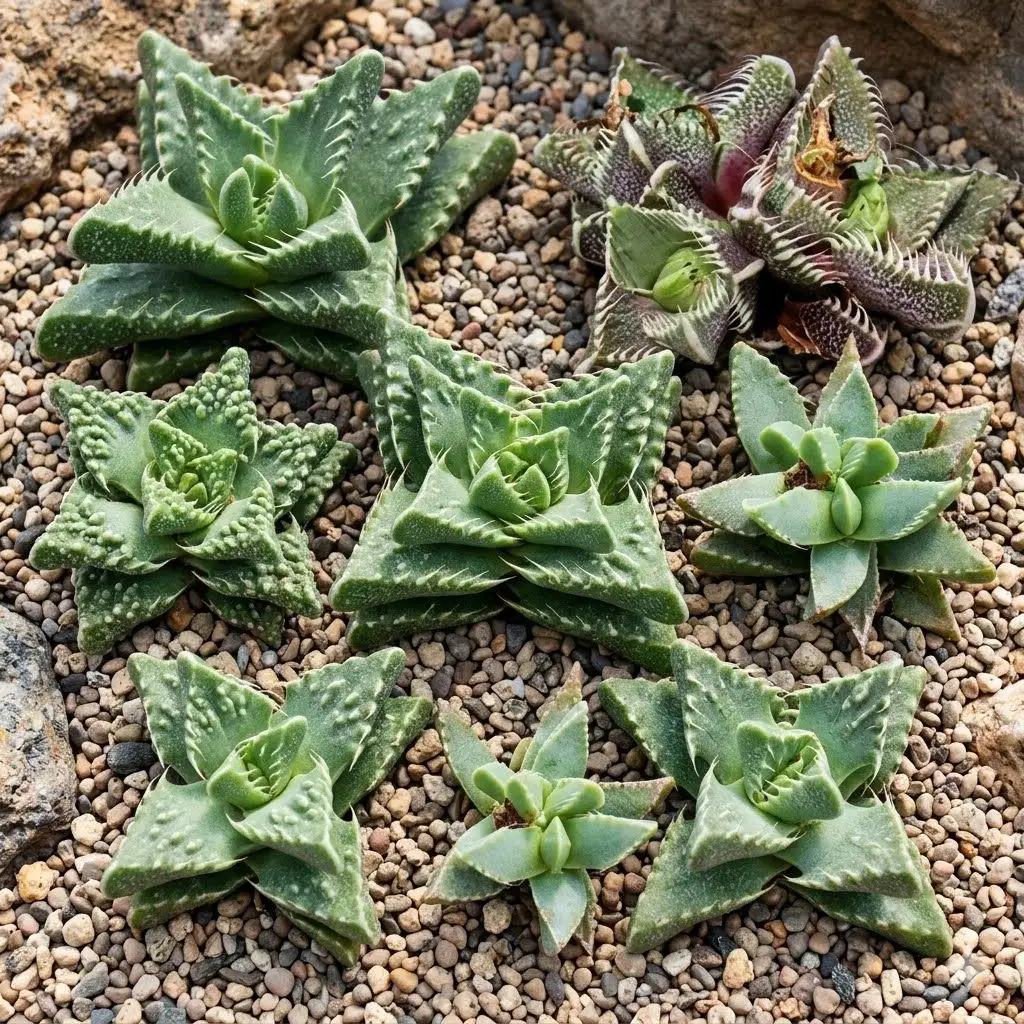
Faucaria is a genus of small mat-forming or clump-forming succulents in the Aizoaceae family, immediately recognisable by their triangular, fleshy leaves in basal rosettes with toothed or soft-ciliate margins resembling open jaws — the source of the generic name from the Latin fauces (throat, jaws). The flowers are a deep golden yellow, relatively large for the plant's size, and bloom primarily in autumn. A recent taxonomic revision reduced the accepted species count through synonymisation of several previously recognised taxa. All species are endemic to the subtropical shrublands of South Africa's Cape Province.
Fenestraria
Fenestraria
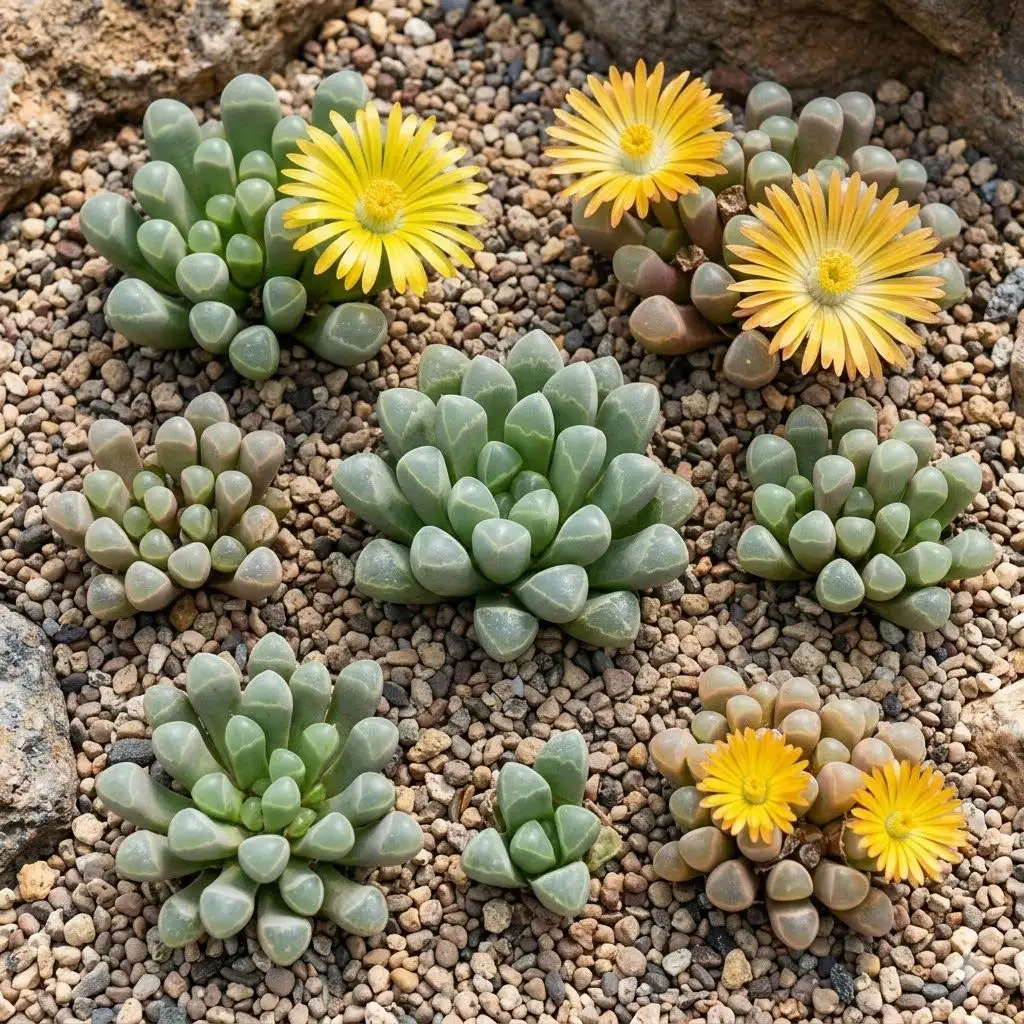
Monotypic genus or with two forms (F. rhopalophylla) native to Namibia and South Africa. Cylindrical leaves grow partially buried with only the translucent tip ("window") exposed, allowing photosynthesis while protecting tissues from excess solar radiation. Flowers are large, white or yellow, daisy-like.
Lithops
Lithops
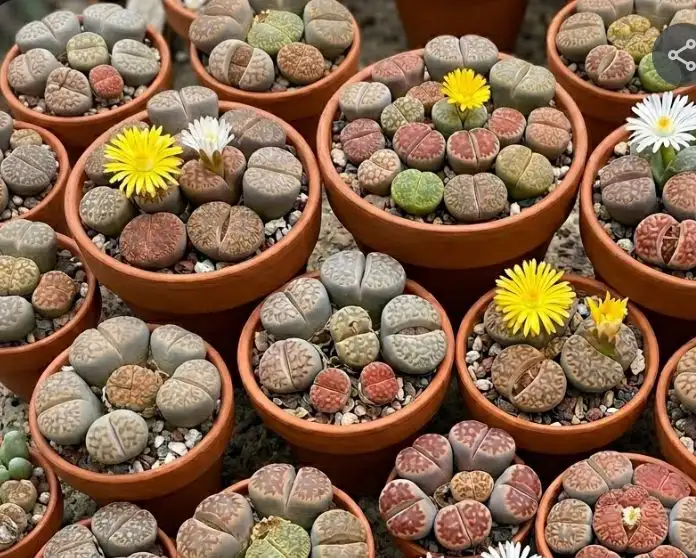
Genus comprising approximately 37 accepted species, all native to southern Africa. They are extremely succulent plants composed of a pair of fused leaves forming a rounded body that mimics surrounding stones. They grow almost entirely below the soil surface, with only the top exposed, which has translucent windows for photosynthesis. They produce a solitary daisy-like flower that emerges from the fissure between the leaves.
Pleiospilos
Pleiospilos
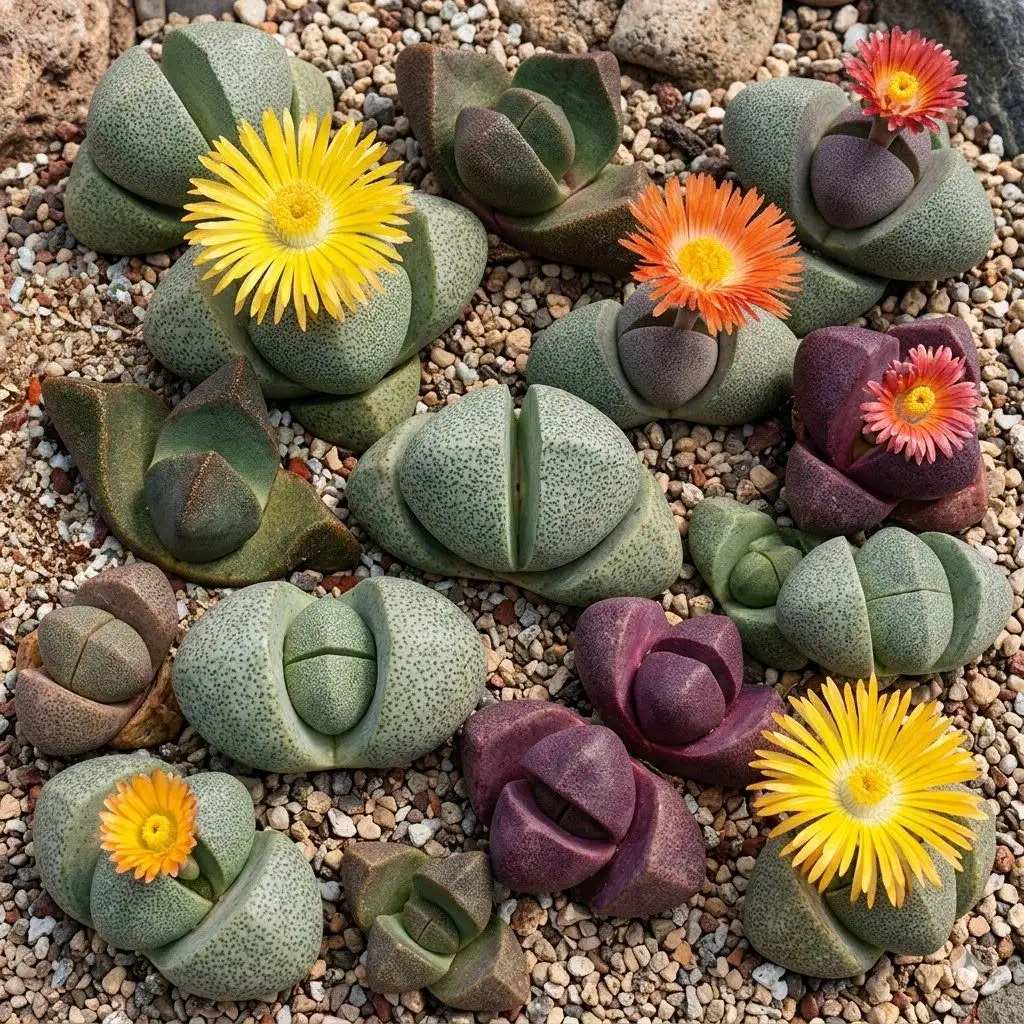
Pleiospilos is a small genus of perennial succulents in the Aizoaceae family that produces highly succulent leaf-bodies, typically in pairs, with a grey-green or brownish appearance that closely mimics the quartz rocks among which it grows. The genus name derives from the Greek pleios (many) and spilos (spot), referring to the numerous dark dots that mark the leaf surface. They bear conspicuous, daisy-like flowers in yellow-orange or white that open by day from the central fissure between the leaves. They represent a paradigmatic example of lithomorphic mimicry in the arid and semi-arid shrublands of southern Africa.
Titanopsis
Titanopsis
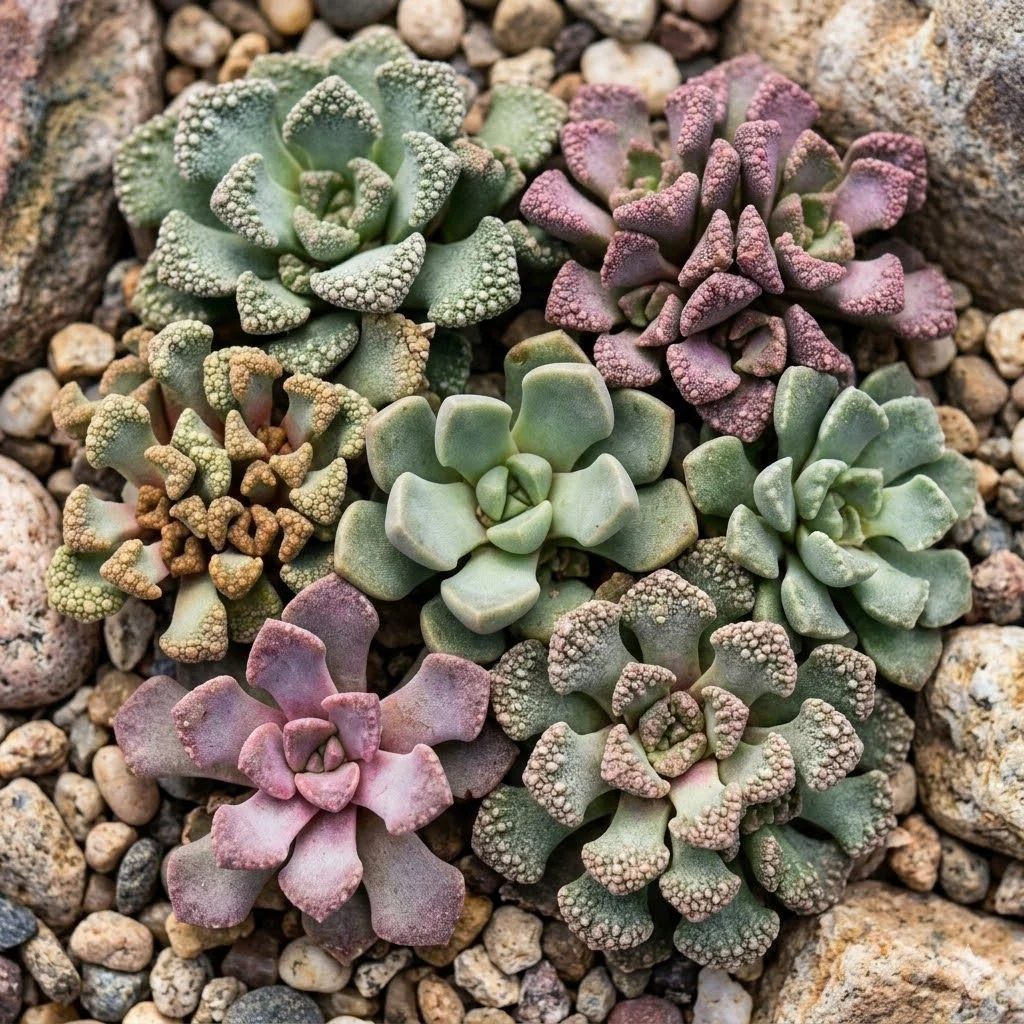
Titanopsis is a small genus of highly specialized mesembs in the Aizoaceae family, distinguished by their rosettes of truncated leaves densely covered with whitish, ochre, or bluish tubercles that astonishingly mimic the texture of the limestone or calcrete substrates on which they grow. The generic name derives from the Greek titanos (lime) and opsis (appearance), a direct reference to this lithic camouflage with calcareous substrates. Their vivid yellow flowers emerge in autumn and winter, often the only visible sign of the plant in its habitat. All species follow a winter-growth cycle and enter dormancy during the dry summer.