
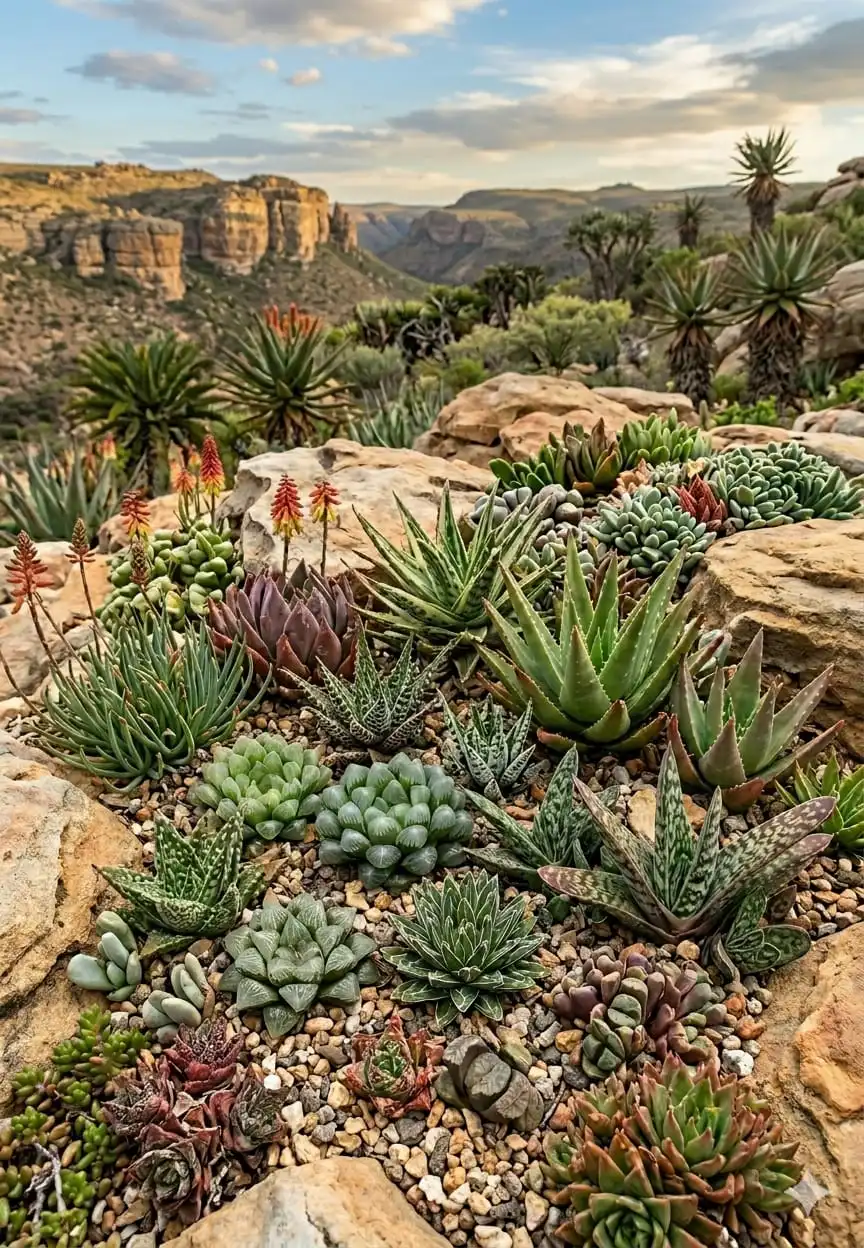
Asphodelaceae
Asphodelaceae Burnett (1835)
Family of succulent monocots distributed mainly in southern Africa, Madagascar, and the Arabian Peninsula. Includes iconic genera such as Aloe, Haworthia, and Gasteria. Plants typically form rosettes of fleshy leaves with entire or spiny margins, producing racemose inflorescences with tubular, nectar-rich flowers pollinated by birds and insects.
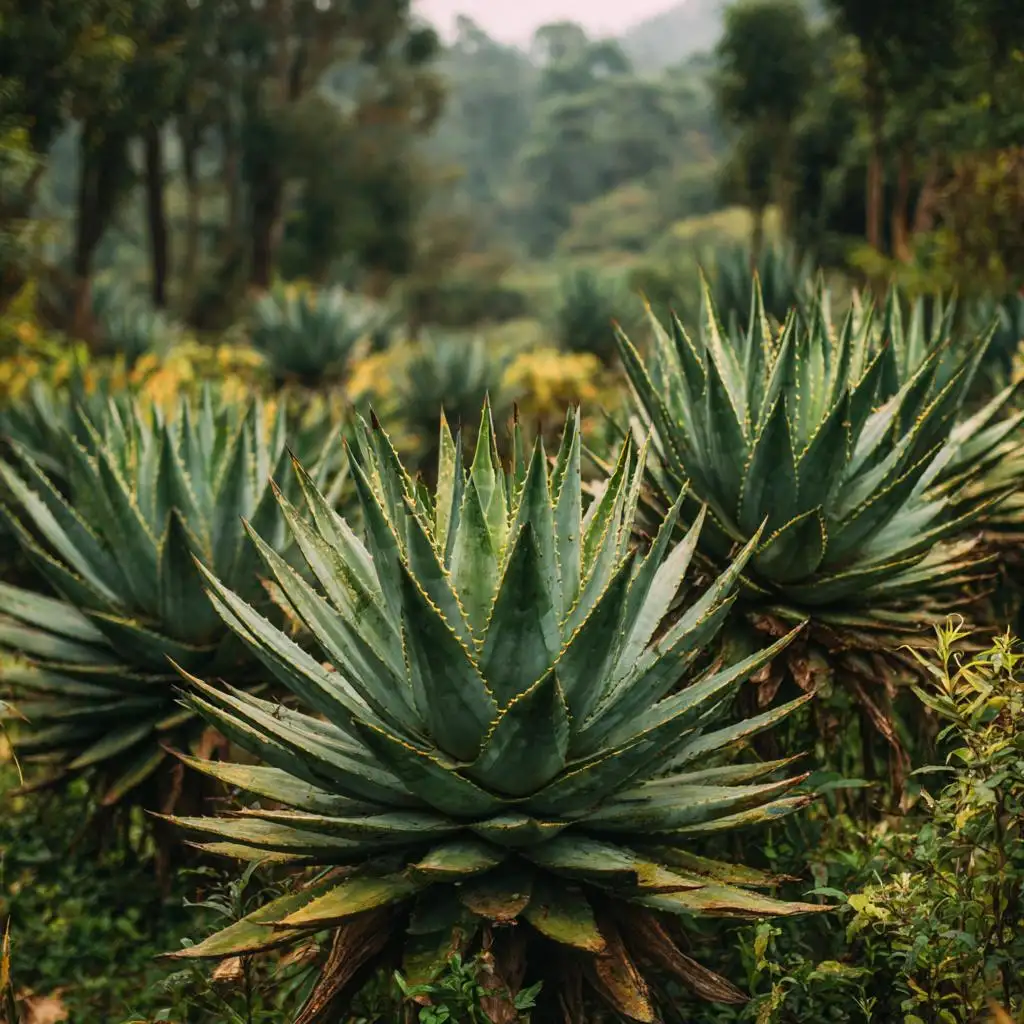
Aloe
Aloe
Genus comprising over 500 accepted species, with a diversity center in southern and eastern Africa. Species range from small stemless rosettes to trees exceeding 10 meters. Succulent leaves typically have toothed margins and contain a mucilaginous gel historically used in traditional medicine. Tubular flowers, usually orange or red, are arranged in erect racemes.
Aloiampelos
Aloiampelos
Genus of scrambling or procumbent aloes segregated from Aloe. Includes the scrambling aloe species originally classified as Aloe ciliaris, among others.
Aloidendron
Aloidendron
Genus of large arborescent aloes segregated from Aloe; includes the world's largest aloe tree.
Aristaloe
Aristaloe
Monotypic genus in the family Asphodelaceae, segregated from Aloe. Contains only Aristaloe aristata, the lace aloe, one of the world's most popular ornamental succulents thanks to its finely toothed leaves with white tubercles and tubular orange flowers. Native to South Africa and Lesotho, it is more cold-hardy than most aloes, tolerating down to −7 °C. The segregation from Aloe was proposed by Boatwright and Manning based on molecular phylogenetic analyses.
Astroloba
Astroloba
Genus of small succulents in the family Asphodelaceae, endemic to the south-western Cape of South Africa. Form compact rosettes with rigid triangular leaves arranged in 5 spiral rows. Morphologically similar to Haworthiopsis, with tubular white or cream flowers. Very popular among collectors for their elegant spiral symmetry.
Bulbine
Bulbine
Genus of succulent and semi-succulent plants in the family Asphodelaceae, subfamily Asphodeloideae, with about 70 species native mainly to South Africa, Namibia and Australia. They form rosettes or clumps of fleshy lanceolate or cylindrical leaves and produce spikes of small six-petalled yellow or orange flowers with hairy stamens. B. frutescens is the most widely cultivated species, popularly known as "bulbine" and used in xeriscaping and as a medicinal plant.
Catevala
Catevala
Historical genus created by Otto Kuntze (1891) as a replacement name for Haworthia Duval. All taxa are heterotypic synonyms of Haworthia species. Plants are rosulate succulents belonging to subfamily Asphodeloideae, native to South Africa and endemic mainly to the Cape region.
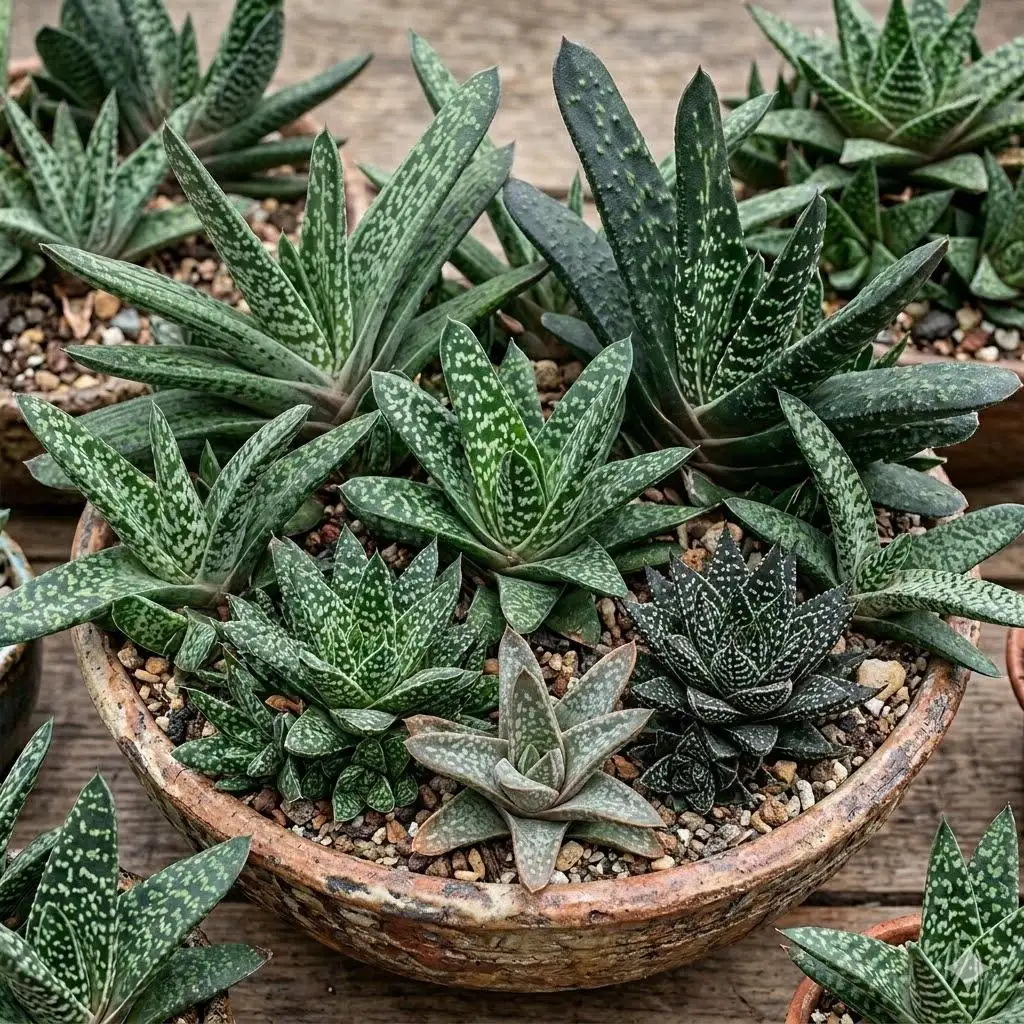
Gasteria
Gasteria
Genus of succulents endemic to South Africa, with about 23 accepted species. They are characterized by thick leaves, distichous (arranged in two rows) or rosulate, frequently with rough texture and white spots. The tubular, curved flowers with an inflated base resemble a stomach, giving the genus its name (from Latin "gaster"). They tolerate partial shade better than most succulents.
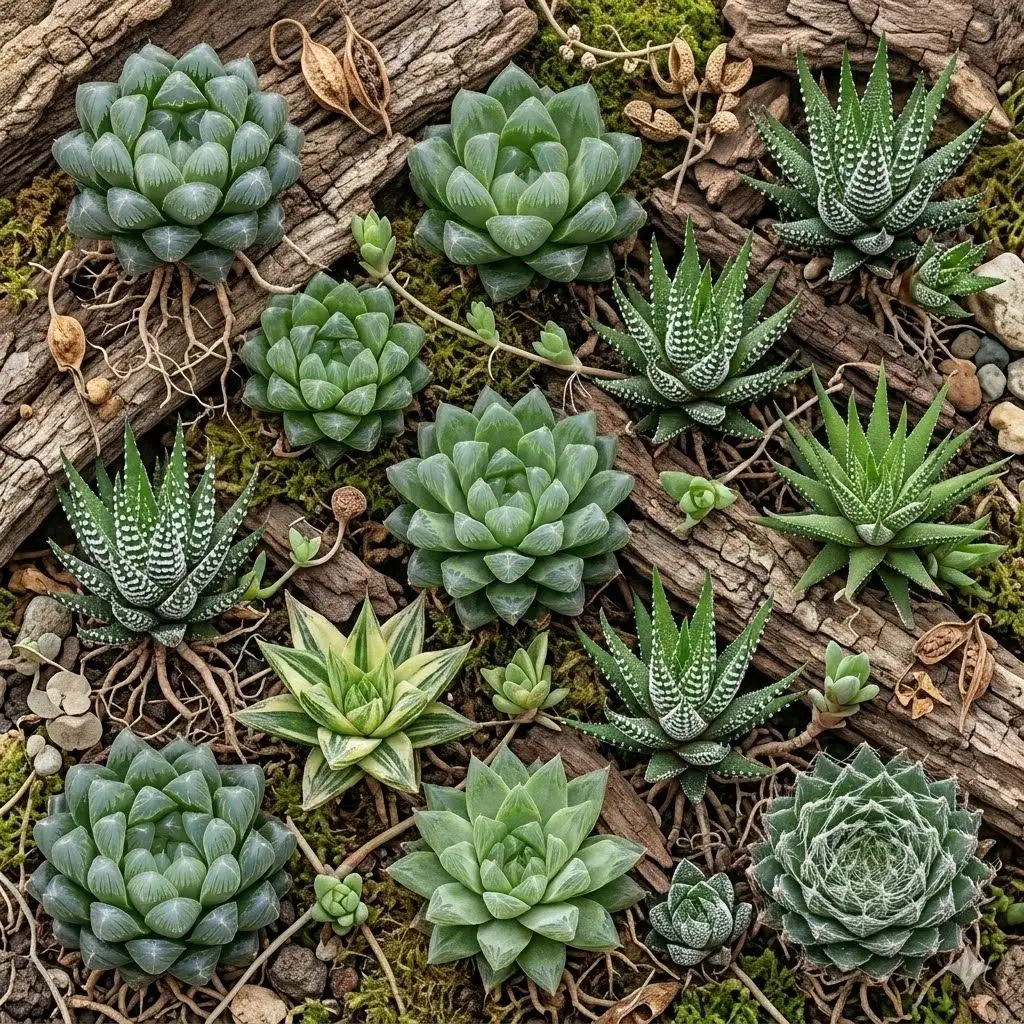
Haworthia
Haworthia
Genus of small succulents native to South Africa, with approximately 150 accepted species (sensu lato). They are characterized by compact rosettes of firm leaves, often with translucent markings called "windows" that allow light to enter the leaf interior. They grow in shaded environments among rocks and under shrubs, adapted to low direct light.
Haworthiopsis
Haworthiopsis
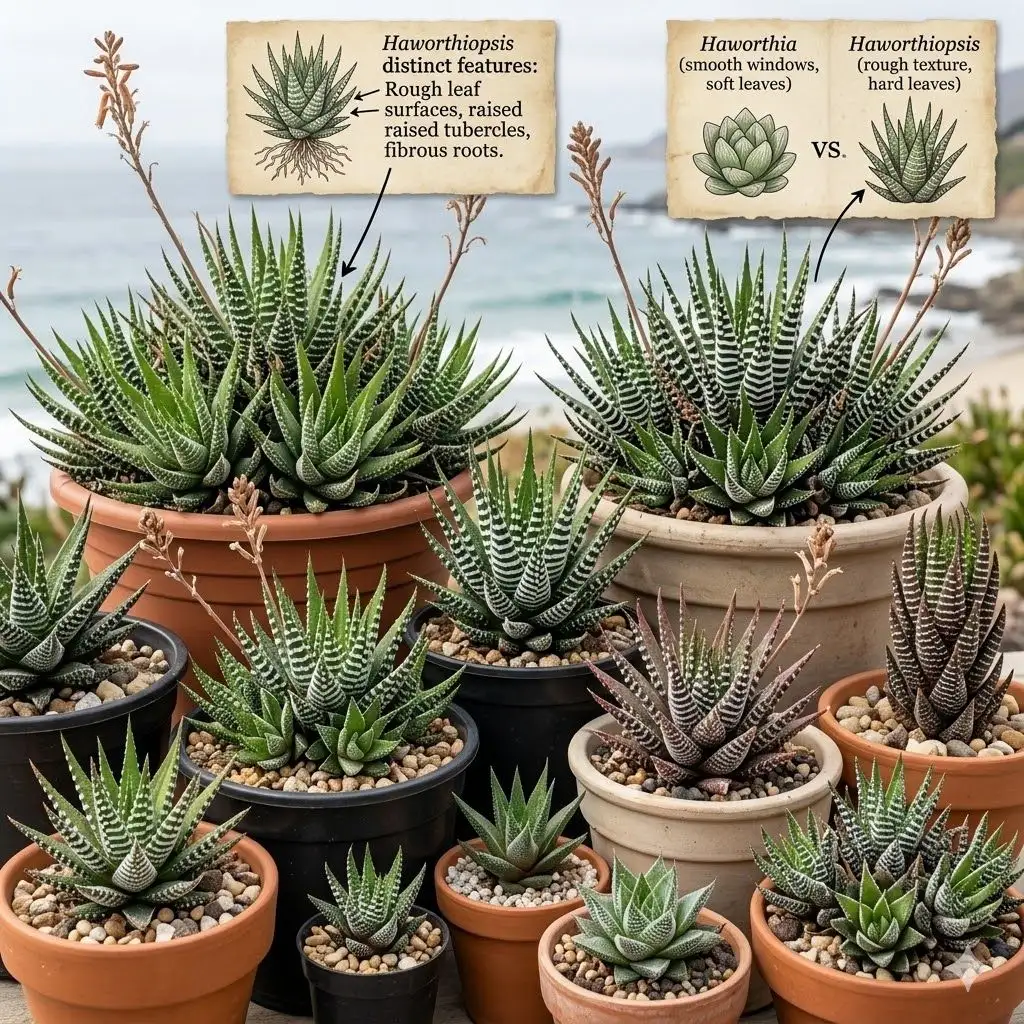
Haworthiopsis is a genus of dwarf succulents from southern Africa, segregated from Haworthia in 2013 on the basis of molecular phylogenetic studies. Its members bear small rosettes of fleshy leaves with a thicker, tougher epidermis than their close relatives, enabling survival through prolonged drought and even fire. The flowers are bilabiate, white or whitish with dark central veins, borne on slender erect inflorescences. The centre of diversity lies in South Africa's Eastern Cape Province, where ten of the genus's nineteen species are endemic.
Tulista
Tulista
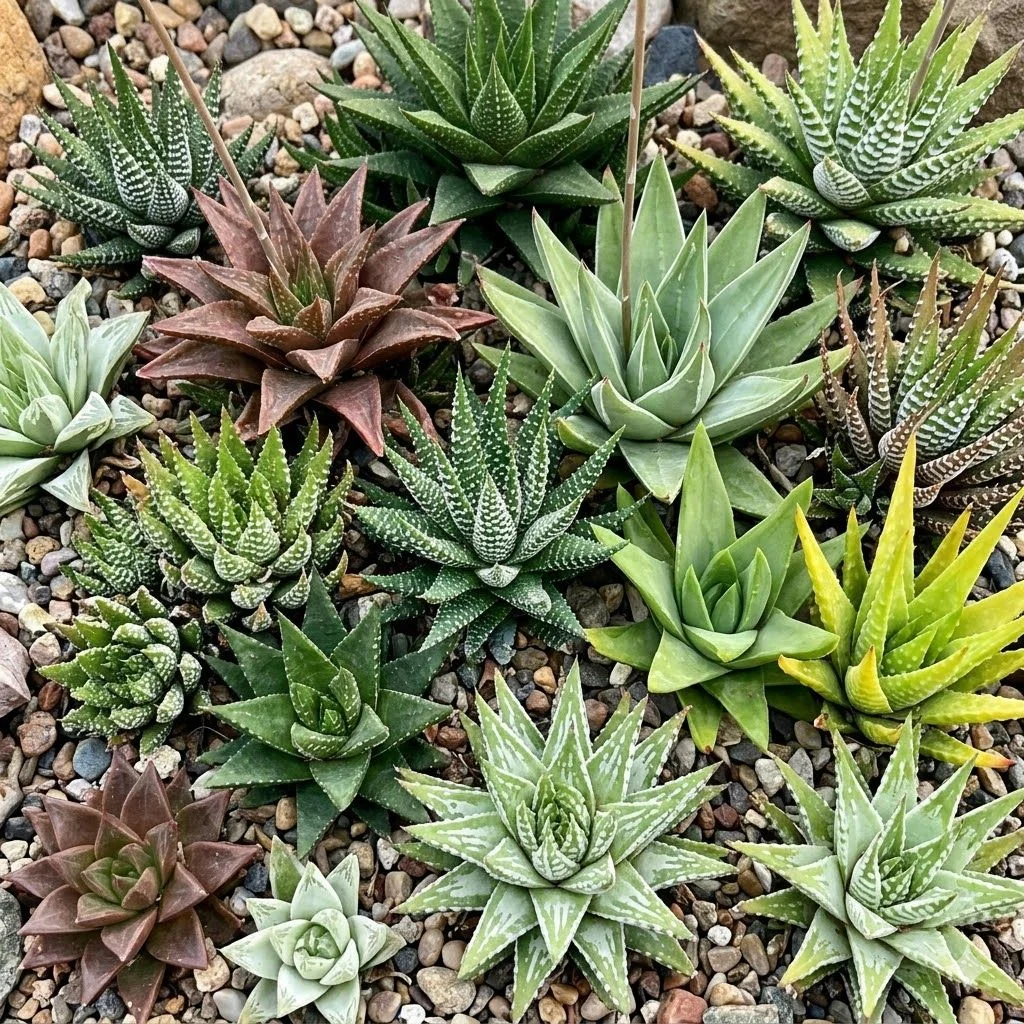
Tulista is a small genus of stemless succulents endemic to South Africa's Western Cape Province, segregated from Haworthia in the early nineteenth century and revalidated through molecular phylogenetic research. Its members form stemless rosettes of robust, fleshy leaves that are generally larger than those of other haworthioids, lack leaf fibres, and produce a yellowish leaf exudate. Flowers are bilabiate, white with pink or brownish-green central veins, borne on well-branched inflorescences. All species are slow-growing and long-lived, widely prized by collectors worldwide.