
Crassulaceae
Crassulaceae J.St.-Hil. (1805)
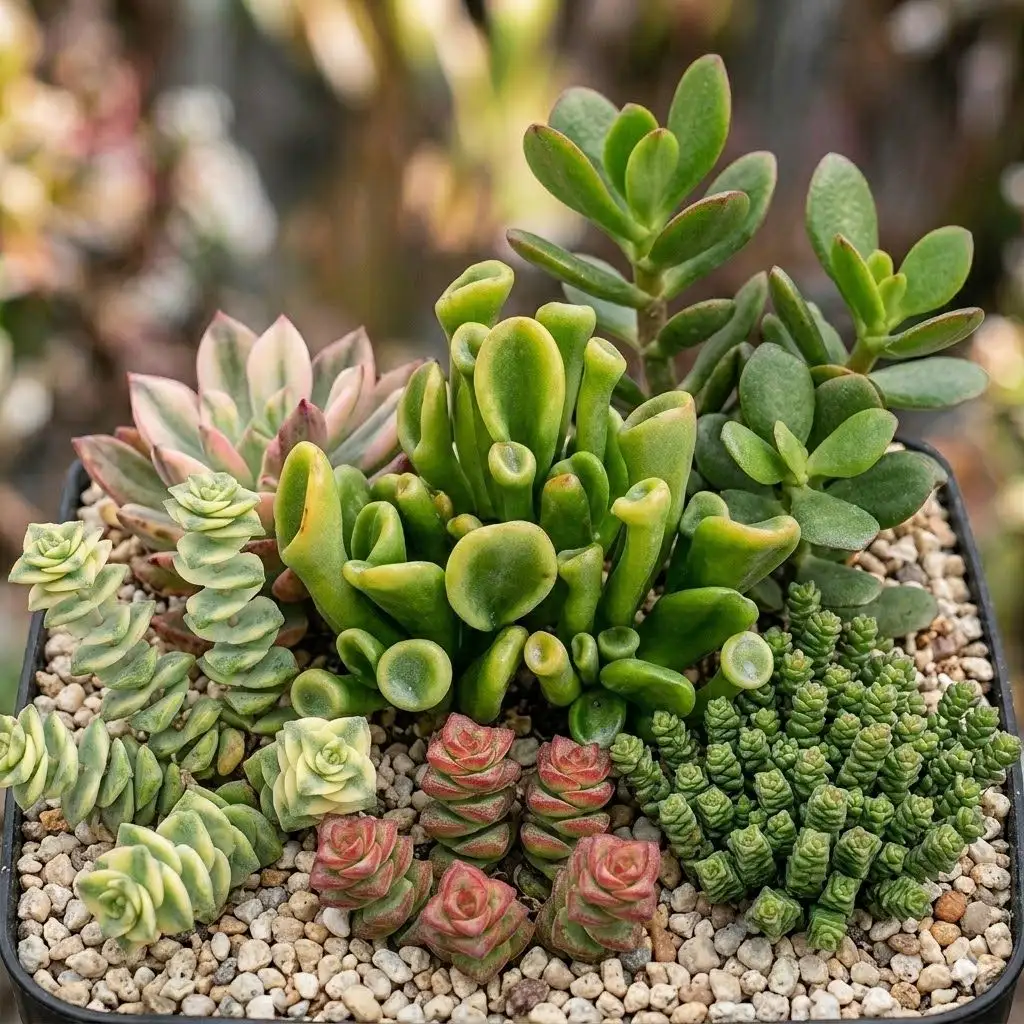
Cosmopolitan family comprising succulent herbaceous and subshrubby plants, distributed across temperate and subtropical regions of both hemispheres. They are characterized by fleshy leaves often arranged in rosettes, with crassulacean acid metabolism (CAM) that enables survival under drought conditions. Flowers typically exhibit radial symmetry with free or slightly fused petals.
Adromischus
Adromischus
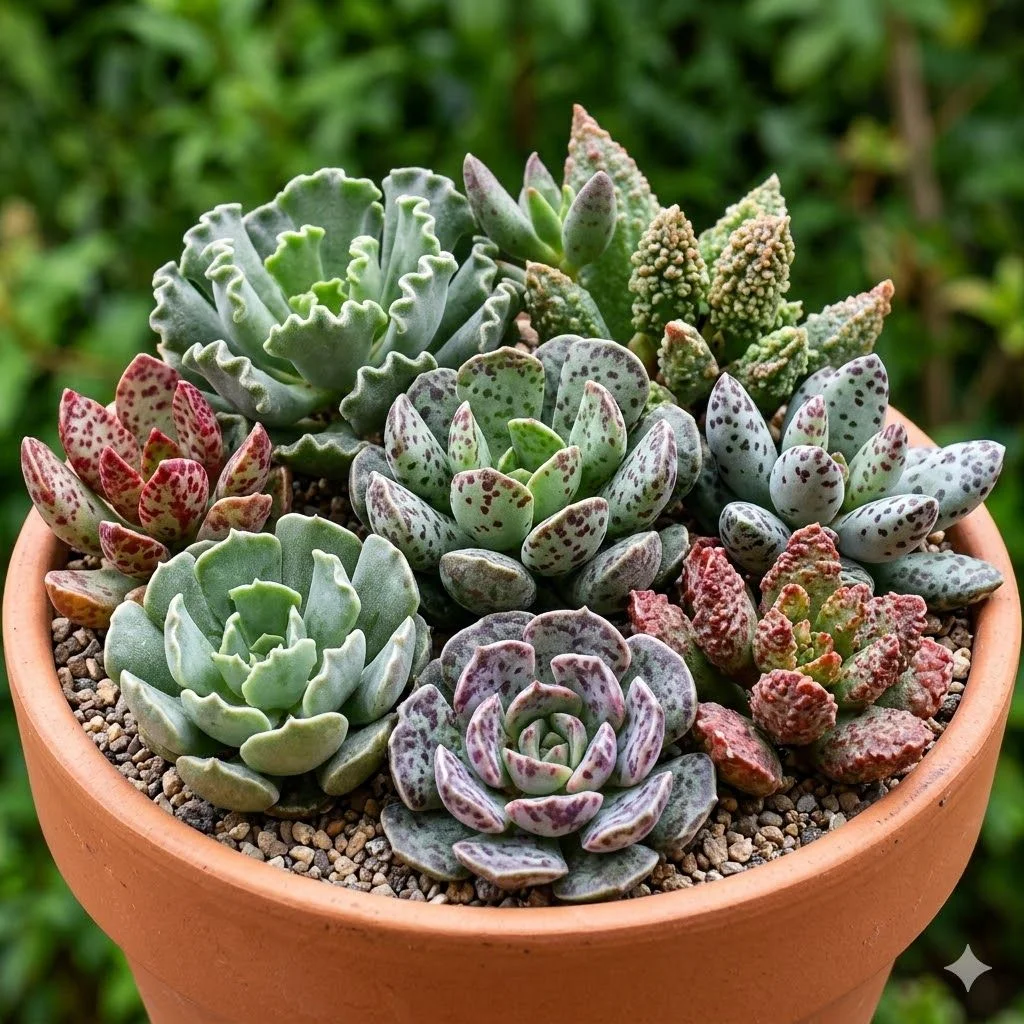
Adromischus is a genus of small perennial succulents native to southern Africa, distinguished by their striking, often spotted, blotched, or unusually textured succulent leaves that vary enormously between species, from smooth and shiny to tuberculate or papillose surfaces. Plants form small clumps of short, branching stems bearing generally obovate, spatulate, or tubular leaves frequently decorated with distinctive dark markings unique to each taxon. Their tubular, whitish-green to pinkish flowers appear on erect spikes during the summer months. The remarkable morphological variability among its 29 accepted species has made Adromischus an active subject of taxonomic study and a favourite among specialist succulent collectors.
Aeonium
Aeonium
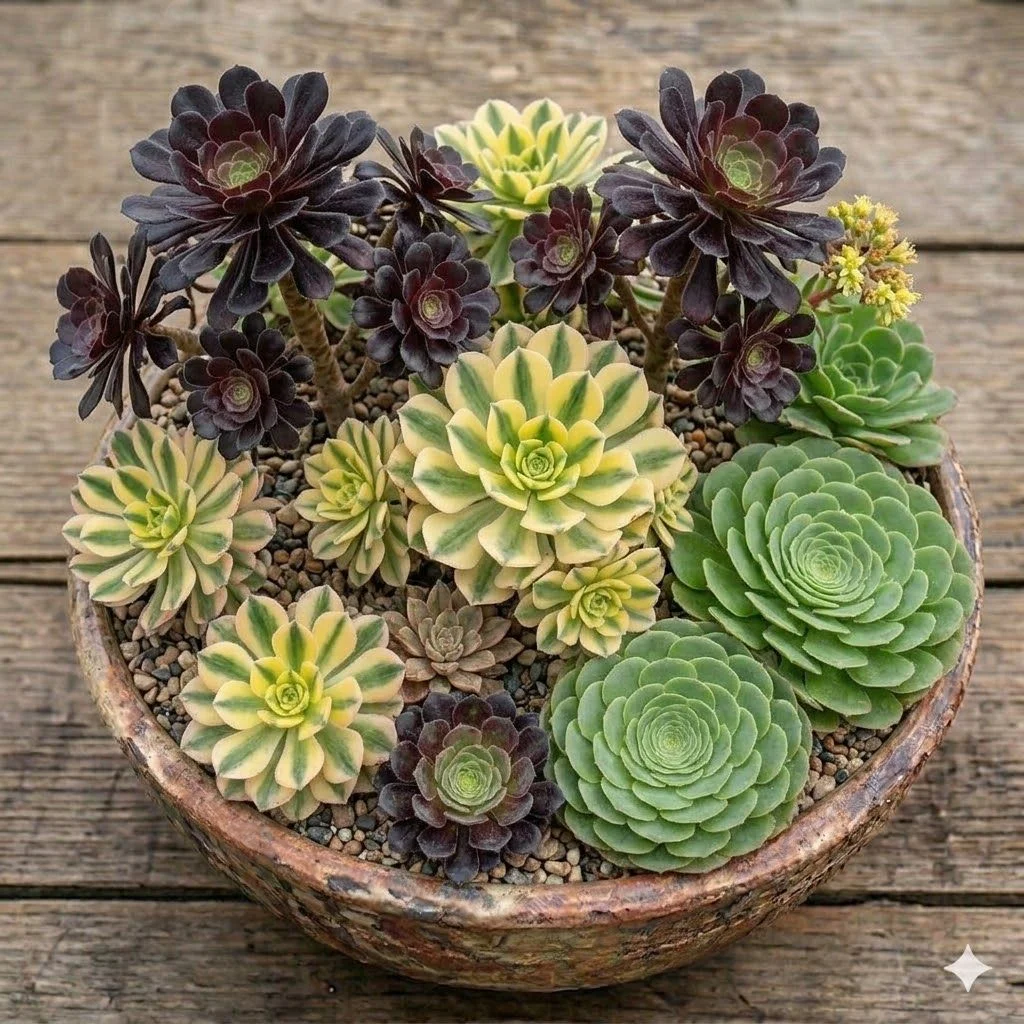
Genus comprising approximately 35 accepted species, mostly endemic to the Canary Islands, with some in Morocco, East Africa, and the Arabian Peninsula. They form terminal rosettes on woody stems and are distinguished from other Crassulaceae genera by their monocarpic rosettes (the rosette dies after flowering, but the plant persists through branching).
Aichryson
Aichryson
Genus of annual and biennial succulent plants endemic to Macaronesia, principally the Canary Islands, with some species in Madeira, the Azores, and Cape Verde. They form rosettes of small, fleshy, hairy leaves ranging from green to reddish, with yellow star-shaped flowers. They grow in humid, shaded areas of ravines, laurel forests, and rocky volcanic slopes.
Asterosedum
Asterosedum
Genus of small succulents in the family Crassulaceae, segregated from Sedum. Includes mat-forming plants from mountainous areas of Europe and Asia, with star-shaped pink flowers and opposite or alternate fleshy leaves. The best-known species is Asterosedum spurium, widely grown as a groundcover.
Bryophyllum
Bryophyllum
Genus of succulents in the family Crassulaceae, subfamily Kalanchoideae, now largely included within the genus Kalanchoe. The species are native mainly to Madagascar and southern Africa, although several are invasive plants in tropical and subtropical regions worldwide. Their most notable feature is the production of adventitious plantlets (propagules) on leaf margins, giving them common names such as "good luck plant", "mother of thousands" or "miracle leaf". Several are potentially invasive and toxic to livestock.
Bulliarda
Bulliarda
Small historical genus of the family Crassulaceae, now considered synonymous with Crassula. It included small aquatic and semi-aquatic herbs of temperate and subtropical regions. The name was proposed by Augustin Pyramus de Candolle in honour of botanist Pierre Bulliard. Species are distributed in Europe, southern Africa and temperate regions of the southern hemisphere.
Byrnesia
Byrnesia
Small genus of succulents in the family Crassulaceae, native to Mexico. The species form rosettes of fleshy leaves and have been reclassified several times among genera such as Dudleya, Echeveria and Graptopetalum. The genus was established by Nathan Lord Britton and Joseph Nelson Rose.
Cotyledon
Cotyledon
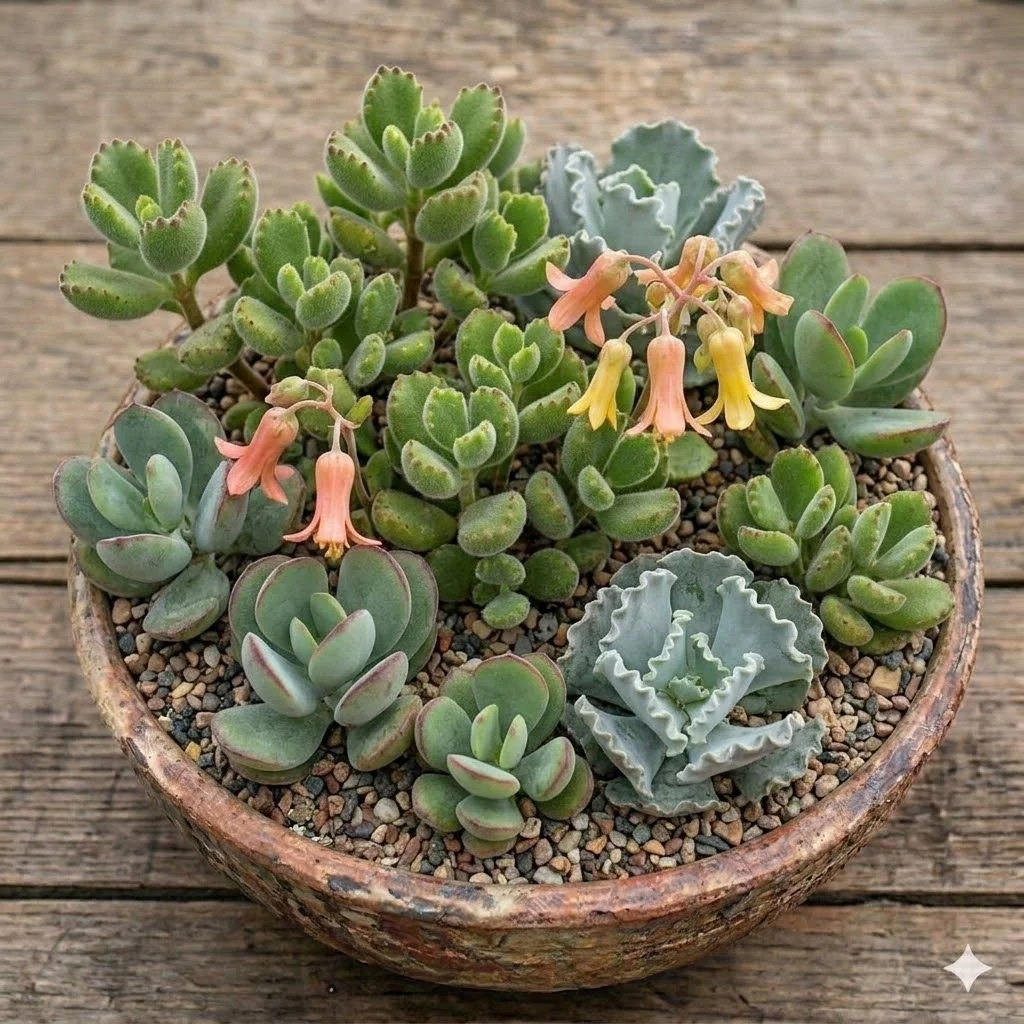
Cotyledon is a genus of succulent shrubs and subshrubs native to southern Africa and parts of the Arabian Peninsula, characterised by thick leaves arranged spirally or in opposite pairs, frequently pruinose, felted, or papillose. Their tubular, pendant flowers in vivid orange, red, and yellow emerge on tall floral stems in spring and summer. The genus occupies arid and subtropical habitats from the Karoo to East African coastal slopes, growing primarily on rocky outcrops and quartzite soils with excellent drainage. Several species are widely popular in horticulture for their ornamental forms and drought tolerance.
Crassula
Crassula
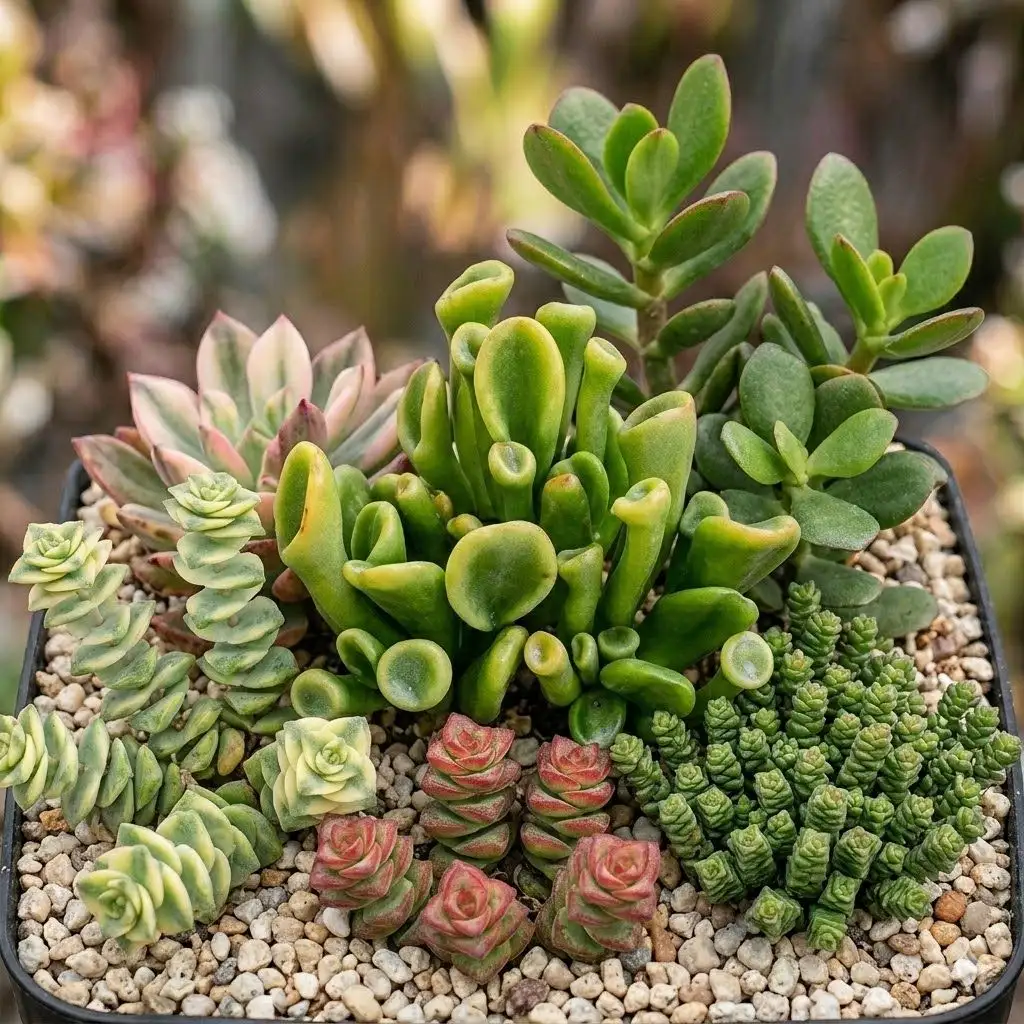
Crassula is the second-largest genus in the family Crassulaceae, encompassing annual, biennial, and perennial succulents ranging from tiny creeping herbs to multi-branched shrubs, all united by fleshy leaves in opposite pairs and often connate at the base. Flowers are small — typically white, pink, or red — gathered in cymes or panicles and usually consisting of five petals. The genus name derives from the Latin crassus (thick), referring to the water-storing leaf tissue that allows these plants to endure prolonged drought. Most species inhabit succulent scrublands, fynbos, rocky outcrops, and semi-arid landscapes of the Cape region, where free-draining, nutrient-poor soils predominate.
Dudleya
Dudleya
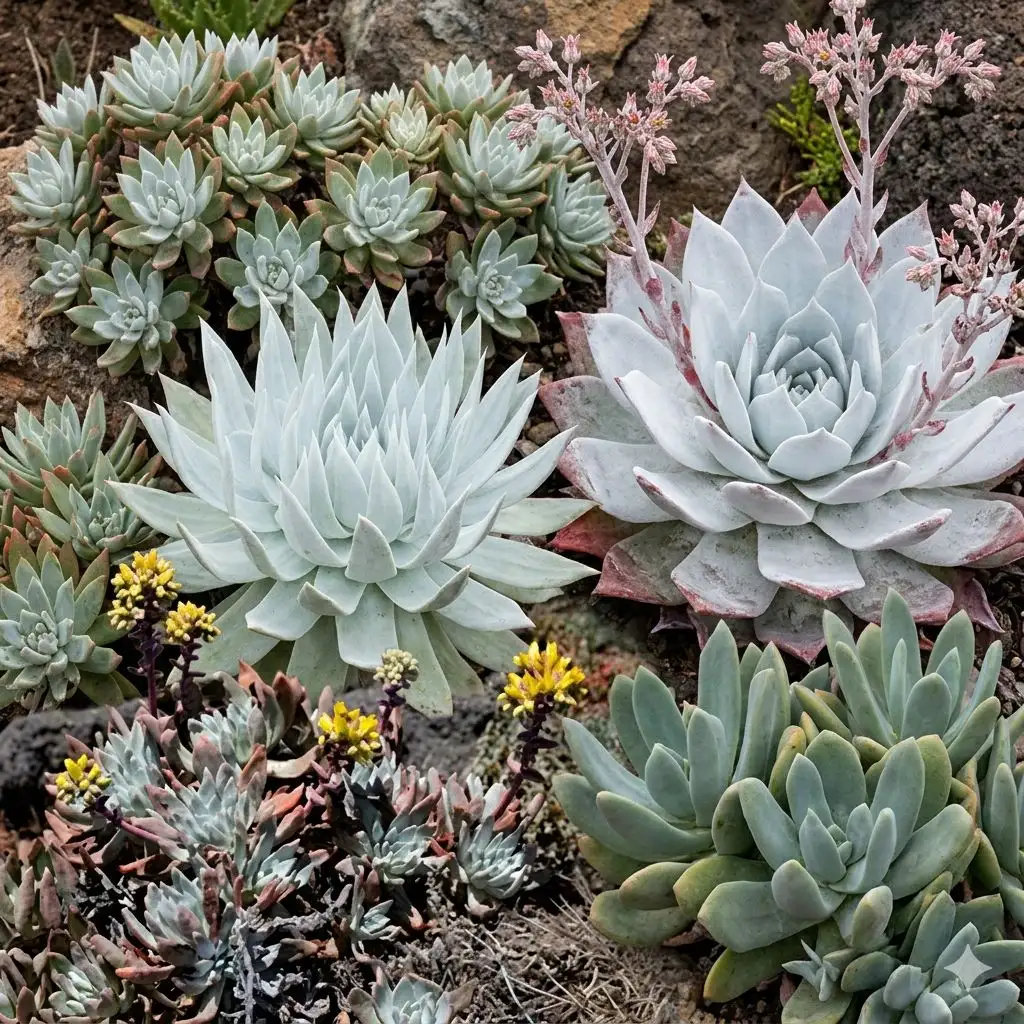
Dudleya is a genus of perennial rosette-forming succulents native to the Pacific coastline from southwestern Oregon to Baja California, Mexico, with the greatest diversity concentrated in California. Their rosettes bear lanceolate or spatulate leaves ranging from matte green to silver-grey or chalky white with a heavy pruinose coating, producing star-shaped flowers in yellow, pink, or red on branching floral stems. Species typically inhabit coastal cliffs, rocky outcrops, and stony chaparral slopes, tolerating salt-laden winds, prolonged drought, and extremely poor soils. Their ornamental appeal and high valuation in the Asian succulent market have made them the primary target of illegal poaching, prompting the passage of California law AB-223 (2021) to protect wild populations.
Echeveria
Echeveria
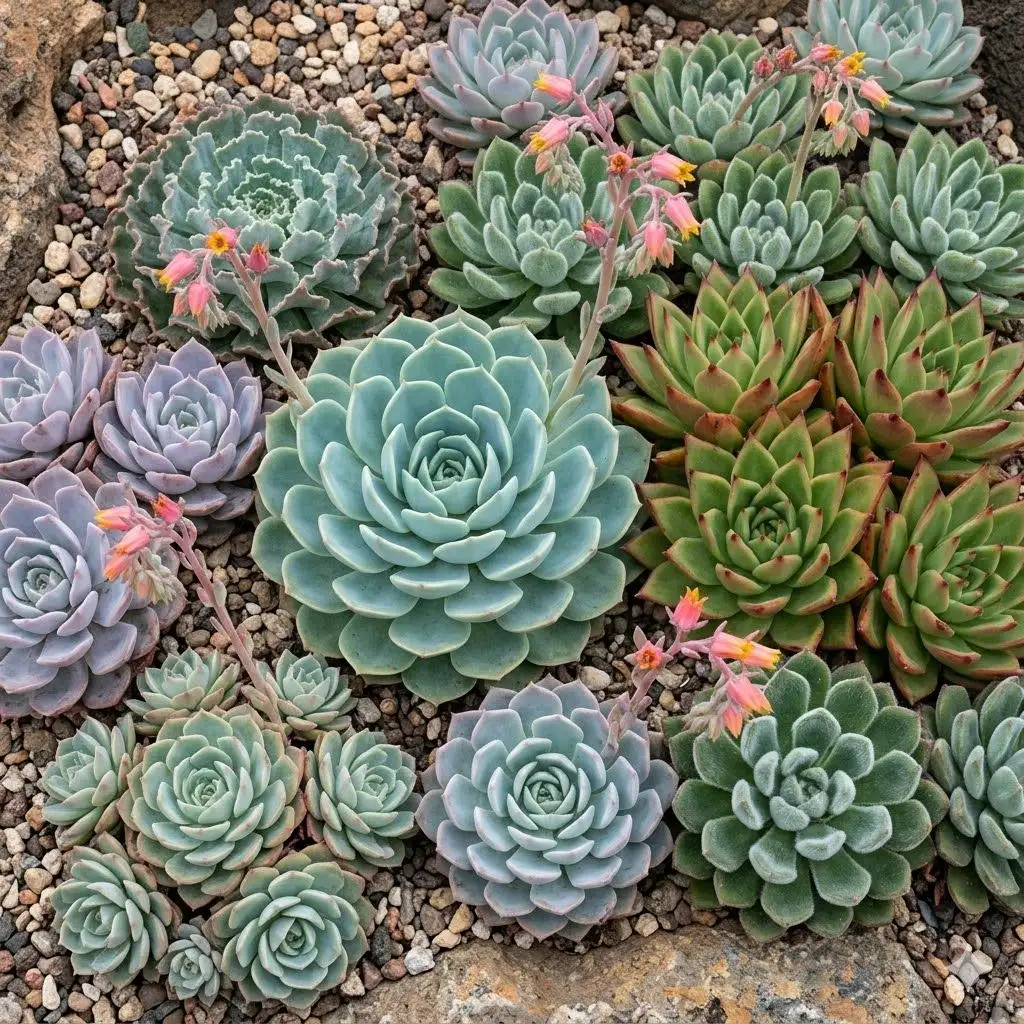
Genus of succulents native to Mexico and Central America, with approximately 150 accepted species. They form compact, symmetrical rosettes with thick, waxy leaves in shades of green, blue, pink, and purple. Their lateral inflorescences bear bell-shaped, brightly colored flowers. They are slow-growing plants that thrive in well-drained soils and bright indirect light.
Graptopetalum
Graptopetalum
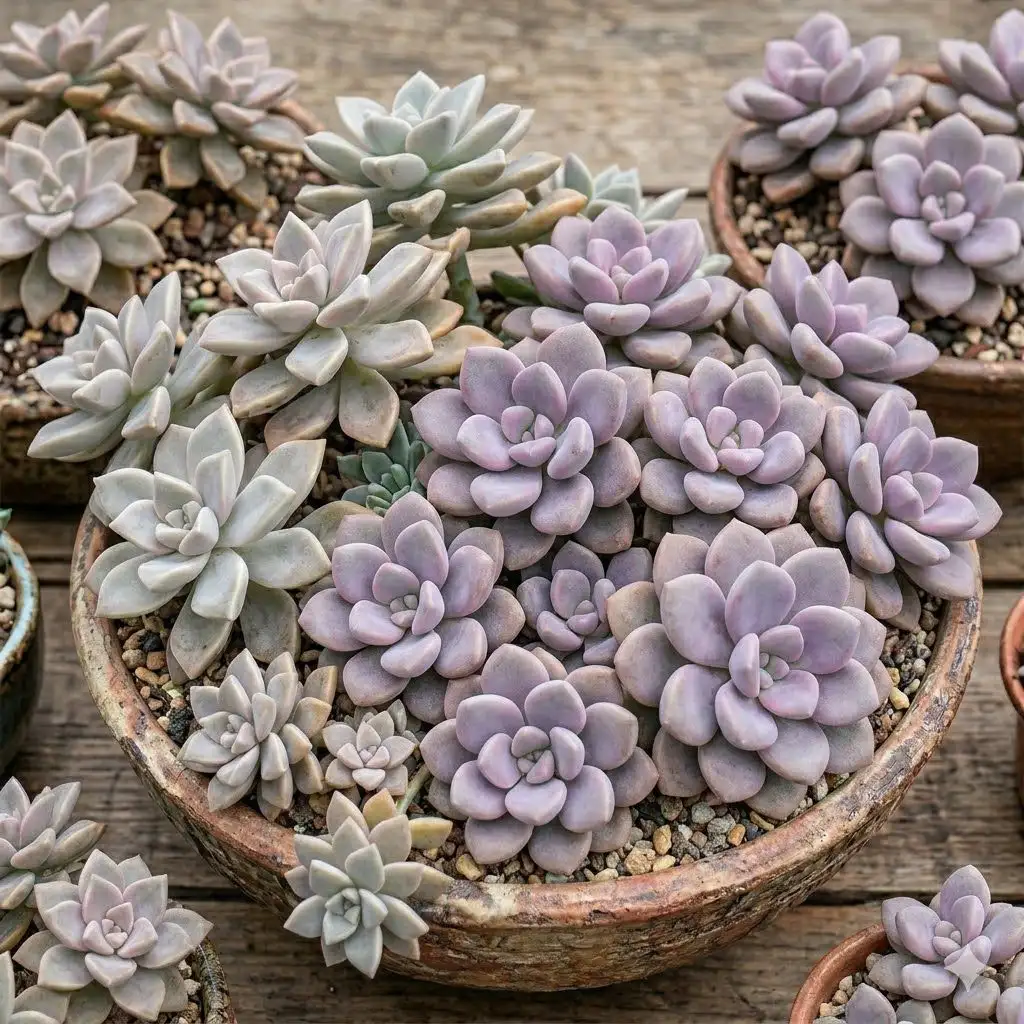
Genus of succulents native to Mexico and Arizona (USA), with approximately 19 accepted species. They form rosettes with thick leaves in grey, pink, and lavender tones. They are phylogenetically close to Echeveria and frequently produce intergeneric hybrids (× Graptoveria). Flowers are star-shaped with red or purple-spotted petals.
Kalanchoe
Kalanchoe
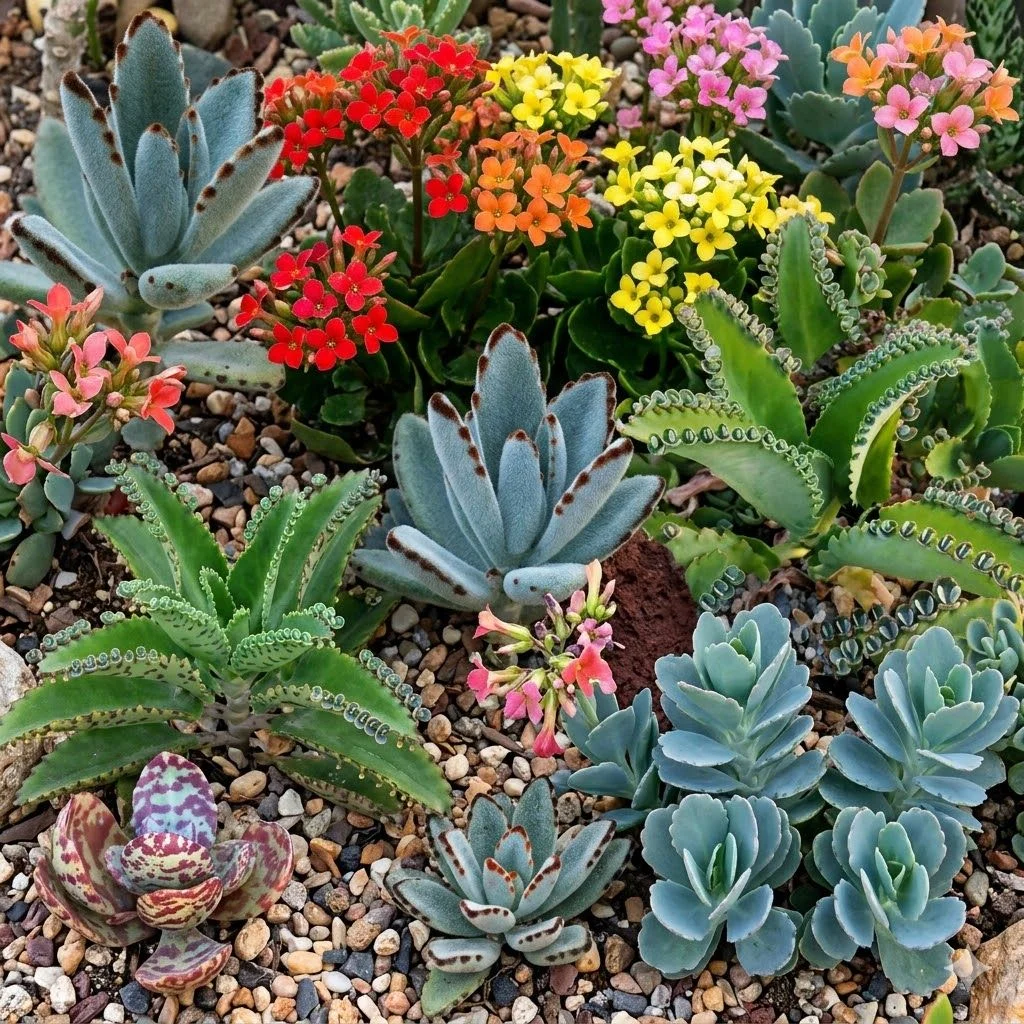
Kalanchoe Adans. is a genus of succulent plants in the family Crassulaceae, comprising approximately 176 accepted species of shrubs, subshrubs, and perennial or biennial herbs. The leaves are fleshy, opposite, and highly variable in shape — ranging from flat and spatulate to cylindrical or strongly crenate — often coated with a waxy bloom or dense pubescence. Flowers are tubular and four-merous, arranged in cymose or thyrsoid terminal inflorescences in colors ranging from white and yellow to deep red and orange. The genus is particularly notable for the ability of many species in the subgenus Bryophyllum to produce vegetative propagules (adventitious plantlets) along leaf margins, a trait unique among flowering plants.
Pachyphytum
Pachyphytum
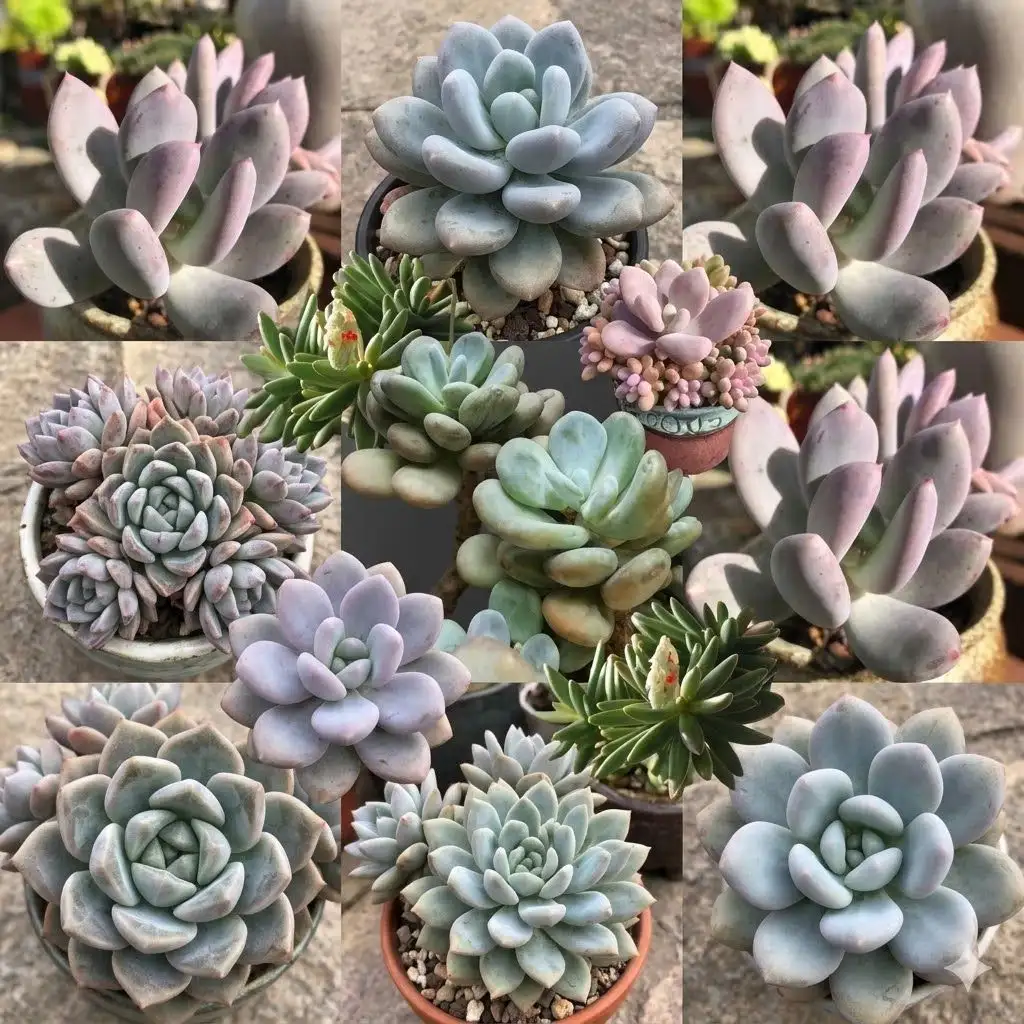
Pachyphytum is a genus of rosette-forming succulents endemic to Mexico, distinguished by its unusually thick, fleshy leaves that are frequently coated with a waxy pruinose layer giving them soft blue, lavender, or silvery hues. Plants form compact rosettes on short or creeping stems and produce arching inflorescences with bell-shaped red, orange, or white flowers. They inhabit rocky cliffs and xerophytic shrublands typically between 1,000 and 2,800 m elevation, with a notable concentration in San Luis Potosí, Hidalgo, Querétaro, and Tamaulipas. Their striking leaf colouration and compact habit have made many species popular ornamental subjects worldwide.
Sedum
Sedum
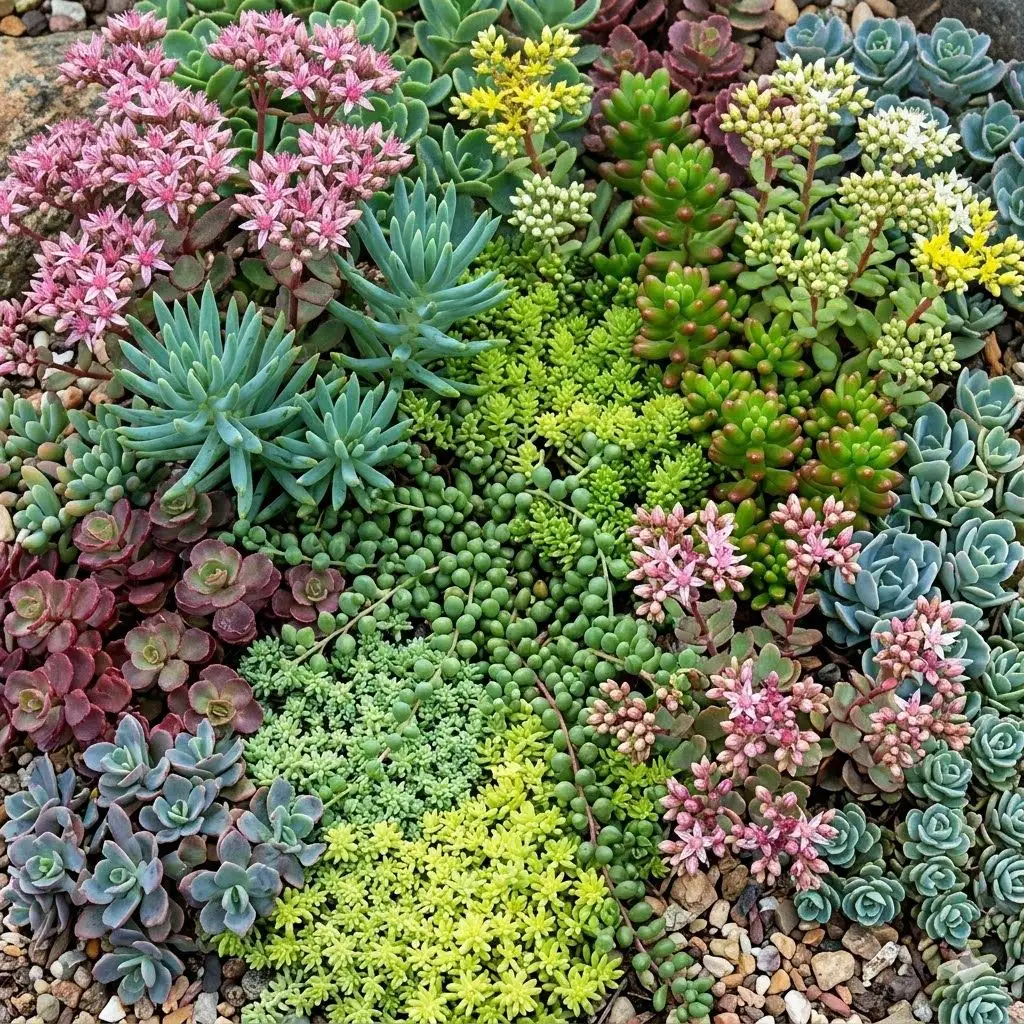
Large and diverse genus with over 400 accepted species, distributed across temperate and montane regions of the Northern Hemisphere. Includes annual, perennial, and subshrubby plants with alternate succulent leaves. Flowers typically have five petals and are grouped in terminal cymes. Many species are used as ground covers, on green roofs, and in rock gardens.
Sempervivum
Sempervivum
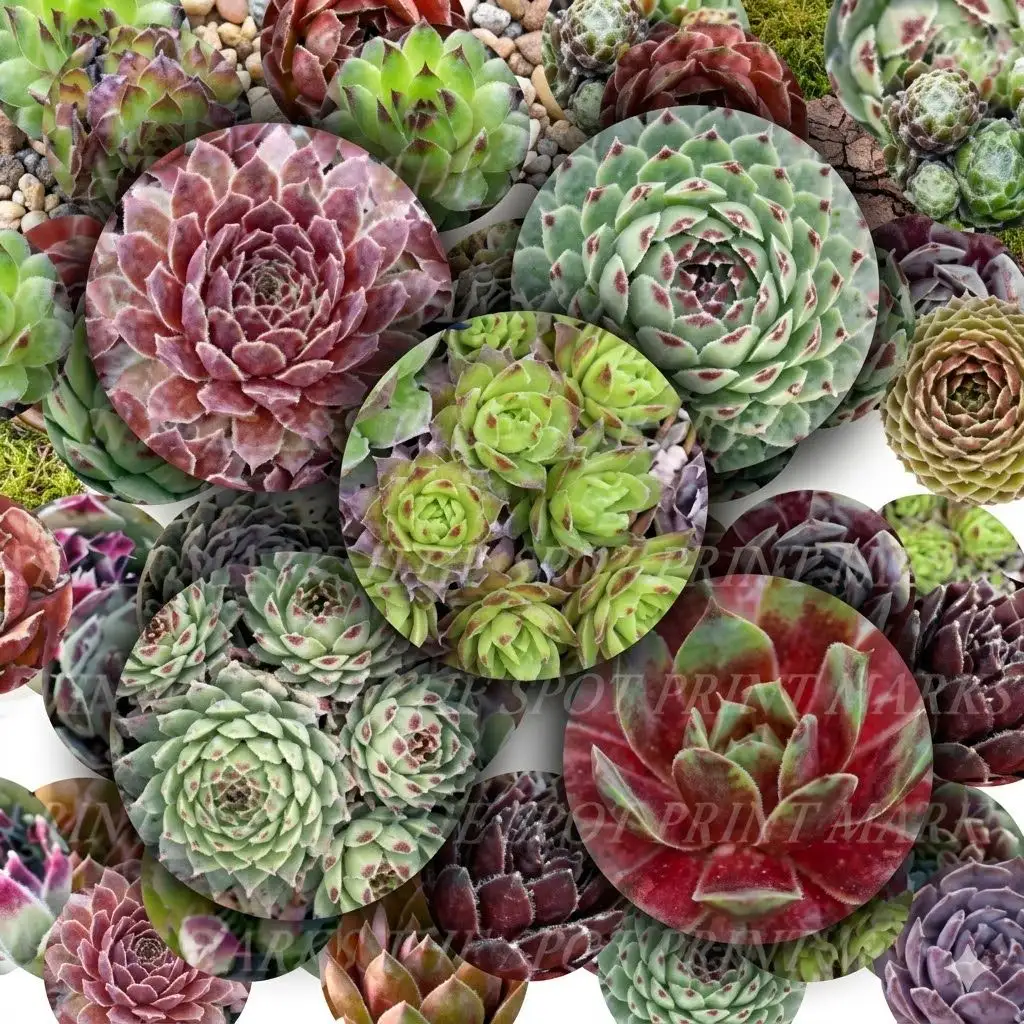
Genus of perennial succulents native to the mountains of Europe, the Caucasus, and Asia Minor, with about 40 accepted species. Commonly known as "houseleeks," they form dense rosettes that propagate vigorously through stolons. They are extremely cold-hardy and widely used in rock gardens and green roofs.