
Cacalia repens L.
Blue chalk sticks
Creeping, mat-forming succulent highly valued for its cylindrical leaves in a striking blue-silver color with waxy pruina. Forms dense low colonies ideal for covering arid ground.
chevron_right edit_note Proposed edits auto-approved at +3 net votes
No pending proposals for this section.
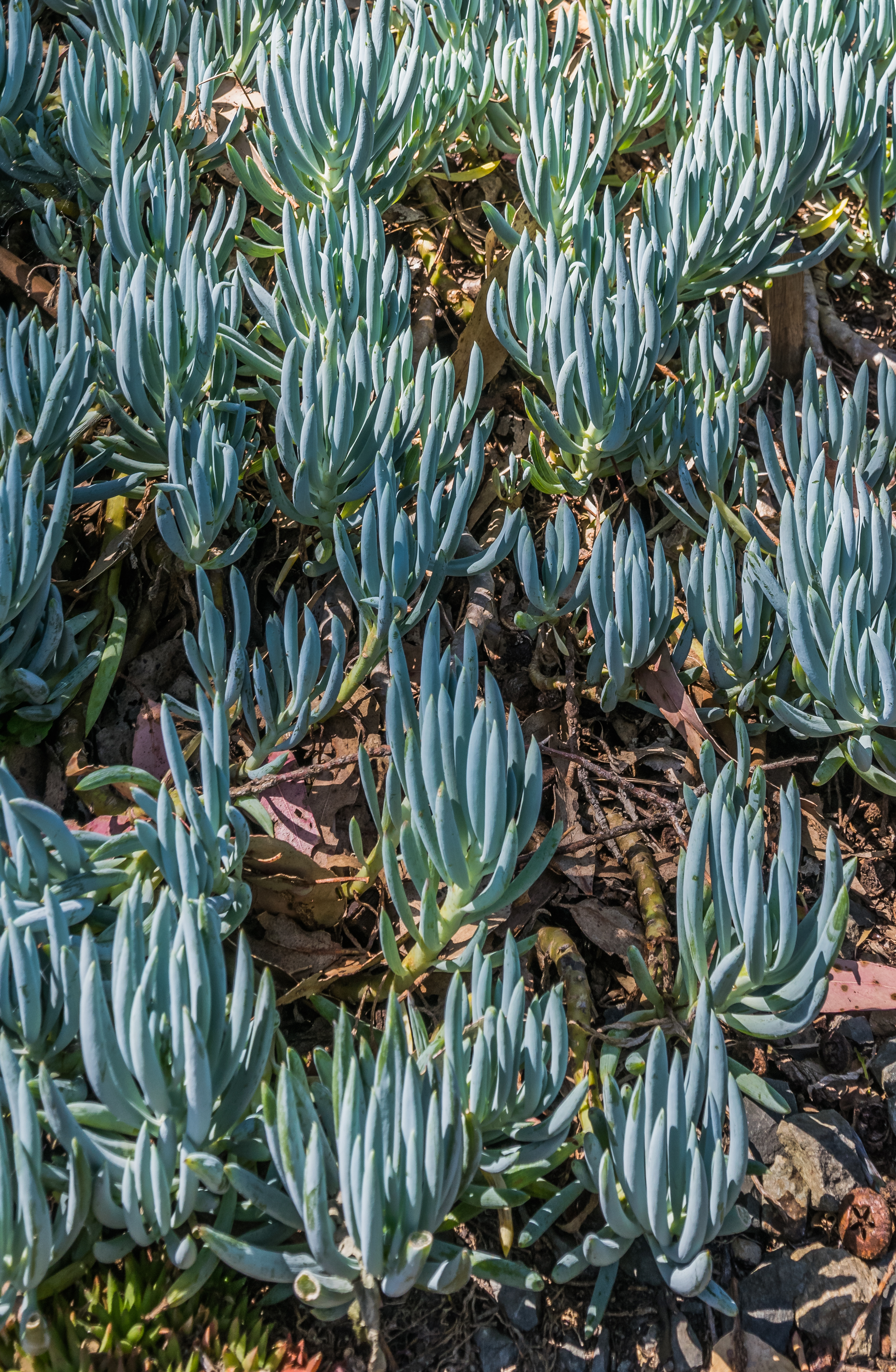
© C T Johansson, CC BY-SA 3.0, via Wikimedia Commons
Overview
| Category | Classification |
|---|---|
| Family | Asteraceae |
| Genus | Cacalia |
| Growth Habit | Mat-forming creeping succulent |
| Conservation Status | Least Concern |
| pH Target | 6.0–7.5 |
| Type | Sandy-gritty with excellent drainage |
Origin & Habitat
Requirements
Soil & Substrate
Type
Sandy-gritty with excellent drainage
groups Beneficial Associations
chevron_right edit_note Proposed edits auto-approved at +3 net votes
No pending proposals for this section.
Propagation Strategy
P
D
In pots: every 2 years. In garden: transplant division every 3–4 years.
Very diluted balanced fertilizer once in spring; not necessary in established gardens.
Uses & Applications
Precautions / Toxicity
Moderately toxic if ingested; contains alkaloids that may cause liver damage in pets.
chevron_right edit_note Proposed edits auto-approved at +3 net votes
No pending proposals for this section.
"'Cacalia repens' L. is the historical name. The currently accepted name is 'Curio repens' (L.) P.V.Heath (2000). Commercially found under 'Senecio serpens' G.D.Rowley or 'Kleinia repens' (L.) Haw. One of the most popular blue-silver mat-forming succulents in Mediterranean and xeriscape landscaping."
chevron_right edit_note Proposed edits auto-approved at +3 net votes
No pending proposals for this section.
Scientific Integrity
🟢 HighVote to help validate this record
Sources
Loading…
Discussion
Disclaimer
This species record is provided for educational and informational purposes only. Jardín Roca Negra does not guarantee the accuracy or completeness of the data. Content is community-curated and may be subject to revision; it should not replace advice from a qualified botanist. This species may be toxic, invasive, or subject to legal restrictions — verify before handling or cultivating. Jardín Roca Negra accepts no liability for any harm arising from reliance on this information. Images are reproduced under Creative Commons or equivalent free licenses; credits are noted below each image.