
Caputia scaposa var. caulescens (Harv.) B.Nord. & Pelser
Caulescent silver senecio
Caputia scaposa var. caulescens is the tallest and most stem-developed variety in the C. scaposa complex. The epithet caulescens refers precisely to its longer, base-lignified stem. The leaves maintain the same characteristic silver coloration of the group, but the overall habit is more erect and arborescent. It is the most common variety in European and North American collections of South African succulents.
chevron_right edit_note Proposed edits auto-approved at +3 net votes
No pending proposals for this section.
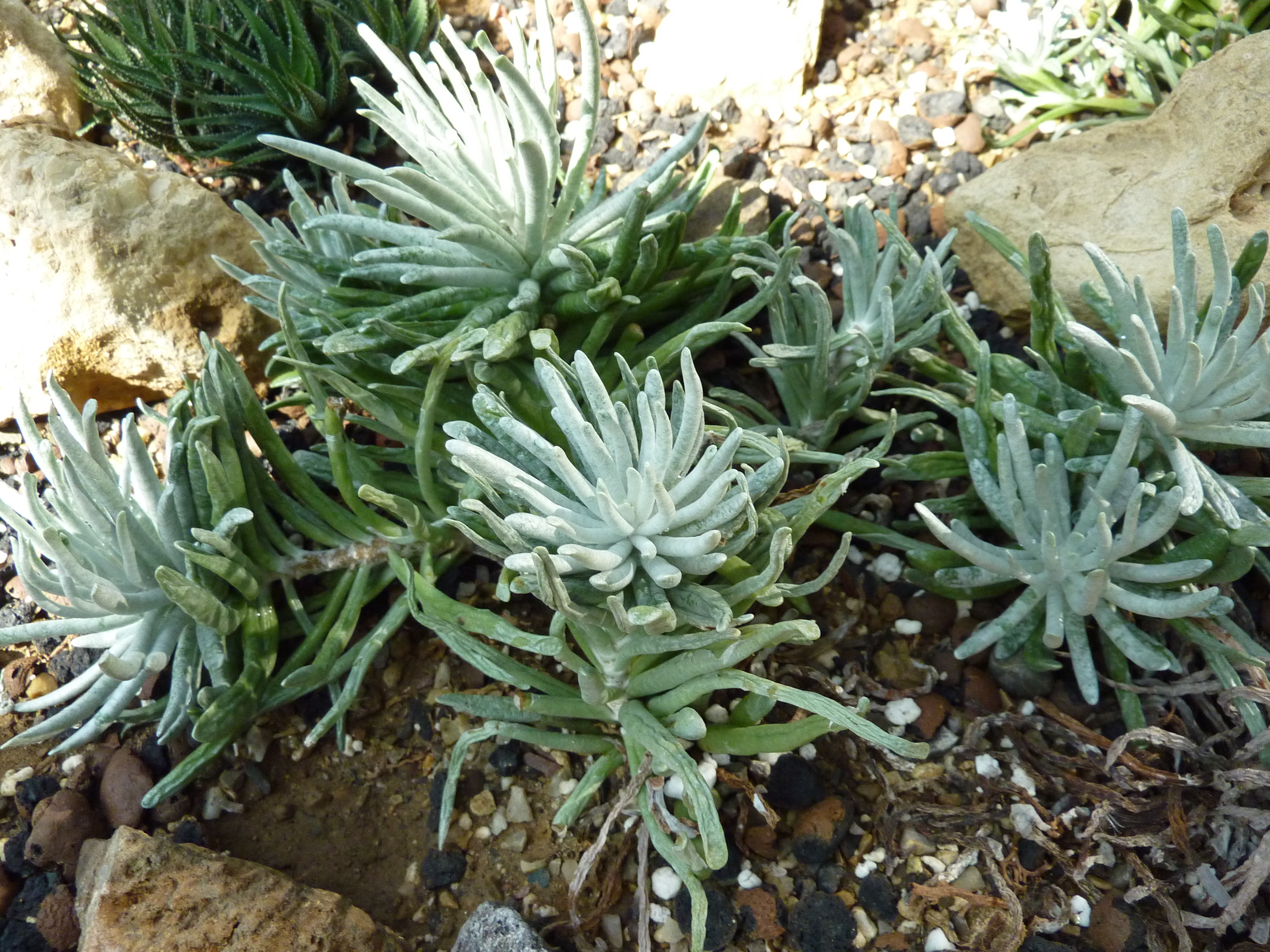
Overview
| Category | Classification |
|---|---|
| Family | Asteraceae |
| Genus | Caputia |
| Growth Habit | Erect, caulescent succulent shrub |
| Conservation Status | Least Concern (IUCN); the most widely cultivated variety |
| pH Target | 6.0–7.5 |
| Type | Sandy-stony, very well-drained |
Origin & Habitat
Requirements
Soil & Substrate
Type
Sandy-stony, very well-drained
groups Beneficial Associations
chevron_right edit_note Proposed edits auto-approved at +3 net votes
No pending proposals for this section.
Propagation Strategy
C
U
Every 2–3 years or when the plant is large enough to be planted in the ground.
One application in spring with low-nitrogen diluted mineral fertilizer.
Uses & Applications
Precautions / Toxicity
Slightly toxic if ingested.
chevron_right edit_note Proposed edits auto-approved at +3 net votes
No pending proposals for this section.
"Originally described as Senecio scaposus var. caulescens by Harvey and transferred to Caputia by B.Nord. & Pelser in 2016. It is the most cultivated variety of the group and the most frequent in nurseries specializing in South African plants. The distinction between var. scaposa and var. caulescens can be subtle in young plants; the longer, base-lignified stem in adults is the main differentiating character."
chevron_right edit_note Proposed edits auto-approved at +3 net votes
No pending proposals for this section.
Scientific Integrity
🟢 HighVote to help validate this record
Sources
Loading…
Discussion
Disclaimer
This species record is provided for educational and informational purposes only. Jardín Roca Negra does not guarantee the accuracy or completeness of the data. Content is community-curated and may be subject to revision; it should not replace advice from a qualified botanist. This species may be toxic, invasive, or subject to legal restrictions — verify before handling or cultivating. Jardín Roca Negra accepts no liability for any harm arising from reliance on this information. Images are reproduced under Creative Commons or equivalent free licenses; credits are noted below each image.