
Bryophyllum verticillatum (Scott-Elliot) A.Berger
Chandelier Plant
Bryophyllum verticillatum, currently classified as Kalanchoe delagoensis (or K. verticillata in some floras), is the famous 'chandelier plant' or 'mother of thousands'. Its cylindrical spotted leaves produce dozens of adventitious plantlets at their tips that drop and root with remarkable ease. It is considered one of the most prolifically reproducing succulents and is an aggressive invader in many countries.
chevron_right edit_note Proposed edits auto-approved at +3 net votes
No pending proposals for this section.
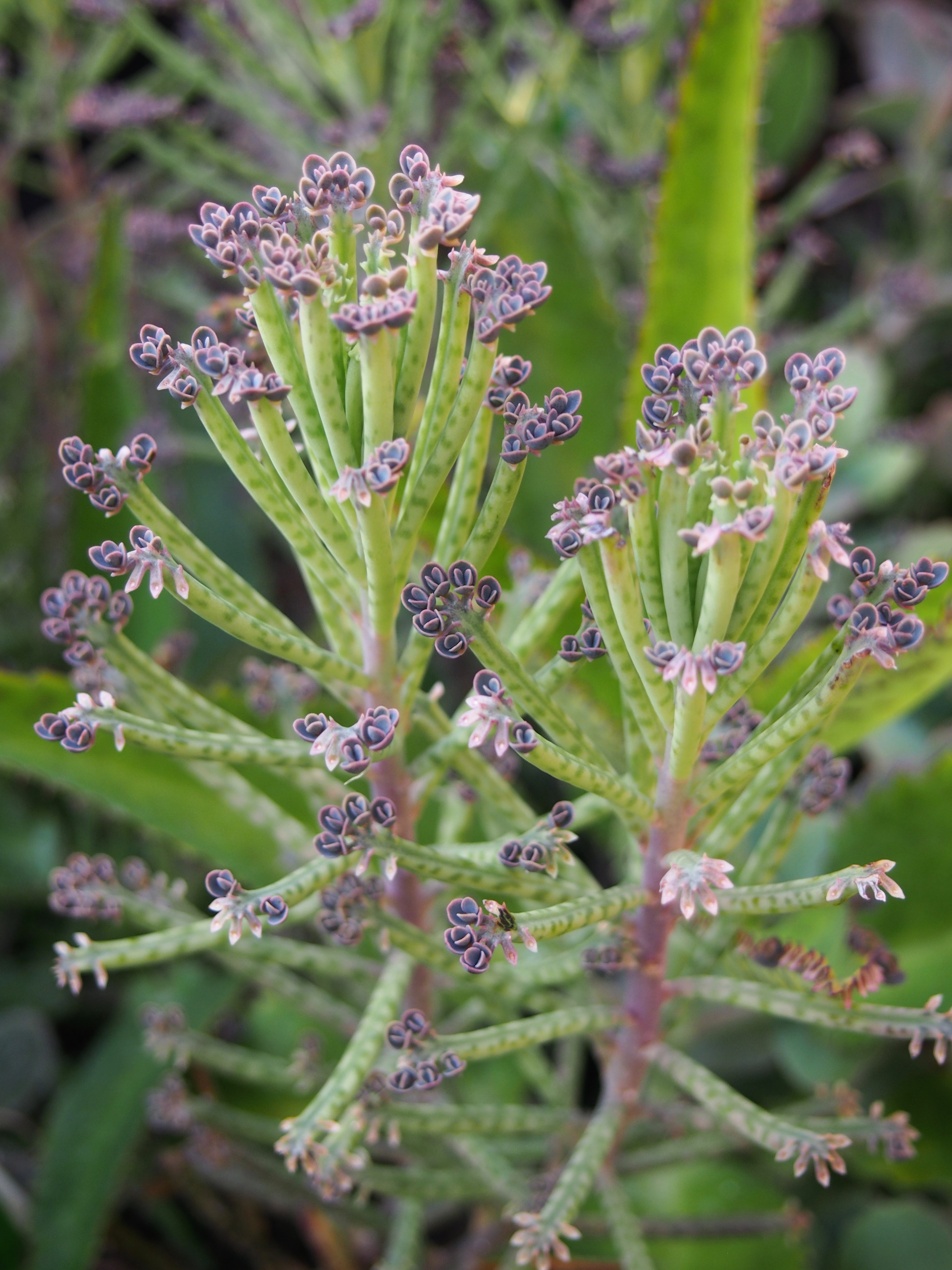
© Agnieszka Kwiecień, Nova
CC BY-SA 4.0
Overview
| Category | Classification |
|---|---|
| Family | Crassulaceae |
| Genus | Bryophyllum |
| Growth Habit | Erect herbaceous plant, robust stems up to 1 m, with cylindrical leaves arranged in whorls. |
| Conservation Status | Not Evaluated (NE) — invasive species in many regions |
| pH Target | 5.5–7.5 |
| Type | Tolerates poor, sandy, rocky or well-drained clay soils. |
Origin & Habitat
Requirements
Soil & Substrate
Type
Tolerates poor, sandy, rocky or well-drained clay soils.
groups Beneficial Associations
chevron_right edit_note Proposed edits auto-approved at +3 net votes
No pending proposals for this section.
Propagation Strategy
G
P
Annual if grown in pots to control size.
Minimal fertilization; too much fertilizer accelerates invasiveness. One diluted application in spring is sufficient.
Uses & Applications
Precautions / Toxicity
Highly toxic to pets and livestock (cardiotoxic bufadienolides); ingestion can be fatal in ruminants.
chevron_right edit_note Proposed edits auto-approved at +3 net votes
No pending proposals for this section.
Plant Health
chevron_right edit_note Proposed edits auto-approved at +3 net votes
No pending proposals for this section.
"Species requiring careful management: its adventitious plantlets make it a top-class invader. In Colombia and tropical countries it should not be planted near pastures or natural areas. Monocarpic: dies after flowering but its plantlets perpetuate the colony."
chevron_right edit_note Proposed edits auto-approved at +3 net votes
No pending proposals for this section.
Scientific Integrity
🟢 HighVote to help validate this record
Sources
Loading…
Discussion
Disclaimer
This species record is provided for educational and informational purposes only. Jardín Roca Negra does not guarantee the accuracy or completeness of the data. Content is community-curated and may be subject to revision; it should not replace advice from a qualified botanist. This species may be toxic, invasive, or subject to legal restrictions — verify before handling or cultivating. Jardín Roca Negra accepts no liability for any harm arising from reliance on this information. Images are reproduced under Creative Commons or equivalent free licenses; credits are noted below each image.