
Brachystelma foetidum Schltr.
Fetid Brachystelma
South African tuberous geophyte whose flowers emit a particularly strong and unpleasant odour (foetidum = fetid in Latin) to attract flies and other dipterans as pollinators. The flowers are relatively large for the genus, with markedly reflexed corolla lobes in reddish-brown to black.
chevron_right edit_note Proposed edits auto-approved at +3 net votes
No pending proposals for this section.
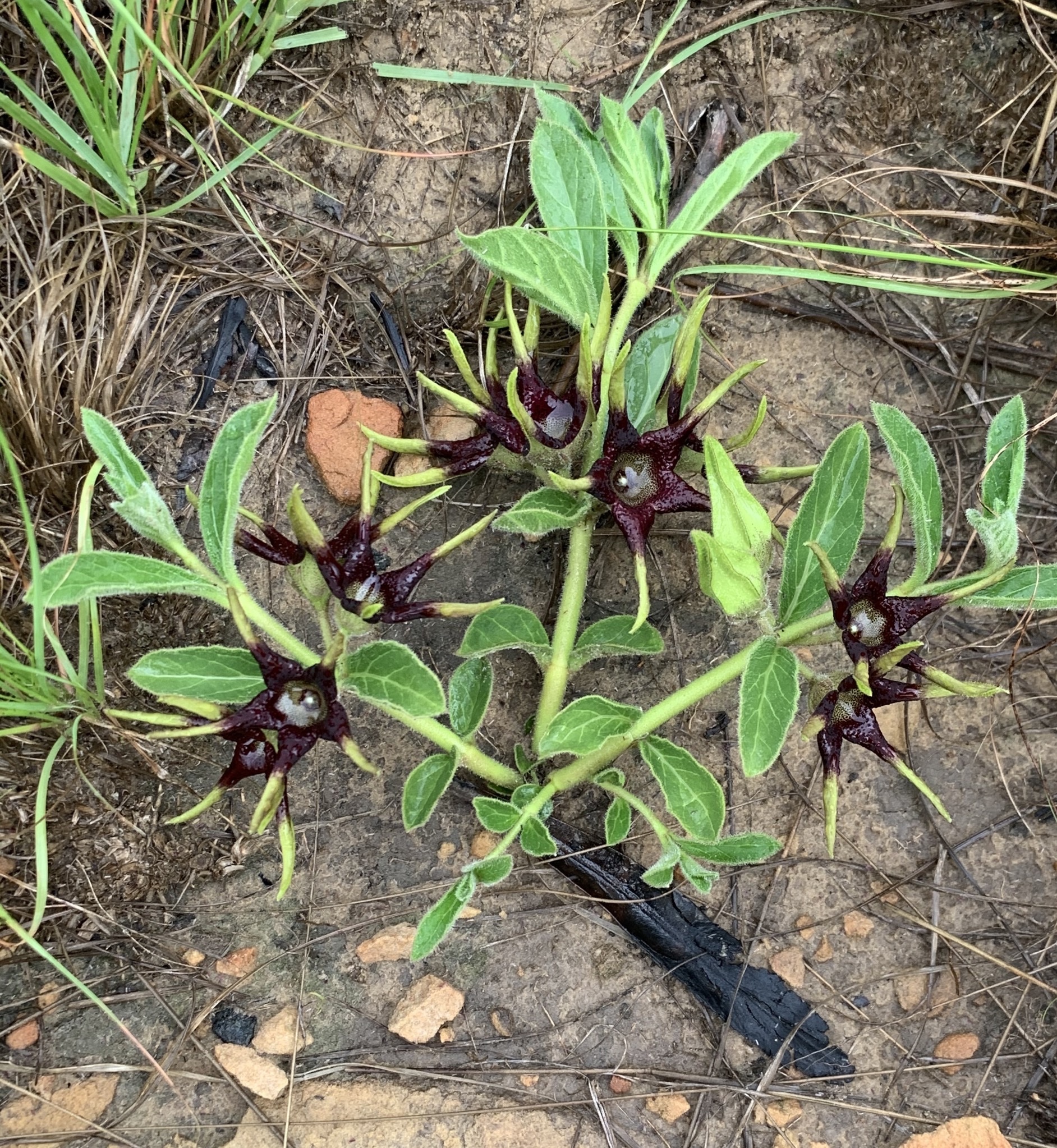
© Dave Richardson, CC BY 4.0
CC BY 4.0
Overview
| Category | Classification |
|---|---|
| Family | Apocynaceae |
| Genus | Brachystelma |
| Growth Habit | Seasonal herbaceous geophyte; annual stems 15–35 cm; globose tuber 5–12 cm in diameter |
| Conservation Status | Least Concern (LC) |
| pH Target | 5.5–7.0 |
| Type | Sandy-loam, fast-draining |
Origin & Habitat
Requirements
Soil & Substrate
Type
Sandy-loam, fast-draining
groups Beneficial Associations
chevron_right edit_note Proposed edits auto-approved at +3 net votes
No pending proposals for this section.
Propagation Strategy
T
B
Every 4–5 years
Very dilute mineral fertilizer (1/4 dose) once a month in spring-summer
Uses & Applications
Precautions / Toxicity
Toxic if ingested; not documented for medicinal use
chevron_right edit_note Proposed edits auto-approved at +3 net votes
No pending proposals for this section.
Plant Health
chevron_right edit_note Proposed edits auto-approved at +3 net votes
No pending proposals for this section.
"Deceit pollination (sapromyiophily) is an evolutionary strategy shared with Stapelia and other Asclepiadoideae; the plant offers no real reward to the pollinator. Described by Rudolf Schlechter in 1895."
chevron_right edit_note Proposed edits auto-approved at +3 net votes
No pending proposals for this section.
Scientific Integrity
🟢 HighVote to help validate this record
Sources
Loading…
Discussion
Disclaimer
This species record is provided for educational and informational purposes only. Jardín Roca Negra does not guarantee the accuracy or completeness of the data. Content is community-curated and may be subject to revision; it should not replace advice from a qualified botanist. This species may be toxic, invasive, or subject to legal restrictions — verify before handling or cultivating. Jardín Roca Negra accepts no liability for any harm arising from reliance on this information. Images are reproduced under Creative Commons or equivalent free licenses; credits are noted below each image.