
Astroloba spiralis (L.) Uitewaal
Spiral astroloba
Astroloba spiralis is one of the most attractive and popular species in the genus, with a pronounced spiral arrangement of its triangular leaves that creates a geometrically perfect rosette. Endemic to the Western Cape, it grows near Worcester and Ceres. It is widely cultivated and highly prized in succulent collections worldwide.
chevron_right edit_note Proposed edits auto-approved at +3 net votes
No pending proposals for this section.
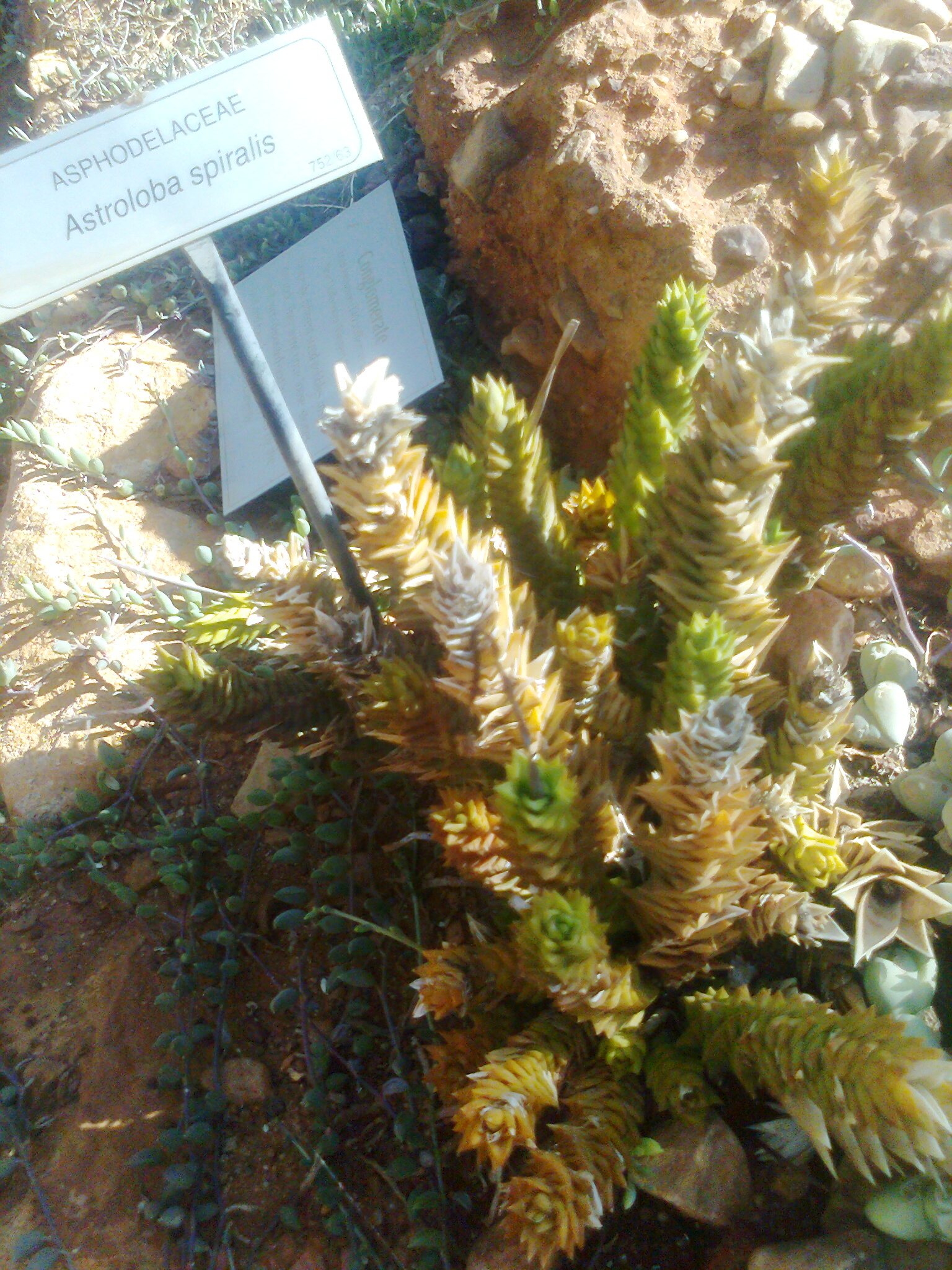
© Abu Shawka, Wikimedia Commons
CC BY-SA 3.0
Overview
| Category | Classification |
|---|---|
| Family | Asphodelaceae |
| Genus | Astroloba |
| Growth Habit | Very pronounced 5-ranked spiral rosette, reaching 12–20 cm tall; leaves form an extremely regular helical pattern; may branch basally over time. |
| Conservation Status | Not Evaluated (NE) by IUCN; distribution in the Western Cape around Worcester and Ceres, relatively stable. |
| pH Target | 6.0–7.0 |
| Type | Well-drained, slightly sandy with organic matter |
Origin & Habitat
Morphology
chevron_right edit_note Proposed edits auto-approved at +3 net votes
No pending proposals for this section.
Requirements
Soil & Substrate
Type
Well-drained, slightly sandy with organic matter
groups Beneficial Associations
chevron_right edit_note Proposed edits auto-approved at +3 net votes
No pending proposals for this section.
Propagation Strategy
T
O
Every 2–3 years or when roots fill the pot
Diluted cactus fertilizer once a month in spring and summer; no fertilizing in autumn-winter
Uses & Applications
Precautions / Toxicity
Not toxic to humans
chevron_right edit_note Proposed edits auto-approved at +3 net votes
No pending proposals for this section.
Plant Health
chevron_right edit_note Proposed edits auto-approved at +3 net votes
No pending proposals for this section.
"Astroloba spiralis is considered the most ornamentally attractive species in the genus owing to its almost perfect helical spiral. It was originally described by Linnaeus as Aloe spiralis. It intergrades with A. pentagona in some localities of the Little Karoo. Lime-green and reddish cultivation forms are highly prized by collectors."
chevron_right edit_note Proposed edits auto-approved at +3 net votes
No pending proposals for this section.
Scientific Integrity
🟢 HighVote to help validate this record
Sources
Loading…
Discussion
Disclaimer
This species record is provided for educational and informational purposes only. Jardín Roca Negra does not guarantee the accuracy or completeness of the data. Content is community-curated and may be subject to revision; it should not replace advice from a qualified botanist. This species may be toxic, invasive, or subject to legal restrictions — verify before handling or cultivating. Jardín Roca Negra accepts no liability for any harm arising from reliance on this information. Images are reproduced under Creative Commons or equivalent free licenses; credits are noted below each image.