
Aristaloe aristata (Haw.) Boatwr. & J.C.Manning
Lace aloe / Guinea-fowl aloe
Aristaloe aristata, commonly known as the lace aloe or guinea-fowl aloe, is the sole species of the monotypic genus Aristaloe, segregated from Aloe by Boatwright and Manning based on molecular phylogenetic analyses. It is native to the mountainous regions of the Eastern Cape, Lesotho, and Free State in South Africa, where it grows in grasslands and rocky slopes. It is undoubtedly one of the most popular and widely cultivated ornamental succulents in the world. Its leaves form a dense rosette with white teeth and pearly tubercles on the surface, without sharp spines, making it completely safe to touch for children and pets. In spring-summer it produces a striking flower stalk with tubular orange-red flowers that attract hummingbirds and nectarivorous birds. Its exceptional cold resistance (down to −7 °C), its tolerance of neglect, and its ease of cultivation make it a perfect gift plant and the most recommended indoor succulent for beginners.
chevron_right edit_note Proposed edits auto-approved at +3 net votes
No pending proposals for this section.
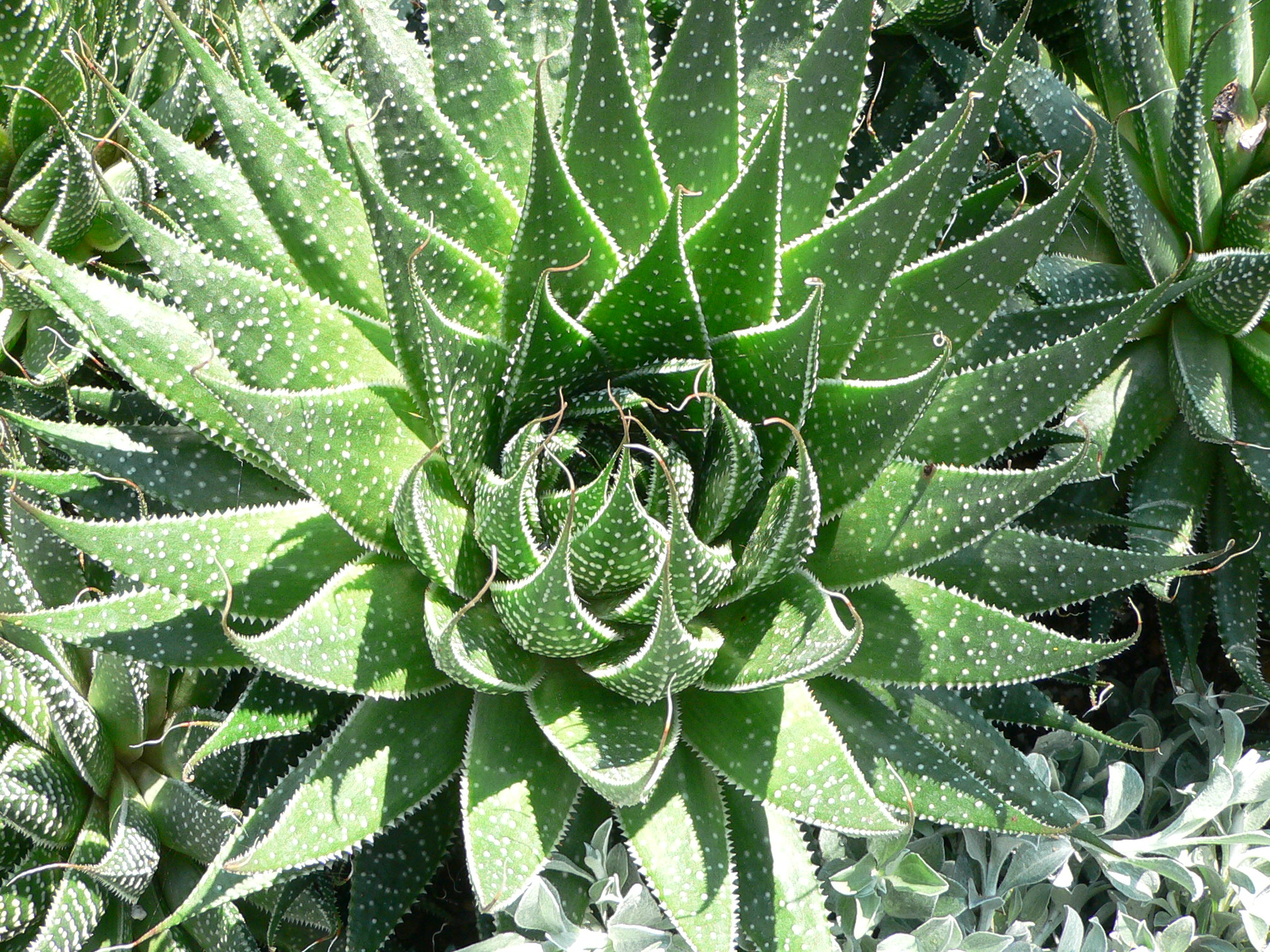
© Raul654 / Wikimedia Commons
CC BY-SA 3.0
Overview
| Category | Classification |
|---|---|
| Family | Asphodelaceae |
| Genus | Aristaloe |
| Growth Habit | Acaulescent perennial succulent; forms compact rosettes of lanceolate leaves up to 10 cm long. Over time it can produce basal offsets forming clumps. Short or absent stem. Flowers in a simple raceme on a stem up to 50 cm tall. |
| Conservation Status | Least Concern (LC); widely distributed species with stable populations across its native range. Its popularity in cultivation has reduced pressure on wild populations. |
| pH Target | 6.0–7.5 |
| Type | Well-draining succulent mix with sand or perlite; tolerates some organic matter |
Origin & Habitat
Morphology
Lanceolate leaves of 8–10 cm, dark to greyish-green, with soft white marginal teeth and numerous white pearly tubercles on both surfaces. No sharp spines: completely safe to touch. The rosette can reach 20–30 cm in diameter.
ecoSimple flower stalk up to 50 cm with a dense raceme of bright orange-red tubular flowers. Blooms in spring-summer (May–July in the northern hemisphere). The flowers attract nectarivorous birds and pollinators.
ecoShallow fibrous roots. Produces basal offsets over time, forming small clumps. Offsets can be easily separated to propagate the plant.
ecoDense, perfectly geometric rosette of green leaves with white spots. The appearance is exotic and elegant, making it very popular as a houseplant and gift. No dangerous spines.
ecochevron_right edit_note Proposed edits auto-approved at +3 net votes
No pending proposals for this section.
Requirements
Soil & Substrate
Type
Well-draining succulent mix with sand or perlite; tolerates some organic matter
groups Beneficial Associations
chevron_right edit_note Proposed edits auto-approved at +3 net votes
No pending proposals for this section.
Propagation Strategy
- 1 Wait until the offset is at least 3–5 cm with its own roots
- 2 Gently separate from the mother plant with a clean knife
- 3 Let the cut callous for 1–2 days in a dry, shaded spot
- 4 Plant in moist succulent mix and place in bright indirect light
- 1 Sow fresh seeds in spring on moist mineral mix
- 2 Cover lightly; maintain at 20–25 °C with bright indirect light
- 3 Keep slightly moist until germination
- 4 Transplant to individual pot when rosette has 3–4 leaves
T
Overwatering (main cause of death)
Every 2–3 years in spring or when the pot is full of offsets
Diluted succulent fertilizer once in spring and once in early summer. Never in autumn-winter.
Uses & Applications
Precautions / Toxicity
Non-toxic to humans. Mild toxicity reported in cats and dogs (may cause mild diarrhea if ingested in large quantities); no sharp spines, completely safe to touch.
chevron_right edit_note Proposed edits auto-approved at +3 net votes
No pending proposals for this section.
Plant Health
chevron_right edit_note Proposed edits auto-approved at +3 net votes
No pending proposals for this section.
"Aristaloe aristata is the entry point for millions of people to the world of succulents. Its combination of geometric beauty, spectacular flowers, absence of dangerous spines, and resistance to cold and neglect make it unique among ornamental succulents. The segregation from the genus Aloe into Aristaloe is an example of how molecular phylogeny has reorganized the taxonomy of Asphodelaceae."
chevron_right edit_note Proposed edits auto-approved at +3 net votes
No pending proposals for this section.
Scientific Integrity
🟢 HighVote to help validate this record
Sources
Loading…
Discussion
Disclaimer
This species record is provided for educational and informational purposes only. Jardín Roca Negra does not guarantee the accuracy or completeness of the data. Content is community-curated and may be subject to revision; it should not replace advice from a qualified botanist. This species may be toxic, invasive, or subject to legal restrictions — verify before handling or cultivating. Jardín Roca Negra accepts no liability for any harm arising from reliance on this information. Images are reproduced under Creative Commons or equivalent free licenses; credits are noted below each image.