
Aloe laeta A.Berger
Madagascar plateau aloe
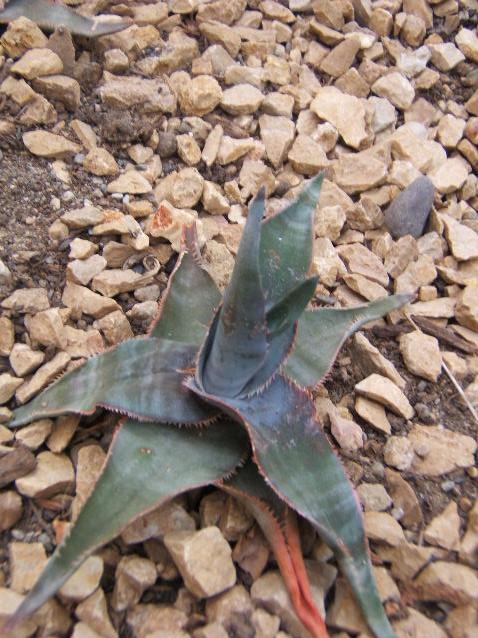
Aloe laeta is a succulent endemic to the central plateau of Madagascar, where it grows on exposed rocky outcrops. It forms a solitary rosette of green leaves with pale spots and produces striking bright red-orange tubular flowers in erect racemes. It is prized by collectors of Malagasy aloes for its rarity and elegant form.
chevron_right edit_note Proposed edits auto-approved at +3 net votes
No pending proposals for this section.
Overview
| Category | Classification |
|---|---|
| Family | Asphodelaceae |
| Genus | Aloe |
| Growth Habit | Solitary stemless or near-stemless rosette |
| Conservation Status | Vulnerable (IUCN); endemic to threatened rocky habitats in Madagascar. |
| pH Target | 6.0–7.5 |
| Type | Sandy-gravelly, very well drained, low in nutrients. |
Origin & Habitat
Morphology
Lance-shaped leaves of medium green with scattered whitish spots, margins toothed with short cartilaginous teeth, arranged in a dense rosette.
ecoVery short or nearly stemless; the rosette sits directly on rock or stony substrate.
ecoBright red-orange tubular flowers arranged in a simple erect raceme on a scape up to 60 cm tall. Blooms mainly in winter.
ecoFibrous and shallow root system, adapted to anchor in rock crevices with little available soil.
ecochevron_right edit_note Proposed edits auto-approved at +3 net votes
No pending proposals for this section.
Requirements
Soil & Substrate
Type
Sandy-gravelly, very well drained, low in nutrients.
groups Beneficial Associations
chevron_right edit_note Proposed edits auto-approved at +3 net votes
No pending proposals for this section.
Propagation Strategy
- 1 Sow in well-draining sandy substrate.
- 2 Keep at 22–26 °C with indirect light.
- 3 Water with a mist sprayer to avoid displacing seeds.
- 4 Transplant when seedlings have 3–4 leaves.
Use pots with excellent drainage.
Overwatering during winter dormancy.
Every 2–3 years or when roots overflow the pot.
Fertilize once in spring with diluted cactus fertilizer.
Uses & Applications
Precautions / Toxicity
Moderately toxic if ingested; sap may irritate sensitive skin.
chevron_right edit_note Proposed edits auto-approved at +3 net votes
No pending proposals for this section.
"Species rarely cultivated outside Madagascar; requires summer drought conditions to bloom properly."
chevron_right edit_note Proposed edits auto-approved at +3 net votes
No pending proposals for this section.
Scientific Integrity
🟢 HighVote to help validate this record
Sources
Loading…
Discussion
Disclaimer
This species record is provided for educational and informational purposes only. Jardín Roca Negra does not guarantee the accuracy or completeness of the data. Content is community-curated and may be subject to revision; it should not replace advice from a qualified botanist. This species may be toxic, invasive, or subject to legal restrictions — verify before handling or cultivating. Jardín Roca Negra accepts no liability for any harm arising from reliance on this information. Images are reproduced under Creative Commons or equivalent free licenses; credits are noted below each image.