
Aloe humilis (L.) Mill.
Spider Aloe
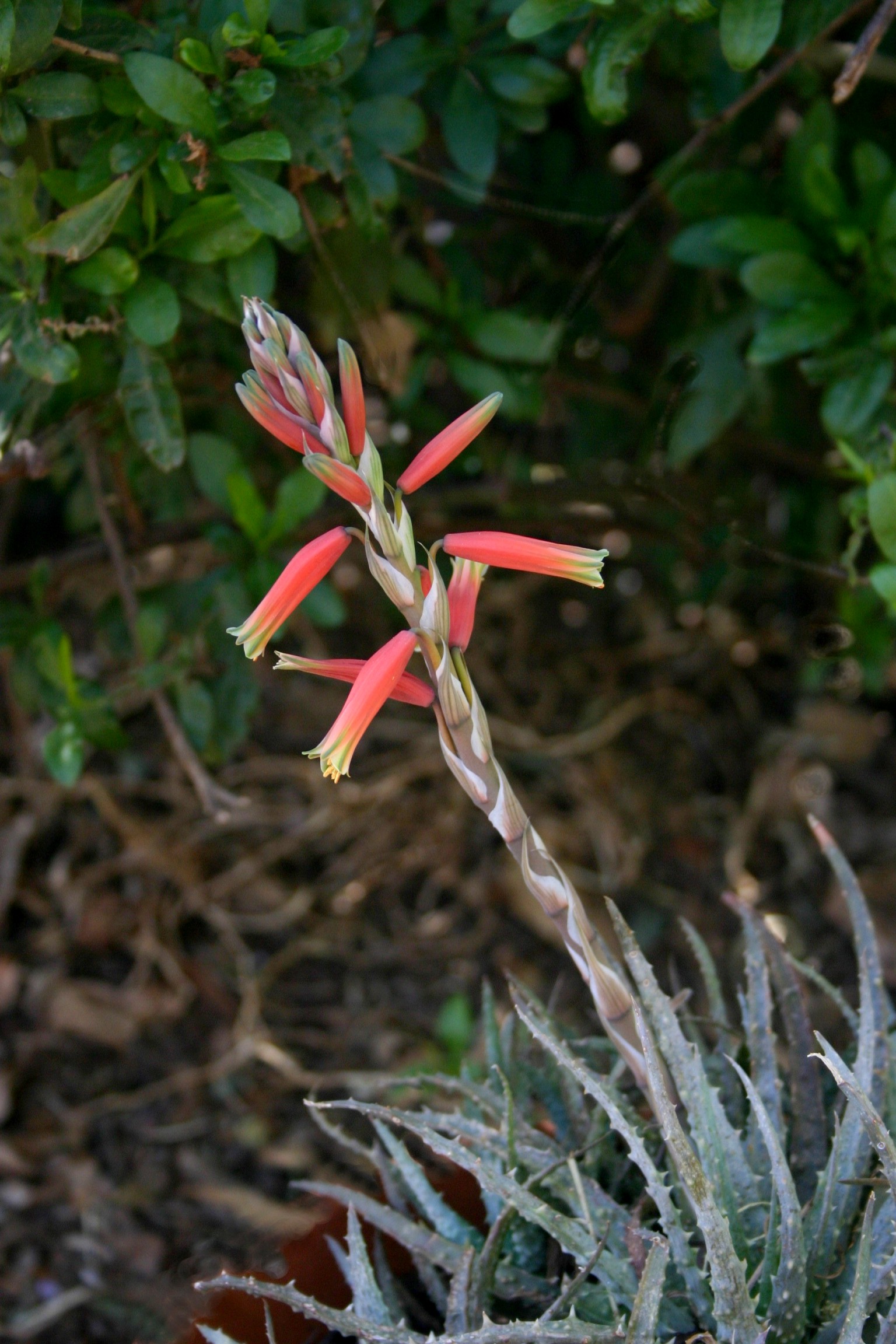
Aloe humilis, known as spider aloe for the dense arrangement of its spiny leaves, is one of the most popular aloe species in succulent collections due to its compact size and striking orange-red flowers. Native to the Eastern and Western Cape of South Africa, it forms clusters of small rosettes of blue-green leaves covered with white marginal teeth and spiny tubercles on both surfaces. It is highly drought-tolerant and withstands sporadic sub-zero temperatures.
chevron_right edit_note Proposed edits auto-approved at +3 net votes
No pending proposals for this section.
Overview
| Category | Classification |
|---|---|
| Family | Asphodelaceae |
| Genus | Aloe |
| Growth Habit | Acaulescent rosette, forming dense colonies |
| Conservation Status | Least Concern (IUCN) |
| pH Target | 6.0–7.5 |
| Type | Cactus substrate with 30–40% perlite or coarse sand |
Origin & Habitat
Morphology
Lance-shaped and erect, blue-green to grey-green, 8–15 cm long. Margins with prominent white teeth; both surfaces with white spiny tubercles that give the characteristic "spider" texture.
ecoVery short stem, practically acaulescent. The plant produces numerous basal offsets forming dense cushions or colonies.
ecoTubular, 2.5–3 cm, orange to scarlet red with exserted stamens. Arranged in simple or forked cylindrical racemes on 25–40 cm peduncles. Blooms in spring (August–October in the southern hemisphere).
ecoFibrous, dense and shallow roots that spread horizontally to maximise rainfall capture in stony substrates.
ecochevron_right edit_note Proposed edits auto-approved at +3 net votes
No pending proposals for this section.
Requirements
Soil & Substrate
Type
Cactus substrate with 30–40% perlite or coarse sand
groups Beneficial Associations
chevron_right edit_note Proposed edits auto-approved at +3 net votes
No pending proposals for this section.
Propagation Strategy
- 1 Extract the offset with roots using a spatula or clean knife, ensuring it has at least 3–4 developed leaves.
- 2 Allow the wound to dry for 24–48 hours in a shaded, ventilated spot.
- 3 Transplant to a very well-draining substrate and water lightly after 5–7 days.
- 1 Sow fresh seeds in moist sandy substrate at 22–25 °C.
- 2 Cover with clear plastic to retain moisture until germination.
- 3 Transplant seedlings when they reach 3–4 cm in height.
This species is ideal for small pots on sunny windowsills.
Overwatering causing stem base rot and wilting.
Every 2–3 years when the colony fills the container
Once in spring with diluted cactus fertilizer
Uses & Applications
Precautions / Toxicity
Mildly toxic to cats and dogs if leaves are ingested
chevron_right edit_note Proposed edits auto-approved at +3 net votes
No pending proposals for this section.
"Aloe humilis shows notable morphological variability in the density of leaf tubercles, which has generated numerous synonyms. Cultivated plants frequently differ from wild ones due to ornamental selection."
chevron_right edit_note Proposed edits auto-approved at +3 net votes
No pending proposals for this section.
Scientific Integrity
🟢 HighVote to help validate this record
Sources
Loading…
Discussion
Disclaimer
This species record is provided for educational and informational purposes only. Jardín Roca Negra does not guarantee the accuracy or completeness of the data. Content is community-curated and may be subject to revision; it should not replace advice from a qualified botanist. This species may be toxic, invasive, or subject to legal restrictions — verify before handling or cultivating. Jardín Roca Negra accepts no liability for any harm arising from reliance on this information. Images are reproduced under Creative Commons or equivalent free licenses; credits are noted below each image.