
Aloe buettneri A.Berger
Buettner's aloe
Aloe buettneri is a small rosette aloe characteristic of the laterite outcrops of West African savannas. Its bright green leaves with whitish spots and tiny marginal teeth form compact rosettes on the iron crusts of laterite. It is a species resistant to the seasonal savanna fires and prolonged drought.
chevron_right edit_note Proposed edits auto-approved at +3 net votes
No pending proposals for this section.
Overview
| Category | Classification |
|---|---|
| Family | Asphodelaceae |
| Genus | Aloe |
| Growth Habit | Small rosette, occasionally cespitose |
| Conservation Status | Least Concern |
| pH Target | 5.0–6.0 |
| Type | Nutrient-poor lateritic soil with high iron content |
Origin & Habitat
Morphology
Lanceolate leaves 20–30 cm long, bright green with whitish spots, tiny marginal teeth 1–2 mm.
ecoPractically absent; rosette emerging directly from laterite rock.
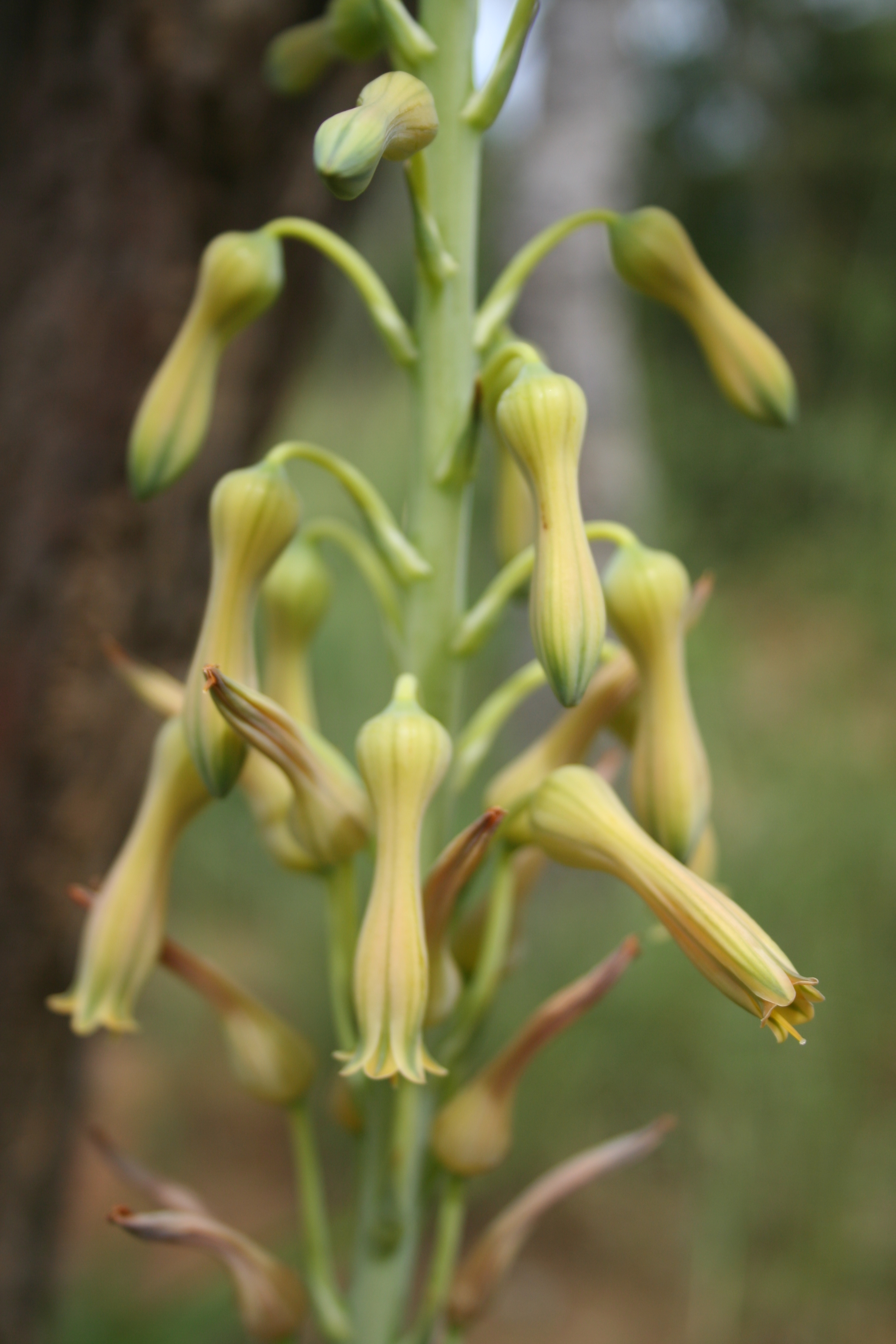
ecoOrange-red tubular flowers 3 cm long in simple racemes on 35–50 cm peduncles. Flowering in the dry season.
ecoRobust roots that penetrate laterite cracks with high desiccation resistance.
ecochevron_right edit_note Proposed edits auto-approved at +3 net votes
No pending proposals for this section.
Requirements
Soil & Substrate
Type
Nutrient-poor lateritic soil with high iron content
groups Beneficial Associations
chevron_right edit_note Proposed edits auto-approved at +3 net votes
No pending proposals for this section.
Propagation Strategy
- 1 Sow in sand and crushed laterite mix at 26–30 °C.
- 2 Keep moist until germination (3–5 weeks).
- 3 Drastically reduce watering after germination.
- 4 Transplant at 4–5 cm into a small pot.
- 1 Separate cespitose rosettes at the start of the rainy season.
- 2 Dry for 2 days and plant in crushed laterite with minimal sand.
- 3 Water after 10 days.
- 4 They root in 6–8 weeks.
Use crushed laterite mixed with coarse sand to replicate the habitat.
Using rich organic substrate that does not simulate lateritic conditions.
Every 3–4 years when roots outgrow the container
No regular fertilisation; optionally one minimal dose at the start of the growing season
Uses & Applications
Precautions / Toxicity
Toxic if ingested.
chevron_right edit_note Proposed edits auto-approved at +3 net votes
No pending proposals for this section.
"This species survives annual savanna fires thanks to its rosette sunk into laterite crevices that protect the apical meristem; researchers use it as a biological indicator of inselberg health in Ghana."
chevron_right edit_note Proposed edits auto-approved at +3 net votes
No pending proposals for this section.
Scientific Integrity
🟡 MediumVote to help validate this record
Sources
Loading…
Discussion
Disclaimer
This species record is provided for educational and informational purposes only. Jardín Roca Negra does not guarantee the accuracy or completeness of the data. Content is community-curated and may be subject to revision; it should not replace advice from a qualified botanist. This species may be toxic, invasive, or subject to legal restrictions — verify before handling or cultivating. Jardín Roca Negra accepts no liability for any harm arising from reliance on this information. Images are reproduced under Creative Commons or equivalent free licenses; credits are noted below each image.