
Agave sonorae (Torr.) Mearns
Sonoran Agave
Agave sonorae is a species originally described by John Torrey and transferred to Agave by Edgar Alexander Mearns. It is native to the Sonoran Desert, spanning the Mexican state of Sonora and southern Arizona (USA), where it grows in canyon bottoms, rocky hillsides, and arid grasslands between 300 and 1,500 m elevation. It forms medium-sized rosettes with green to greyish-green, relatively narrow leaves bearing robust marginal teeth. Its trans-border range makes it a representative floristic element of the Sonoran Desert, one of the world's hottest deserts, and it plays an important ecological role as shelter and food source for bats, birds, and reptiles.
chevron_right edit_note Proposed edits auto-approved at +3 net votes
No pending proposals for this section.
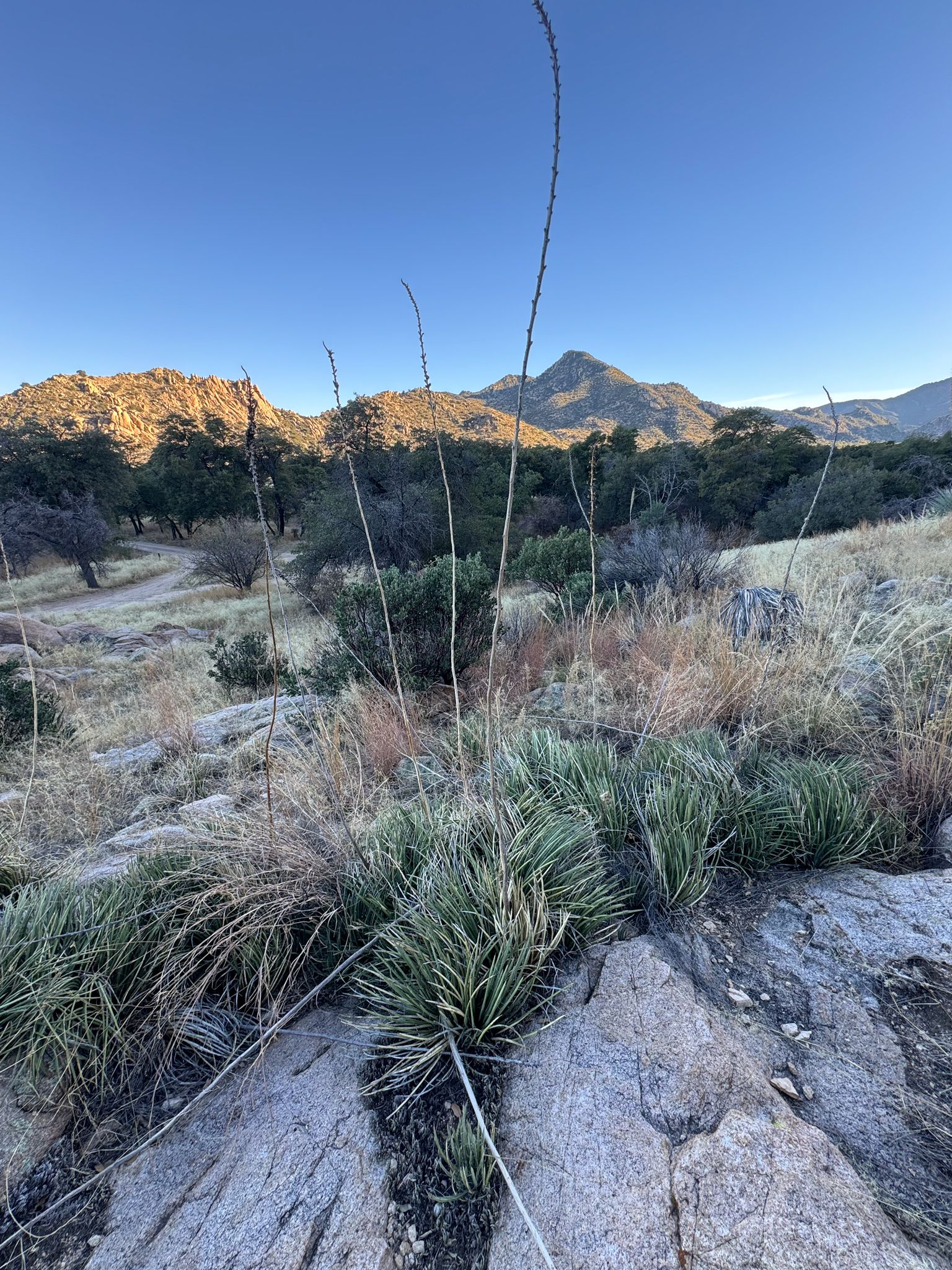
Overview
| Category | Classification |
|---|---|
| Family | Asparagaceae |
| Genus | Agave |
| Growth Habit | Acaulescent to subcaulescent medium-sized rosette (40–80 cm tall, 60–100 cm diameter), monocarpic. Life cycle 10–25 years. Produces some basal offsets; also propagates effectively by seed. |
| Conservation Status | Not independently assessed by the IUCN for this species/variety. Arizona populations are protected under the Endangered Species Act for certain subpopulations on the US side. In Sonora, livestock pressure and agricultural expansion are the main threats. |
| pH Target | 7.0–8.2 |
| Type | Stony to sandy, poor soil with excellent drainage; of granitic, basaltic, or calcareous origin; neutral to alkaline pH. |
Origin & Habitat
Morphology
Lanceolate to narrowly linear, rigid leaves 40–80 cm long and 3–7 cm wide, medium green to greyish-green. Margins bearing corneous teeth 3–6 mm long, dark brown, regularly spaced. Subulate apical spine 2–4 cm, brown to grey, very pungent. Surface with slight waxy sheen.
ecoPanicle 4–7 m tall, open with well-developed lateral branches. Tubular pale yellow to yellowish-green flowers 5–8 cm long. Exserted yellow anthers. Spring to summer flowering (April–August). Pollinated by bats of genus Leptonycteris and moths of genus Manduca.
ecoShort to moderate stem, usually buried or at soil level. In mature plants may reach 20–40 cm. Rich in fructan reserves that fund terminal flowering. Stem damage by agave snout weevil can cause premature rosette death.
ecoShallow and extensive root system adapted to rapid uptake of sporadic monsoon rains. Short-lived fleshy roots absorb water quickly during summer monsoon rains. Tolerant of stony and shallow soils.
ecochevron_right edit_note Proposed edits auto-approved at +3 net votes
No pending proposals for this section.
Requirements
Soil & Substrate
Type
Stony to sandy, poor soil with excellent drainage; of granitic, basaltic, or calcareous origin; neutral to alkaline pH.
groups Beneficial Associations
chevron_right edit_note Proposed edits auto-approved at +3 net votes
No pending proposals for this section.
Propagation Strategy
G
O
Every 4–7 years or when roots emerge from drainage holes.
Optional annual fertilisation in spring or early summer with a low-concentration granular fertiliser. In desert ground gardens it is not necessary.
Uses & Applications
Precautions / Toxicity
No documented toxicity to humans. Sap may cause mild contact dermatitis. Spines are the main physical hazard. No reports of toxicity to domestic animals under normal conditions.
chevron_right edit_note Proposed edits auto-approved at +3 net votes
No pending proposals for this section.
Plant Health
Root and crown rot (Phytophthora/Fusarium)
Mealybug (Pseudococcus spp.)
Agave snout weevil (Scyphophorus acupunctatus)
chevron_right edit_note Proposed edits auto-approved at +3 net votes
No pending proposals for this section.
"The taxonomic identity of Agave sonorae has historically been debated in relation to Agave schottii and Agave multilineata. Mearns formally transferred it to Agave in 1896, delimiting it by its robust rosettes and binational distribution in the Sonoran Desert. iNaturalist observations in Arizona show specimens in scattered populations in Oak Creek Canyon and the Rincon Mountains. The summer monsoon rain pattern strongly conditions its phenology of growth and flowering."
chevron_right edit_note Proposed edits auto-approved at +3 net votes
No pending proposals for this section.
Scientific Integrity
🟡 MediumVote to help validate this record
Sources
Loading…
Discussion
Disclaimer
This species record is provided for educational and informational purposes only. Jardín Roca Negra does not guarantee the accuracy or completeness of the data. Content is community-curated and may be subject to revision; it should not replace advice from a qualified botanist. This species may be toxic, invasive, or subject to legal restrictions — verify before handling or cultivating. Jardín Roca Negra accepts no liability for any harm arising from reliance on this information. Images are reproduced under Creative Commons or equivalent free licenses; credits are noted below each image.