
Agave rzedowskiana P.Carrillo, Vega & R.Delgad.
Rzedowski's Agave
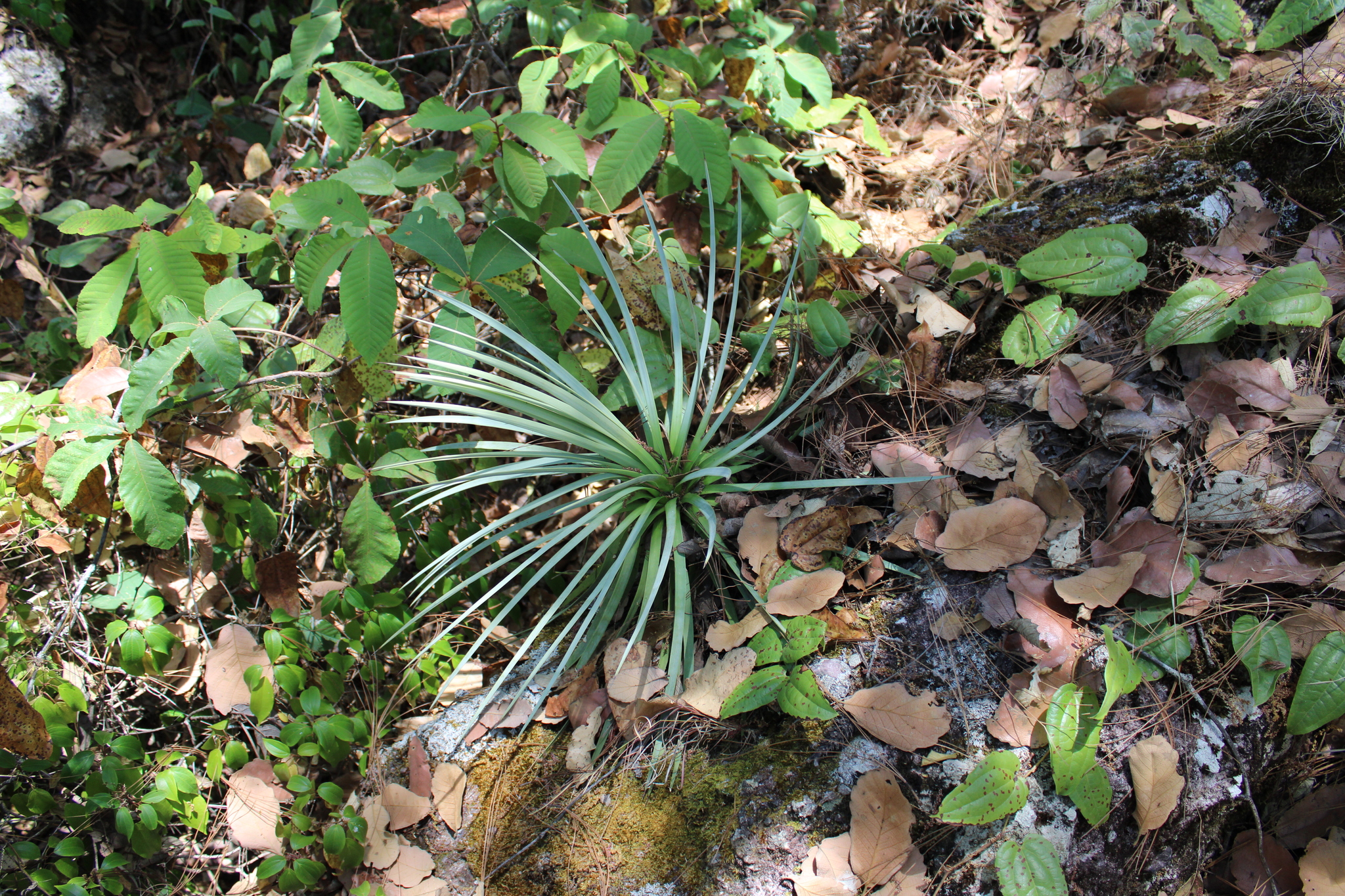
Agave rzedowskiana is an agave species described by P. Carrillo, Vega and R. Delgado, endemic to the state of Sinaloa, Mexico, in the municipality of Concordia and adjacent areas. It belongs to subgenus Littaea and forms medium-sized rosettes with grayish-green leaves. It was named in honour of the renowned botanist Jerzy Rzedowski, who devoted his life to the study of Mexican flora. It grows on rocky hillsides of tropical deciduous forest and xerophytic scrubland between 400 and 1,200 m elevation. Its very restricted geographical range makes it particularly vulnerable to anthropogenic disturbance and climate change.
chevron_right edit_note Proposed edits auto-approved at +3 net votes
No pending proposals for this section.
Overview
| Category | Classification |
|---|---|
| Family | Asparagaceae |
| Genus | Agave |
| Growth Habit | Medium-sized acaulescent rosette, monocarpic. Produces a single flower scape at the end of its life cycle, which may last 8–20 years depending on habitat conditions. Generates rhizomatous offsets allowing vegetative propagation. |
| Conservation Status | Not formally assessed by the IUCN. Species with very restricted range (endemic to Sinaloa), potentially vulnerable given the small size of known populations and anthropogenic pressure on the tropical deciduous forests of the region. |
| pH Target | 6.5–7.5 |
| Type | Rocky-stony, well-drained soil of igneous or metamorphic origin; low in organic matter and nutrients, slightly acid to neutral. |
Origin & Habitat
Morphology
Lanceolate to linear, rigid and canaliculate leaves 40–70 cm long and 4–7 cm wide at base, grayish-green to blue-green in colour. Margins with corneous teeth 3–6 mm long, dark brown, irregularly spaced. Apical spine 2–4 cm, subulate, pungent, dark brown at tip. Leaf surface is smooth with a slight waxy pruina.
ecoInflorescence a narrow spike 3–5 m tall. Tubular greenish-yellow flowers 5–7 cm long, arranged in whorls along the scape. Inner tepals longer than outer. Exserted stamens with yellow anthers. Summer flowering, pollinated by bats and nocturnal moths.
ecoStem very short, practically subterranean during the vegetative phase, becoming visible only at scape emergence. Internal spongy tissue with reserves of carbohydrates and water. Frequent production of basal or rhizomatous offsets.
ecoShallow, fibrous, extensively branched root system to maximise water capture in shallow rocky soils. Fleshy storage roots present in the stem-root transition zone. Frequent mycorrhizal association with soil fungi.
ecochevron_right edit_note Proposed edits auto-approved at +3 net votes
No pending proposals for this section.
Requirements
Soil & Substrate
Type
Rocky-stony, well-drained soil of igneous or metamorphic origin; low in organic matter and nutrients, slightly acid to neutral.
groups Beneficial Associations
chevron_right edit_note Proposed edits auto-approved at +3 net votes
No pending proposals for this section.
Propagation Strategy
G
O
Every 3–5 years or when roots have fully filled the container.
Optional single spring application of dilute low-nitrogen fertiliser (NPK 5-10-10). Avoid over-fertilising, which promotes soft growth susceptible to pests.
Uses & Applications
Precautions / Toxicity
No documented toxicity to humans under normal handling conditions. Sap may cause skin irritation in sensitive individuals with prolonged contact. The apical spine and marginal teeth represent the main physical hazard.
chevron_right edit_note Proposed edits auto-approved at +3 net votes
No pending proposals for this section.
Plant Health
Root rot (Phytophthora/Fusarium)
Mealybug (Pseudococcus spp.)
Agave snout weevil (Scyphophorus acupunctatus)
chevron_right edit_note Proposed edits auto-approved at +3 net votes
No pending proposals for this section.
"Recently described species still poorly represented in herbaria and living collections. iNaturalist observations from Concordia, Sinaloa, currently constitute the most complete photographic record. Verification against the original Carrillo et al. description is recommended before trading vegetative material. Taxonomy within subgenus Littaea remains subject to ongoing molecular revision."
chevron_right edit_note Proposed edits auto-approved at +3 net votes
No pending proposals for this section.
Scientific Integrity
🟡 MediumVote to help validate this record
Sources
Loading…
Discussion
Disclaimer
This species record is provided for educational and informational purposes only. Jardín Roca Negra does not guarantee the accuracy or completeness of the data. Content is community-curated and may be subject to revision; it should not replace advice from a qualified botanist. This species may be toxic, invasive, or subject to legal restrictions — verify before handling or cultivating. Jardín Roca Negra accepts no liability for any harm arising from reliance on this information. Images are reproduced under Creative Commons or equivalent free licenses; credits are noted below each image.