
Agave nizandensis Cutak
Nizanda Agave
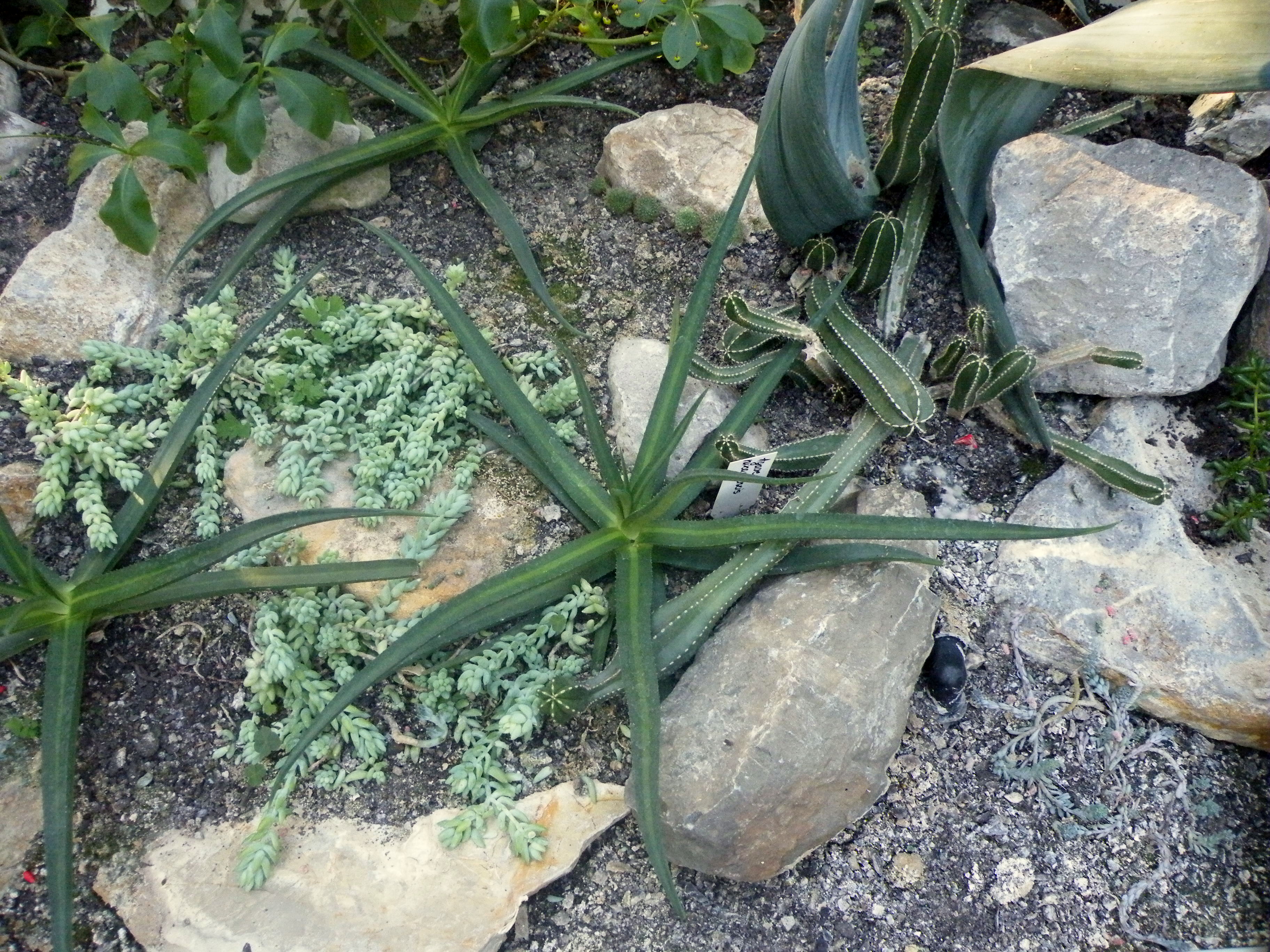
Agave nizandensis is a rare and threatened species endemic to the municipality of Nizanda in the Isthmus of Tehuantepec, Oaxaca, Mexico. It forms compact, dense rosettes with rigid grayish-green leaves that are notably smaller than most agaves. Described by Lyman Benson David Cutak in 1948, it is considered one of Mexico's most threatened agave species, with wild populations greatly reduced by habitat destruction. It grows in dry scrublands and low deciduous forests on rocky calcareous soils.
chevron_right edit_note Proposed edits auto-approved at +3 net votes
No pending proposals for this section.
Overview
| Category | Classification |
|---|---|
| Family | Asparagaceae |
| Genus | Agave |
| Growth Habit | Compact acaulescent rosette, monocarpic; dies after a single flowering event that occurs after several years of vegetative growth. Produces basal offsets that perpetuate the colony. |
| Conservation Status | Endangered (EN) per IUCN. Endemic species with very restricted range and continuously declining populations due to habitat loss and degradation. Listed under Mexico's NOM-059-SEMARNAT. |
| pH Target | 7.0–8.0 |
| Type | Calcareous-rocky soil, highly porous, with low organic matter content |
Origin & Habitat
Morphology
Lanceolate, rigid leaves 20–35 cm long and 3–5 cm wide, grayish green, with toothed margins bearing corneous gray-to-brown teeth and a terminal spine 1.5–2.5 cm long, pungent. The thick cuticle reduces water loss in xeric environments.
ecoInflorescence a spike or narrow panicle 3–5 m tall. Tubular greenish-yellow flowers 5–7 cm long, arranged in clusters along the scape. Pollination is carried out mainly by bats and nocturnal moths.
ecoStem very short or absent (acaulescent), with the rosette body practically at ground level. The central tissue is fibrous and accumulates water and reserve carbohydrates during the extended vegetative phase.
ecoShallow and extensive root system adapted for rapid uptake of scarce seasonal rain. Fleshy storage roots are present near the stem zone. No prominent taproot.
ecochevron_right edit_note Proposed edits auto-approved at +3 net votes
No pending proposals for this section.
Requirements
Soil & Substrate
Type
Calcareous-rocky soil, highly porous, with low organic matter content
groups Beneficial Associations
chevron_right edit_note Proposed edits auto-approved at +3 net votes
No pending proposals for this section.
Propagation Strategy
S
O
Every 3–5 years or when roots have completely filled the pot
Minimal fertilization: one application of balanced fertilizer at half strength in spring. Excess nitrogen produces soft growth and greater pest susceptibility.
Uses & Applications
Precautions / Toxicity
Leaves have very pungent apical spines that can cause puncture wounds. The sap may cause contact dermatitis in sensitive individuals. No significant systemic toxicity reported.
chevron_right edit_note Proposed edits auto-approved at +3 net votes
No pending proposals for this section.
Plant Health
Root rot caused by Phytophthora or Fusarium in waterlogged substrates
Mealybugs (Pseudococcus spp.) in leaf axils and roots
Agave snout weevil (Scyphophorus acupunctatus): boring into the central stem, lethal if not detected early
chevron_right edit_note Proposed edits auto-approved at +3 net votes
No pending proposals for this section.
"Species of very high conservation value: its distribution area is estimated at less than 10 km². Botanical gardens maintaining ex-situ collections directly contribute to its preservation. Do not collect wild material."
chevron_right edit_note Proposed edits auto-approved at +3 net votes
No pending proposals for this section.
Scientific Integrity
🟡 MediumVote to help validate this record
Sources
Loading…
Discussion
Disclaimer
This species record is provided for educational and informational purposes only. Jardín Roca Negra does not guarantee the accuracy or completeness of the data. Content is community-curated and may be subject to revision; it should not replace advice from a qualified botanist. This species may be toxic, invasive, or subject to legal restrictions — verify before handling or cultivating. Jardín Roca Negra accepts no liability for any harm arising from reliance on this information. Images are reproduced under Creative Commons or equivalent free licenses; credits are noted below each image.