
Agave funkiana K.Koch & C.D.Bouché
Funk's Agave
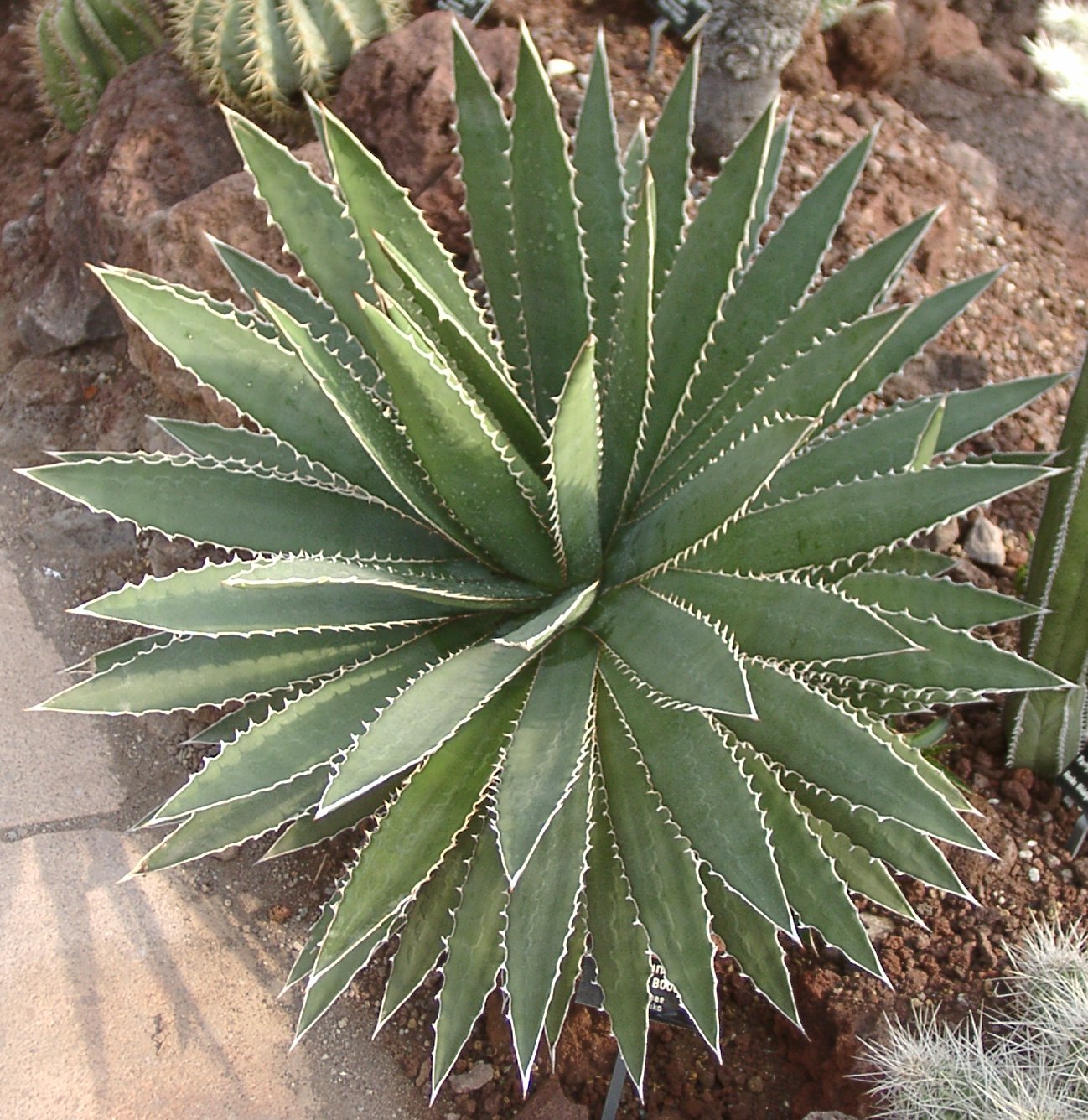
Agave funkiana, locally known as maguey henequén del norte or northern lecheguilla, is a medium-sized species native to the states of Tamaulipas and San Luis Potosí in northeastern Mexico. It is characterised by its long, narrow, intense green leaves with fine but sharp marginal teeth and a terminal spine that can exceed 5 cm. It has historically been exploited for coarse fibre extraction, similar to henequén (Agave fourcroydes), from which ropes, sacks, and crafts were made in rural communities of northeastern Mexico. It is a species adapted to the Tamaulipan thornscrub, one of the most arid and biodiverse ecosystems in northeastern Mexico.
chevron_right edit_note Proposed edits auto-approved at +3 net votes
No pending proposals for this section.
Overview
| Category | Classification |
|---|---|
| Family | Asparagaceae |
| Genus | Agave |
| Growth Habit | Medium rosette, acaulescent or short-stemmed, monocarpic. Diameter 60–100 cm. Numerous narrow leaves giving it a dense appearance. Produces offsets with moderate frequency. |
| Conservation Status | Least Concern (LC) – IUCN. Common in Tamaulipan thornscrub although its habitat faces agricultural and livestock pressure. |
| pH Target | 7.0–8.5 |
| Type | Sandy, stony or calcareous caliche, highly draining |
Origin & Habitat
Morphology
Linear-lanceolate, rigid, 50–90 cm long and 3–6 cm wide, intense to dark green. Margin with small reddish-brown corneous teeth, spaced 1–3 cm apart, and a prominent terminal spine 4–6 cm long, dark brown to black.
ecoYellow to reddish, 5–8 cm, arranged in panicles on a scape 4–6 m tall. Flowering occurs only once, typically at 10–20 years. Flowers are visited mainly by bats and nocturnal moths.
ecoAcaulescent or with a very short, compact stem. The numerous narrow leaves produce good-strength fibre, though of lower quality than true henequén (A. fourcroydes). The plant accumulates sugars in the piña at a moderate rate.
ecoShallow and well-distributed root system, adapted to the sandy-stony substrate of Tamaulipan thornscrub. Fine, branched roots penetrate cracks in calcareous caliche to anchor the plant.
ecochevron_right edit_note Proposed edits auto-approved at +3 net votes
No pending proposals for this section.
Requirements
Soil & Substrate
Type
Sandy, stony or calcareous caliche, highly draining
groups Beneficial Associations
chevron_right edit_note Proposed edits auto-approved at +3 net votes
No pending proposals for this section.
Propagation Strategy
P
P
Every 3–4 years; prefers in-ground planting for best development.
Annual spring fertilization with slow-release mineral fertilizer, low in nitrogen (5-10-10). No fertilization in autumn or winter.
Uses & Applications
Precautions / Toxicity
Low to moderate. The terminal spine is very hazardous and can cause deep wounds. Avoid placing in high-traffic gardens or areas accessible to children.
chevron_right edit_note Proposed edits auto-approved at +3 net votes
No pending proposals for this section.
Plant Health
Root rot (Phytophthora spp., excess moisture)
Mealybugs (Pseudococcus spp.)
Agave snout weevil (Scyphophorus acupunctatus)
chevron_right edit_note Proposed edits auto-approved at +3 net votes
No pending proposals for this section.
"Species rarely cultivated outside its native range despite its good adaptability and ornamental appeal. Its name honours the German botanist Nicolas Funck (1816–1896). Taxonomically close to Agave lophanta and frequently confused with it; distinguished by its narrower leaves and more northerly distribution."
chevron_right edit_note Proposed edits auto-approved at +3 net votes
No pending proposals for this section.
Scientific Integrity
🟡 MediumVote to help validate this record
Sources
Loading…
Discussion
Disclaimer
This species record is provided for educational and informational purposes only. Jardín Roca Negra does not guarantee the accuracy or completeness of the data. Content is community-curated and may be subject to revision; it should not replace advice from a qualified botanist. This species may be toxic, invasive, or subject to legal restrictions — verify before handling or cultivating. Jardín Roca Negra accepts no liability for any harm arising from reliance on this information. Images are reproduced under Creative Commons or equivalent free licenses; credits are noted below each image.