
Agave cubensis Jacq.
Cuban Agave
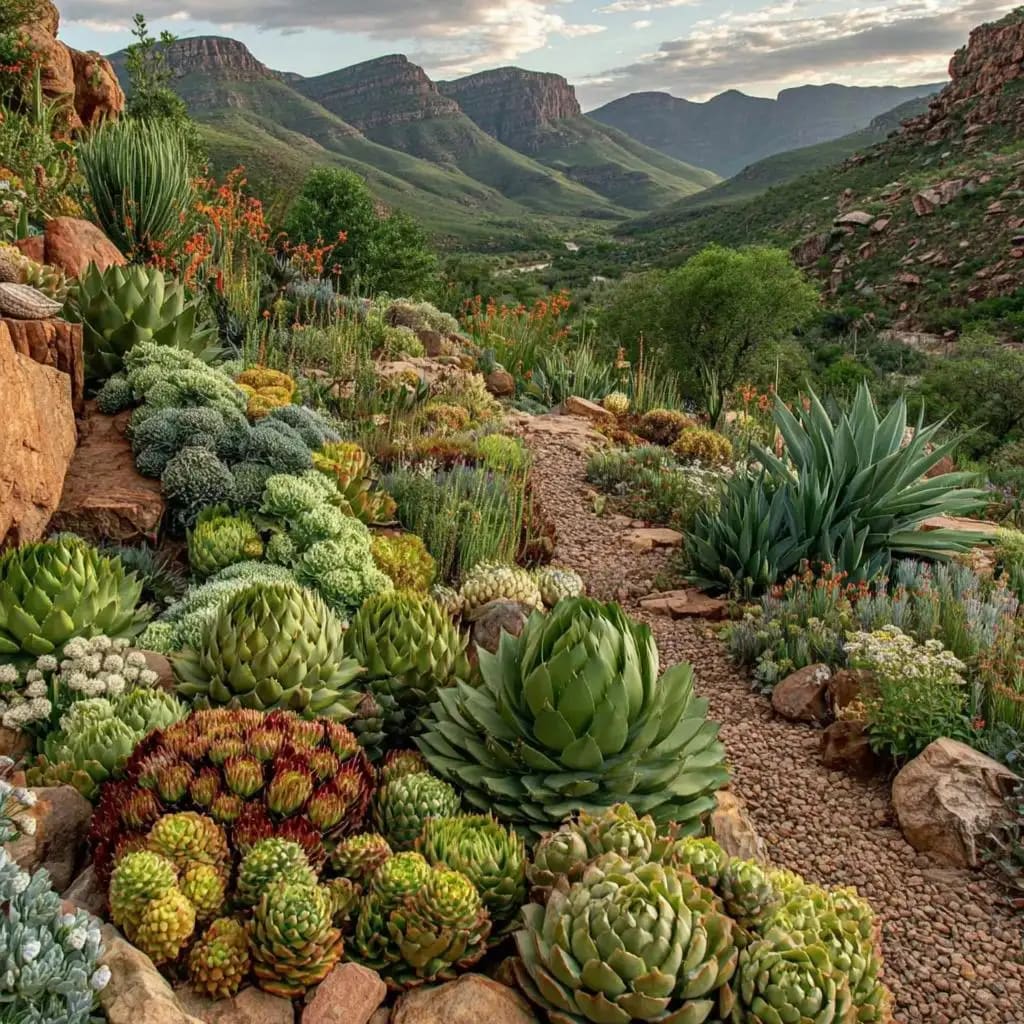
Agave cubensis is a species endemic to Cuba, described by botanist Nikolaus Joseph von Jacquin in the 18th century. It forms compact rosettes of rigid blue-green leaves with pronounced terminal spines and toothed margins. Like all agaves, it is monocarpic: it flowers only once in its lifetime, produces an impressive inflorescence, and then dies, leaving offsets that perpetuate the colony. It adapts perfectly to poor soils and arid conditions, making it a botanical relic of Caribbean xerophytic ecosystems.
chevron_right edit_note Proposed edits auto-approved at +3 net votes
No pending proposals for this section.
Overview
| Category | Classification |
|---|---|
| Family | Asparagaceae |
| Genus | Agave |
| Growth Habit | Solitary rosette or in small clusters via basal offsets. Grows slowly, reaching flowering maturity after several decades. |
| Conservation Status | Data Deficient (DD) — Cuban endemic species whose wild populations have not been recently assessed by the IUCN. |
| pH Target | 6.0–7.5 |
| Type | Sandy, sandy loam, rocky |
Origin & Habitat
Morphology
Lanceolate, rigid, blue-green to grey-green in color, with margins armed with curved corneous teeth and a pungent apical spine up to 4 cm. They measure 50–90 cm in length and 6–10 cm in width at the base.
ecoTubular, yellow-green in color, clustered in a terminal panicle that can exceed 4 m in height. Single flowering at the end of the plant's life cycle, generally after 15–30 years.
ecoShort and robust stem, nearly acaulescent in young specimens, with leaf bases leaving evident scars. At maturity it may elongate slightly before flowering.
ecoFibrous root system extending horizontally to maximize water uptake during scarce rainfall periods. Produces fleshy storage roots.
ecochevron_right edit_note Proposed edits auto-approved at +3 net votes
No pending proposals for this section.
Requirements
Soil & Substrate
Type
Sandy, sandy loam, rocky
groups Beneficial Associations
chevron_right edit_note Proposed edits auto-approved at +3 net votes
No pending proposals for this section.
Propagation Strategy
S
O
Every 3–4 years or when roots outgrow the container.
Minimal fertilization: one low-nitrogen application at the start of spring.
Uses & Applications
Precautions / Toxicity
Leaf spines and teeth can cause mechanical injuries. Sap may cause contact dermatitis in sensitive skin.
chevron_right edit_note Proposed edits auto-approved at +3 net votes
No pending proposals for this section.
Plant Health
Root rot (Phytophthora spp.) from excess moisture
Mealybug (Dysmicoccus spp.) on leaves and crown
Agave snout weevil (Scyphophorus acupunctatus) — boring into central stem
chevron_right edit_note Proposed edits auto-approved at +3 net votes
No pending proposals for this section.
"Species of biogeographic interest due to its Cuban endemism. Its conservation status in natural habitats deserves monitoring given the fragmentation of xerophytic ecosystems in Cuba."
chevron_right edit_note Proposed edits auto-approved at +3 net votes
No pending proposals for this section.
Scientific Integrity
🟡 MediumVote to help validate this record
Sources
Loading…
Discussion
Disclaimer
This species record is provided for educational and informational purposes only. Jardín Roca Negra does not guarantee the accuracy or completeness of the data. Content is community-curated and may be subject to revision; it should not replace advice from a qualified botanist. This species may be toxic, invasive, or subject to legal restrictions — verify before handling or cultivating. Jardín Roca Negra accepts no liability for any harm arising from reliance on this information. Images are reproduced under Creative Commons or equivalent free licenses; credits are noted below each image.