
Agave congesta Gentry
Congested Agave
Agave congesta is a compact, small to medium-sized species endemic to the rocky slopes and ravines of the Sierra Madre del Sur in Guerrero and Oaxaca, Mexico. Its name alludes to the densely packed leaves of its rosette. It grows in mid-elevation xerophytic scrublands (700–1800 m) on shallow, stony soils. It is little known outside its native range and is rare in international botanical collections.
chevron_right edit_note Proposed edits auto-approved at +3 net votes
No pending proposals for this section.
Overview
| Category | Classification |
|---|---|
| Family | Asparagaceae |
| Genus | Agave |
| Growth Habit | Compact acaulescent to subcaulescent rosette; very slow-growing, monocarpic |
| Conservation Status | Not Evaluated (NE) – IUCN; endemic to Sierra Madre del Sur |
| pH Target | 6.5–8.0 |
| Type | Shallow stony, skeletal, well-drained soil over calcareous or igneous substrate |
Origin & Habitat
Morphology
Rigid, lanceolate to ovate-lanceolate leaves 30–55 cm long, dark green to grey-green, very densely arranged. Small, regular marginal teeth; dark brown terminal spine 2–4 cm long.
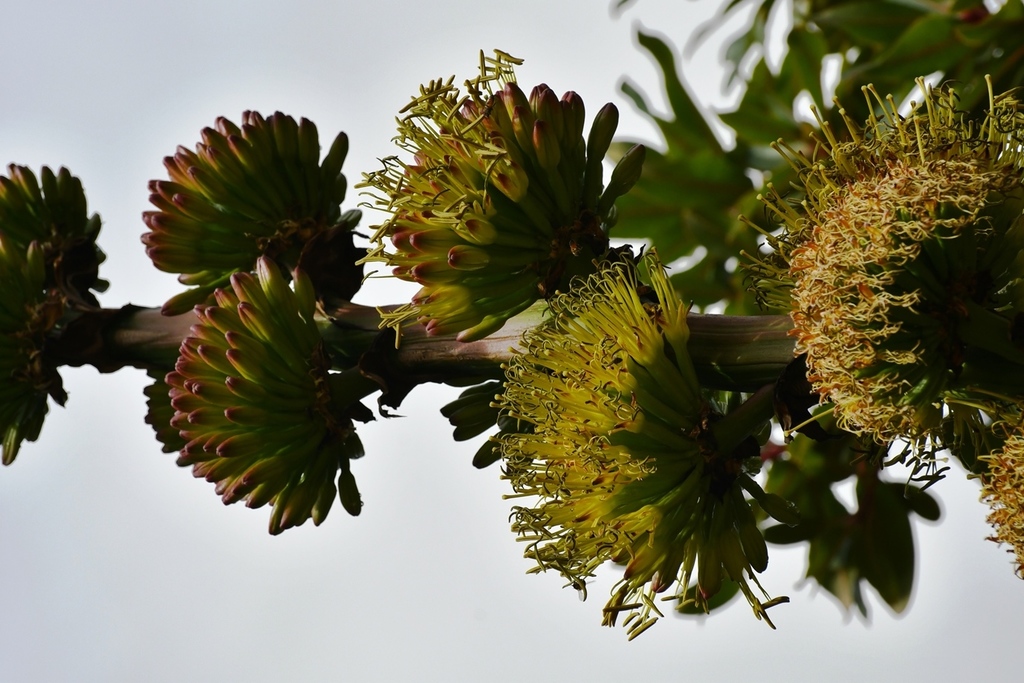
ecoYellow to yellow-green flowers in narrow spikes or panicles atop a 3–5 m stalk. A single bloom at the end of the life cycle.
ecoAcaulescent or very short, robust stem with visible leaf scars at maturity.
ecoShallow, spreading root system adapted to thin soils over rock. Roots with fleshy storage thickenings.
ecochevron_right edit_note Proposed edits auto-approved at +3 net votes
No pending proposals for this section.
Requirements
Soil & Substrate
Type
Shallow stony, skeletal, well-drained soil over calcareous or igneous substrate
groups Beneficial Associations
chevron_right edit_note Proposed edits auto-approved at +3 net votes
No pending proposals for this section.
Propagation Strategy
R
E
Every 4–5 years, only when strictly necessary.
Minimal fertilization: very dilute mineral fertilizer (5-10-10) solution once a year in spring.
Uses & Applications
Precautions / Toxicity
Moderate saponins in sap; terminal spine is sharp but not especially long.
chevron_right edit_note Proposed edits auto-approved at +3 net votes
No pending proposals for this section.
Plant Health
Root rot (Fusarium spp.) from overwatering
Mealybugs (Dysmicoccus spp.) at leaf bases
Agave snout weevil (Scyphophorus acupunctatus) – larvae in the heart
chevron_right edit_note Proposed edits auto-approved at +3 net votes
No pending proposals for this section.
"Poorly represented in herbaria and virtually absent from the succulent plant trade. Most documented observations come from the same type locality in Guerrero. Its taxonomy has been little revised since Gentry's original description."
chevron_right edit_note Proposed edits auto-approved at +3 net votes
No pending proposals for this section.
Scientific Integrity
🟡 MediumVote to help validate this record
Sources
Loading…
Discussion
Disclaimer
This species record is provided for educational and informational purposes only. Jardín Roca Negra does not guarantee the accuracy or completeness of the data. Content is community-curated and may be subject to revision; it should not replace advice from a qualified botanist. This species may be toxic, invasive, or subject to legal restrictions — verify before handling or cultivating. Jardín Roca Negra accepts no liability for any harm arising from reliance on this information. Images are reproduced under Creative Commons or equivalent free licenses; credits are noted below each image.