
Aloe aristata Haw.
Lace Aloe
Aloe aristata, known as 'Lace Aloe' or 'Guinea Fowl Aloe', is a compact South African succulent notably different from other aloes with its dense, perfect dark green rosette of leaves covered in fine white warts and a whitish terminal spine. Its 15–20 cm diameter and remarkable shade tolerance make it one of the few aloes truly suited for indoor culture. Botanists have recently reclassified it to the genus Aristaloe, though the name Aloe aristata still prevails in horticulture.
chevron_right edit_note Proposed edits auto-approved at +3 net votes
No pending proposals for this section.
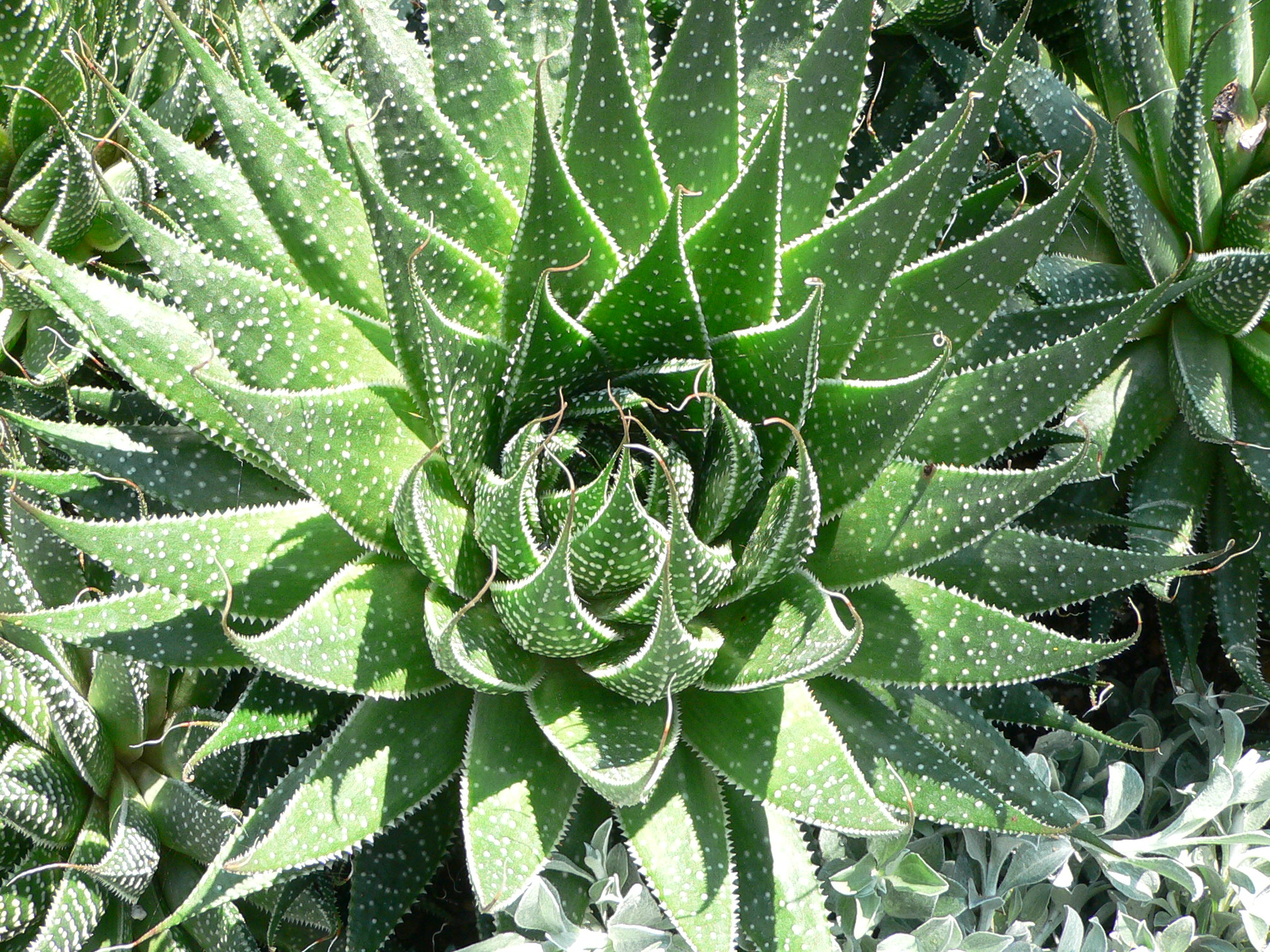
© John Rusk
CC BY 2.0
Overview
| Category | Classification |
|---|---|
| Family | Asphodelaceae |
| Genus | Aloe |
| Growth Habit | Compact spiral rosette 15–20 cm in diameter, without an appreciable stem; produces basal offsets forming dense clusters. |
| Conservation Status | Species not threatened overall. Widely cultivated as an ornamental; wild populations in South Africa are protected in reserves. |
| pH Target | 6.0 – 7.0 |
| Type | Porous succulent substrate: cactus soil + 25% perlite + 15% coarse sand. Drainage within 10 minutes of watering. |
Origin & Habitat
Morphology
Lanceolate leaves 8–12 cm, dark green with numerous white tubercles on both surfaces and margins with small white teeth. Apex ends in a whitish flexible spine.
ecoOrange-red tubular flowers about 3 cm long in dense racemes on scapes 30–50 cm. Blooms in autumn–winter, attracting hummingbirds and bees.
ecoStem practically nonexistent; the rosette emerges at ground level. With age a very short stem may appear.
ecoFibrous and somewhat fleshy roots, moderate growth. Sensitive to sustained excess moisture.
ecochevron_right edit_note Proposed edits auto-approved at +3 net votes
No pending proposals for this section.
Requirements
Soil & Substrate
Type
Porous succulent substrate: cactus soil + 25% perlite + 15% coarse sand. Drainage within 10 minutes of watering.
groups Beneficial Associations
chevron_right edit_note Proposed edits auto-approved at +3 net votes
No pending proposals for this section.
Propagation Strategy
- 1 Remove the plant from the pot in spring and locate basal offsets.
- 2 Separate each offset with its roots using a sterilized blade.
- 3 Let cuts dry for 2 days and plant in well-drained substrate.
- 4 Water for the first time after 7 days, with a small amount.
Ideal for bathrooms and kitchens with north-facing windows where other aloes don't thrive.
Watering at the same frequency as in summer during autumn and winter months.
Every 2–3 years in spring when offsets fill the pot.
Half-strength succulent fertilizer once a month in spring and summer; none in autumn–winter.
Uses & Applications
Precautions / Toxicity
Toxic if ingested; contains anthraquinones (aloin) that can cause vomiting, diarrhea, and gastrointestinal irritation in humans. Moderately toxic to dogs and cats. Not suitable for consumption.
chevron_right edit_note Proposed edits auto-approved at +3 net votes
No pending proposals for this section.
Plant Health
Mealybugs: regularly inspect leaf axils and the rosette base; eliminate with alcohol or systemic insecticide.
Root rot from overwatering in low-light conditions (higher risk indoors); reduce watering in autumn–winter.
Soft scales (Coccus hesperidum): flat brown coverings adhered to leaves; scrape off manually and treat with insecticide.
chevron_right edit_note Proposed edits auto-approved at +3 net votes
No pending proposals for this section.
"Aloe aristata was recently reclassified as Aristaloe aristata (Haw.) Boatwr. & J.C.Manning, being the sole member of the genus Aristaloe; it is genetically distinct from true aloes and shares traits with gasterias; its ornithophilous (bird-pollinated) flowers show the typical long orange tube that attracts hummingbirds in areas where it has naturalized."
chevron_right edit_note Proposed edits auto-approved at +3 net votes
No pending proposals for this section.
Scientific Integrity
🟡 MediumVote to help validate this record
Sources
Loading…
Discussion
Disclaimer
This species record is provided for educational and informational purposes only. Jardín Roca Negra does not guarantee the accuracy or completeness of the data. Content is community-curated and may be subject to revision; it should not replace advice from a qualified botanist. This species may be toxic, invasive, or subject to legal restrictions — verify before handling or cultivating. Jardín Roca Negra accepts no liability for any harm arising from reliance on this information. Images are reproduced under Creative Commons or equivalent free licenses; credits are noted below each image.