
Agave attenuata Salm-Dyck
Foxtail agave
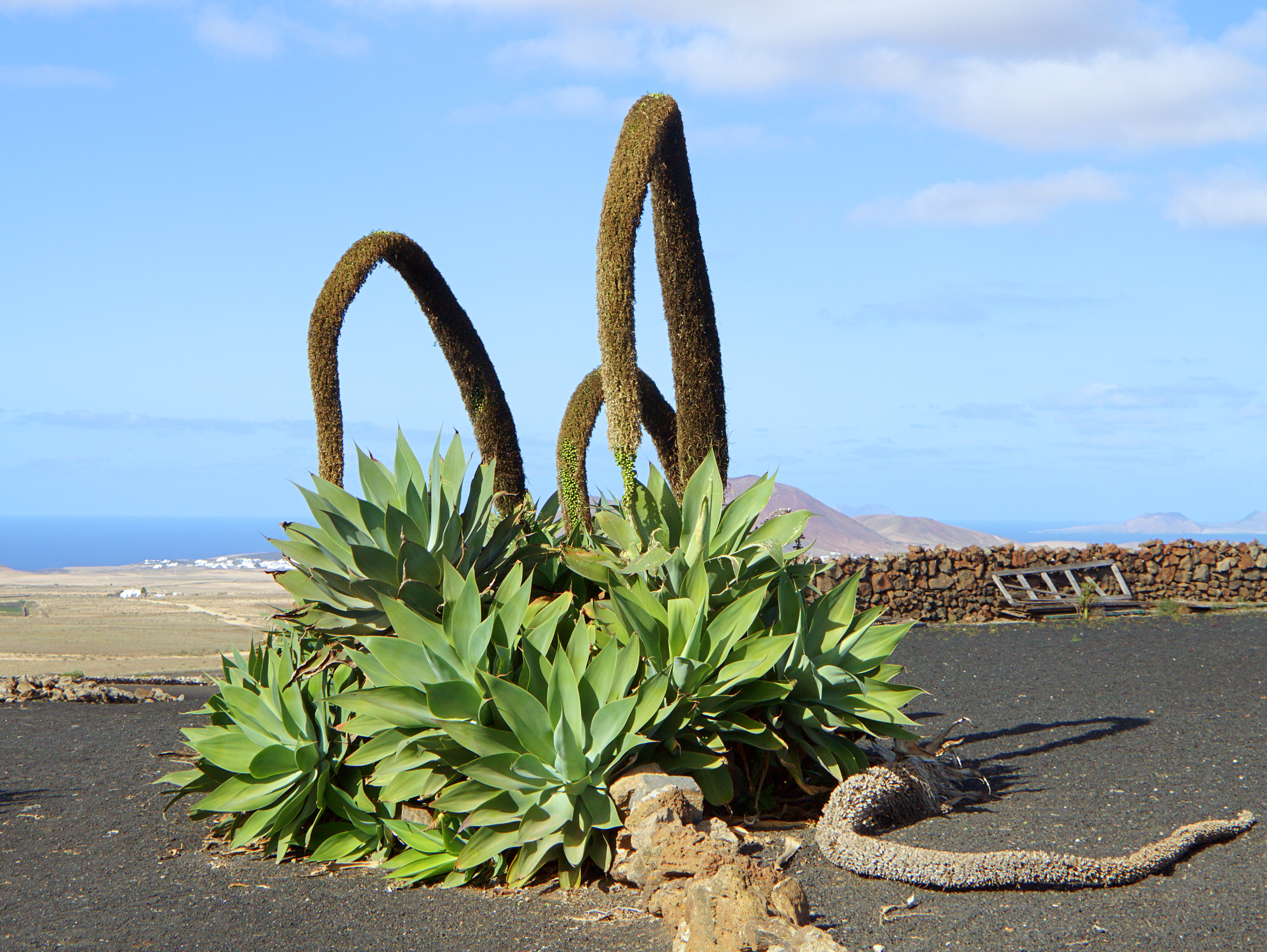
Agave attenuata, known as the foxtail agave for its distinctive arching, dense inflorescence, is unique in the genus for completely lacking terminal and marginal spines on its leaves, making it the safest species for home gardens and public spaces. Native to the mountains of central Mexico at altitudes of 1,900–2,800 m, it develops rosettes of soft, flexible grey-green leaves up to 1.5 m in diameter on a short stem that eventually becomes a trunk over the years. When it flowers, it produces a dense 2–3 m arching spike with hundreds of yellow-green flowers; after flowering the mother plant dies, leaving numerous offsets.
chevron_right edit_note Proposed edits auto-approved at +3 net votes
No pending proposals for this section.
Overview
| Category | Classification |
|---|---|
| Family | Asparagaceae |
| Genus | Agave |
| Growth Habit | Monocarpic rosette on a short stem that over the years forms a trunk up to 1 m; produces abundant basal offsets |
| Conservation Status | Vulnerable (VU) in the wild — natural populations in Mexico are very small and localized; widely cultivated outside its native range |
| pH Target | 6.0 – 7.0 |
| Type | Well-drained with some organic matter; sand + potting mix 50/50 |
Origin & Habitat
Morphology
Lanceolate, glaucous to grey-green, soft to the touch, 50–70 cm long; no apical spine (only a flexible tip) and no hard marginal teeth — the diagnostic character of the taxon.
ecoYellow-green, tubular, 5–6 cm long, densely arranged on an arching spike (not branched into a candelabra) of 2–3 m that curves downward under its own weight.
ecoShort caudex that elongates over the years to 50–100 cm, giving the specimen a tree-like habit with the rosette elevated above the ground.
ecoFibrous, shallow and spreading; more sensitive to waterlogging than other Agave species given its montane origin with well-drained summer rainfall.
ecochevron_right edit_note Proposed edits auto-approved at +3 net votes
No pending proposals for this section.
Requirements
Soil & Substrate
Type
Well-drained with some organic matter; sand + potting mix 50/50
groups Beneficial Associations
chevron_right edit_note Proposed edits auto-approved at +3 net votes
No pending proposals for this section.
Propagation Strategy
- 1 Separate 10–20 cm offsets with their own roots using a sterilized knife
- 2 Allow the cut to dry for 2–3 days in a dry location
- 3 Plant in sandy, well-drained substrate with moderate organic component
- 4 Water lightly after 5–7 days; keep in partial shade for the first weeks
Accepts large pot with good drainage — one of the best succulents for large format containers
Overwatering in autumn-winter: the most common cause of loss
Every 2–3 years or when the specimen outgrows the container
Succulent fertilizer (NPK 5-10-10) every 6–8 weeks in spring-summer; none in autumn-winter
Uses & Applications
Precautions / Toxicity
Although it lacks spines, the sap may cause contact dermatitis in sensitive individuals. Leaves contain saponins that irritate mucous membranes if ingested.
chevron_right edit_note Proposed edits auto-approved at +3 net votes
No pending proposals for this section.
Plant Health
Root rot from excess moisture — more susceptible than other species in the genus
Mealybugs in sheltered areas under basal leaves
chevron_right edit_note Proposed edits auto-approved at +3 net votes
No pending proposals for this section.
"It is the only truly safe Agave species for gardens with children and pets due to its complete absence of spines. Its 'foxtail' inflorescence is one of the most spectacular sights in the plant world when the plant finally flowers."
chevron_right edit_note Proposed edits auto-approved at +3 net votes
No pending proposals for this section.
Scientific Integrity
🟡 MediumVote to help validate this record
Sources
Loading…
Discussion
Disclaimer
This species record is provided for educational and informational purposes only. Jardín Roca Negra does not guarantee the accuracy or completeness of the data. Content is community-curated and may be subject to revision; it should not replace advice from a qualified botanist. This species may be toxic, invasive, or subject to legal restrictions — verify before handling or cultivating. Jardín Roca Negra accepts no liability for any harm arising from reliance on this information. Images are reproduced under Creative Commons or equivalent free licenses; credits are noted below each image.