
Agave americana L.
Century plant
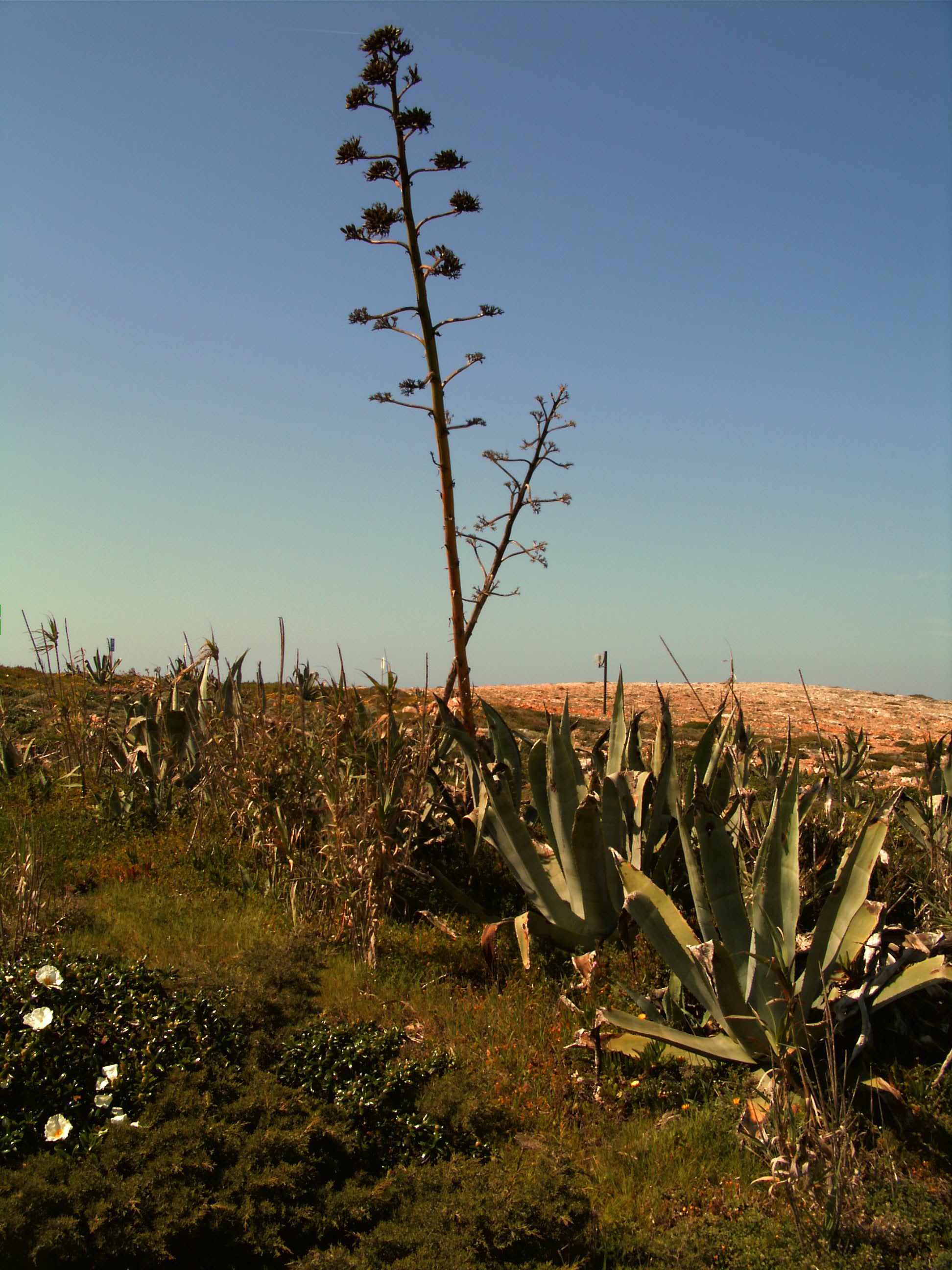
Agave americana, commonly known as the century plant, is the most emblematic species of the genus: it forms an enormous rosette of glaucous blue-grey leaves that can exceed 2 meters in diameter, armed with a sharp dark apical spine and curved marginal teeth. After accumulating energy for 10 to 30 years, it produces a spectacular branched candelabra-like inflorescence that can reach 8 meters in height with thousands of yellow flowers; once fruited, the mother plant dies and is replaced by the basal offsets it produced during its lifetime.
chevron_right edit_note Proposed edits auto-approved at +3 net votes
No pending proposals for this section.
Overview
| Category | Classification |
|---|---|
| Family | Asparagaceae |
| Genus | Agave |
| Growth Habit | Large monocarpic rosette; produces basal and rhizomatous offsets (pups) throughout its lifetime |
| Conservation Status | Least Concern (LC) — widely naturalized, though wild Mexican populations face pressure from over-collection |
| pH Target | 6.0 – 7.5 |
| Type | Sandy, gravelly, or stony; slightly acidic to neutral pH |
Origin & Habitat
Morphology
Lanceolate, rigid, glaucous (blue-grey), 1–2 m long and 15–25 cm wide at the base; margins with curved brown corneous teeth and a black terminal spine 3–5 cm long, very sharp.
ecoTubular, yellow-green, 7–10 cm long, grouped in thousands on a branched panicle up to 8 m tall. Flowers only once in the plant's lifetime (monocarpic).
ecoVegetative stem very short (caudex), nearly imperceptible; the flowering stem (scape) is woody, erect, and massive, emerging from the center of the rosette.
ecoFibrous and extensive root system that spreads superficially to twice the rosette diameter to efficiently capture rainfall.
ecochevron_right edit_note Proposed edits auto-approved at +3 net votes
No pending proposals for this section.
Requirements
Soil & Substrate
Type
Sandy, gravelly, or stony; slightly acidic to neutral pH
groups Beneficial Associations
chevron_right edit_note Proposed edits auto-approved at +3 net votes
No pending proposals for this section.
Propagation Strategy
- 1 Wait until the pup is at least 10–15 cm and has formed its own basal roots
- 2 Wear thick gloves; separate the pup from the mother with a clean knife or spade, cutting the stolon
- 3 Allow the cut to dry in a dry, ventilated spot for 3–5 days to callous
- 4 Plant in barely moist sandy substrate; do not water for the first 10 days
- 5 Place in gradually increasing full sun exposure
- 1 Sow in substrate mix of 50% sand + 50% peat at 24–28 °C
- 2 Cover with a thin layer of sand; keep slightly moist
- 3 Germinates in 2–4 weeks; transplant when it has 3–4 true leaves
- 4 Initial growth is slow; takes 3–5 years to reach decorative size
Always plant in substrate with excellent drainage; add 40–50% perlite or grit
Overwatering, especially in autumn-winter — the number one cause of death
Every 3–5 years or when roots overflow the container
Once in spring with a cactus fertilizer (low nitrogen, rich in potassium and phosphorus)
Uses & Applications
Precautions / Toxicity
Leaves contain saponins and calcium oxalate that can irritate skin and mucous membranes; the marginal teeth and terminal spine cause serious puncture wounds. Keep away from children and pets.
chevron_right edit_note Proposed edits auto-approved at +3 net votes
No pending proposals for this section.
Plant Health
Mealybugs (Pseudococcus) — inspect leaf bases regularly
Heart rot (Erwinia) from overwatering or waterlogging — fatal if not corrected
Agave snout weevil (Scyphophorus acupunctatus) — borer that attacks the flower scape
chevron_right edit_note Proposed edits auto-approved at +3 net votes
No pending proposals for this section.
"The 'Marginata' variety (yellow-margined leaves) is the most popular cultivated form in Europe. In Spain and the Mediterranean it has naturalized so extensively that many consider it native. Its common name 'century plant' comes from the myth that it flowers every 100 years; in reality it takes 10 to 30 years."
chevron_right edit_note Proposed edits auto-approved at +3 net votes
No pending proposals for this section.
Scientific Integrity
🟡 MediumVote to help validate this record
Sources
Loading…
Discussion
Disclaimer
This species record is provided for educational and informational purposes only. Jardín Roca Negra does not guarantee the accuracy or completeness of the data. Content is community-curated and may be subject to revision; it should not replace advice from a qualified botanist. This species may be toxic, invasive, or subject to legal restrictions — verify before handling or cultivating. Jardín Roca Negra accepts no liability for any harm arising from reliance on this information. Images are reproduced under Creative Commons or equivalent free licenses; credits are noted below each image.