
Crassula perfoliata L.
Propeller Plant / Airplane Plant
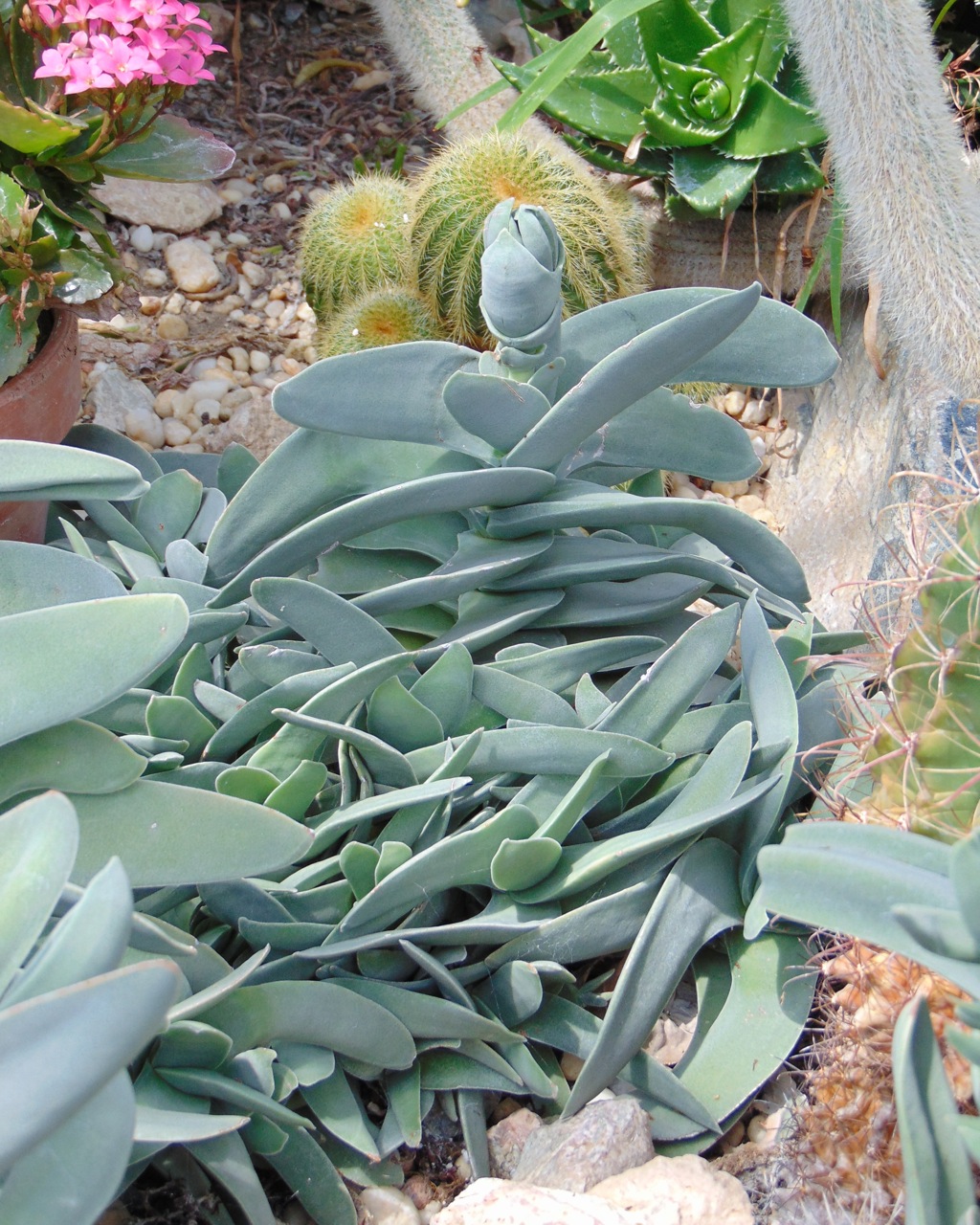
Crassula perfoliata (formerly known as C. falcata in its most cultivated variety), called the "propeller plant", is a large-leaved, striking succulent native to the Eastern and Western Cape of South Africa. The falcata variety is the best known in horticulture and is distinguished by its grey sickle-shaped or propeller-like leaves inserted on the stem so that each pair is rotated relative to the previous, creating a very ornamental spiral effect. Its scarlet flowers are the showiest in the genus.
chevron_right edit_note Proposed edits auto-approved at +3 net votes
No pending proposals for this section.
© Christer T Johansson
CC BY 3.0
Overview
| Category | Classification |
|---|---|
| Family | Crassulaceae |
| Genus | Crassula |
| Growth Habit | Erect shrubby succulent |
| Conservation Status | Least Concern |
| pH Target | 6.0 – 7.0 |
| Type | Well-drained sandy loam with moderate moisture retention |
Origin & Habitat
Morphology
Large leaves 5–10 cm long, sickle-shaped (falcate) or propeller-like in form, grey-green to blue-grey in colour with the surface covered in a fine layer of pruina (waxy powder). Each leaf pair is rotated 90° relative to the one below, forming a very geometric and ornamental helical pattern. The leaves are fleshy with slightly crenate margins.
ecoThick, erect or slightly inclined stem with grey bark that can reach 30–60 cm tall. Branches little and tends to elongate vertically; old specimens develop a lignified base. The species produces basal offsets that can be separated for propagation.
ecoTubular flowers red to orange-red or bright scarlet, 8–12 mm long, gathered in dense, flat, wide corymbs up to 15 cm in diameter, produced in summer on robust scapes. This is the showiest and most colourful flowering of all cultivated species in the genus Crassula.
ecoFibrous, moderately deep root system for a crassula. Tolerates slightly more substrate moisture than other species in the genus during the flowering season, but still requires good drainage to prevent rot.
ecochevron_right edit_note Proposed edits auto-approved at +3 net votes
No pending proposals for this section.
Requirements
Soil & Substrate
Type
Well-drained sandy loam with moderate moisture retention
groups Beneficial Associations
chevron_right edit_note Proposed edits auto-approved at +3 net votes
No pending proposals for this section.
Propagation Strategy
- 1 Cut a stem with 2–3 grey-green strap-shaped leaves 8–12 cm long with sterilised scissors.
- 2 The long leaves make the cutting bulky; tie lightly with string if needed for stability.
- 3 Allow to cure in shade for 3–4 days.
- 4 Plant in cactus mix with perlite; insert the stem at least 3 cm for greater stability.
- 5 Water sparingly and place in full light; the strap-shaped leaves naturally orient towards light.
- 1 C. perfoliata forms clumps; remove the plant in spring and separate individual rooted rosettes.
- 2 Allow cuts to dry for 1–2 days.
- 3 Plant each rosette in an individual pot with well-draining substrate.
The strap or helicopter-shaped leaves arranged in a spiral create a very ornamental sculptural silhouette; place where it can be appreciated from above.
Watering too frequently, rotting the roots of this species sensitive to persistent moisture.
Repot every 2–3 years in spring. The large strap leaves require a stable, heavy pot to prevent the plant from tipping.
Fertilise once a month in spring and summer with liquid succulent fertiliser at 50% dose. No fertilisation in autumn and winter.
Uses & Applications
Precautions / Toxicity
Low toxicity; caution is recommended with pets and young children although no serious poisonings are reported.
chevron_right edit_note Proposed edits auto-approved at +3 net votes
No pending proposals for this section.
"The scarlet-red flower colour of C. perfoliata var. falcata, uncommon in the genus Crassula which is dominated by white and pink flowers, is linked to bird pollination (ornithophily) in its native southern African habitat, where nectarivorous birds such as the Cape sunbird regularly visit the inflorescences."
chevron_right edit_note Proposed edits auto-approved at +3 net votes
No pending proposals for this section.
Scientific Integrity
🟡 MediumVote to help validate this record
Sources
Loading…
Discussion
Disclaimer
This species record is provided for educational and informational purposes only. Jardín Roca Negra does not guarantee the accuracy or completeness of the data. Content is community-curated and may be subject to revision; it should not replace advice from a qualified botanist. This species may be toxic, invasive, or subject to legal restrictions — verify before handling or cultivating. Jardín Roca Negra accepts no liability for any harm arising from reliance on this information. Images are reproduced under Creative Commons or equivalent free licenses; credits are noted below each image.