
Cephalopentandra ecirrhosa (Cogn.) C.Jeffrey
Tendril-less African Caudex-Cucumber
Caudiciform plant of the Cucurbitaceae family — the cucumber and melon family — native to the savannas and dry thickets of East Africa. It has a succulent caudex, globose to irregularly swollen, that can reach 20-30 cm in diameter, partially buried in the soil, from which slender annual stems with lobed leaves emerge each season. It completely lacks tendrils (a unique character in the family, reflected in the epithet "ecirrhosa"), so it cannot climb supports.
chevron_right edit_note Proposed edits auto-approved at +3 net votes
No pending proposals for this section.
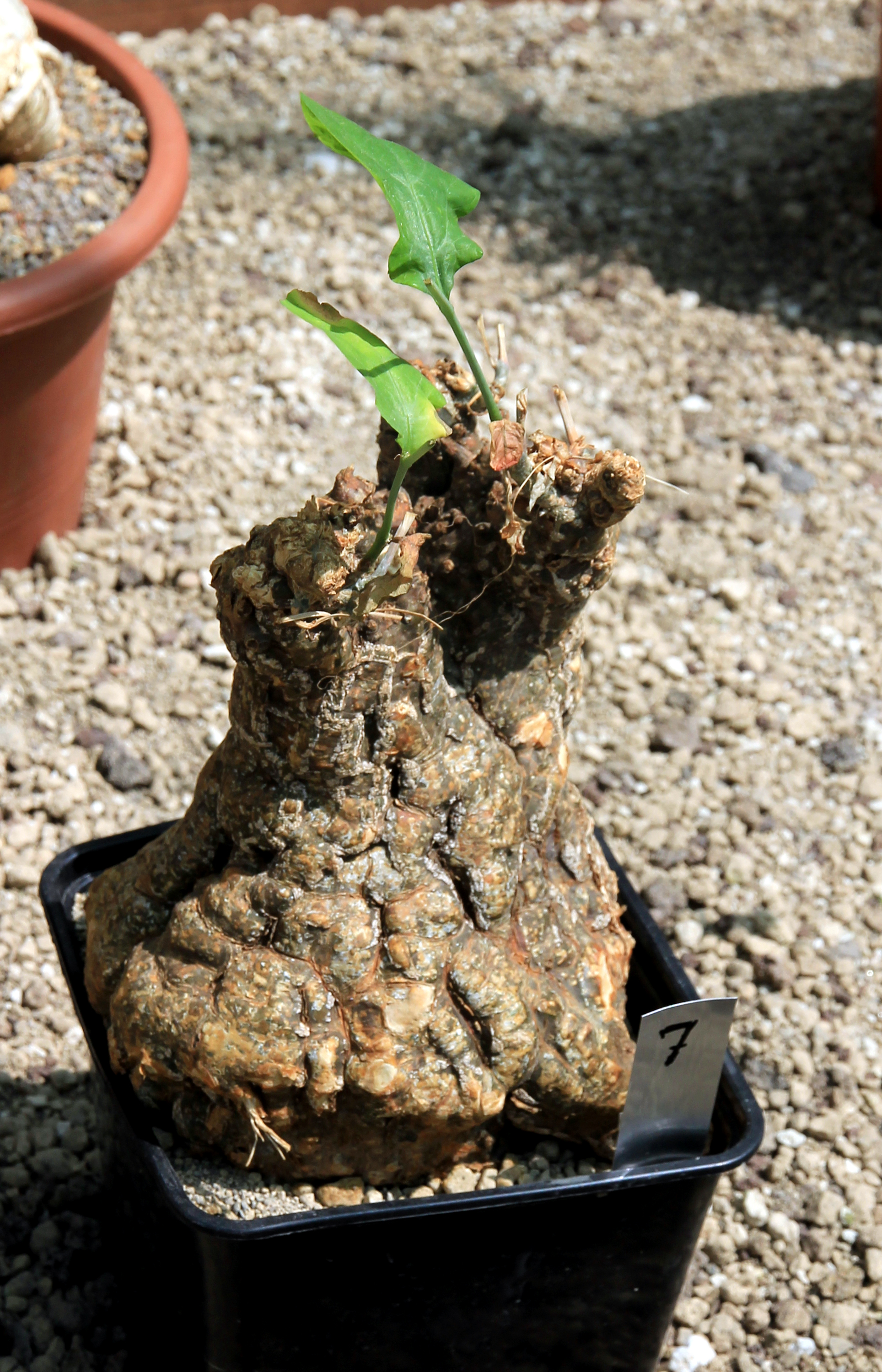
© Karelj / Wikimedia Commons
CC BY-SA 4.0
Overview
| Category | Classification |
|---|---|
| Family | Cucurbitaceae |
| Genus | Cephalopentandra |
| Growth Habit | Herbaceous caudiciform with annual stems, tendril-less |
| Conservation Status | Not evaluated (IUCN) |
| pH Target | 6.0-7.5 |
| Type | Very mineral, sandy-gravelly, excellent drainage. |
Origin & Habitat
Requirements
Soil & Substrate
Type
Very mineral, sandy-gravelly, excellent drainage.
groups Beneficial Associations
chevron_right edit_note Proposed edits auto-approved at +3 net votes
No pending proposals for this section.
Propagation Strategy
F
O
Every 3-5 years, with extreme care not to damage roots.
Diluted mineral fertilizer (cactus) once a month in spring and summer; nothing in autumn-winter.
Uses & Applications
Precautions / Toxicity
No documented toxicity data; African caudiciform cucurbits typically contain bitter cucurbitacins; do not ingest.
chevron_right edit_note Proposed edits auto-approved at +3 net votes
No pending proposals for this section.
"Species originally described as Coccinia ecirrhosa by Alfred Cogniaux (1895) and recombined in the genus Cephalopentandra by Charles Jeffrey (1967). The generic name derives from Greek kephalé (head) and pentándros (five stamens). The epithet "ecirrhosa" (tendril-less) is the most striking morphological character of the species and unique in the Cucurbitaceae family. Occasionally cultivated in European botanical gardens for caudiciform exhibitions."
chevron_right edit_note Proposed edits auto-approved at +3 net votes
No pending proposals for this section.
Scientific Integrity
🟢 HighVote to help validate this record
Sources
Loading…
Discussion
Disclaimer
This species record is provided for educational and informational purposes only. Jardín Roca Negra does not guarantee the accuracy or completeness of the data. Content is community-curated and may be subject to revision; it should not replace advice from a qualified botanist. This species may be toxic, invasive, or subject to legal restrictions — verify before handling or cultivating. Jardín Roca Negra accepts no liability for any harm arising from reliance on this information. Images are reproduced under Creative Commons or equivalent free licenses; credits are noted below each image.