
Adansonia digitata
African baobab
Adansonia digitata, known as the African baobab, is one of the most iconic and long-lived trees in the world, capable of surviving over 1,000 years. Its massive, bulbous or cylindrical trunk can store thousands of liters of water as an adaptation to the prolonged droughts of the African savanna. During the dry season it loses its leaves, taking on a spectral 'upside-down tree' appearance — as if its roots point skyward — which has inspired numerous local legends. It is a keystone species in sub-Saharan savanna ecosystems, providing food, shelter, and water to dozens of animal species.
chevron_right edit_note Proposed edits auto-approved at +3 net votes
No pending proposals for this section.
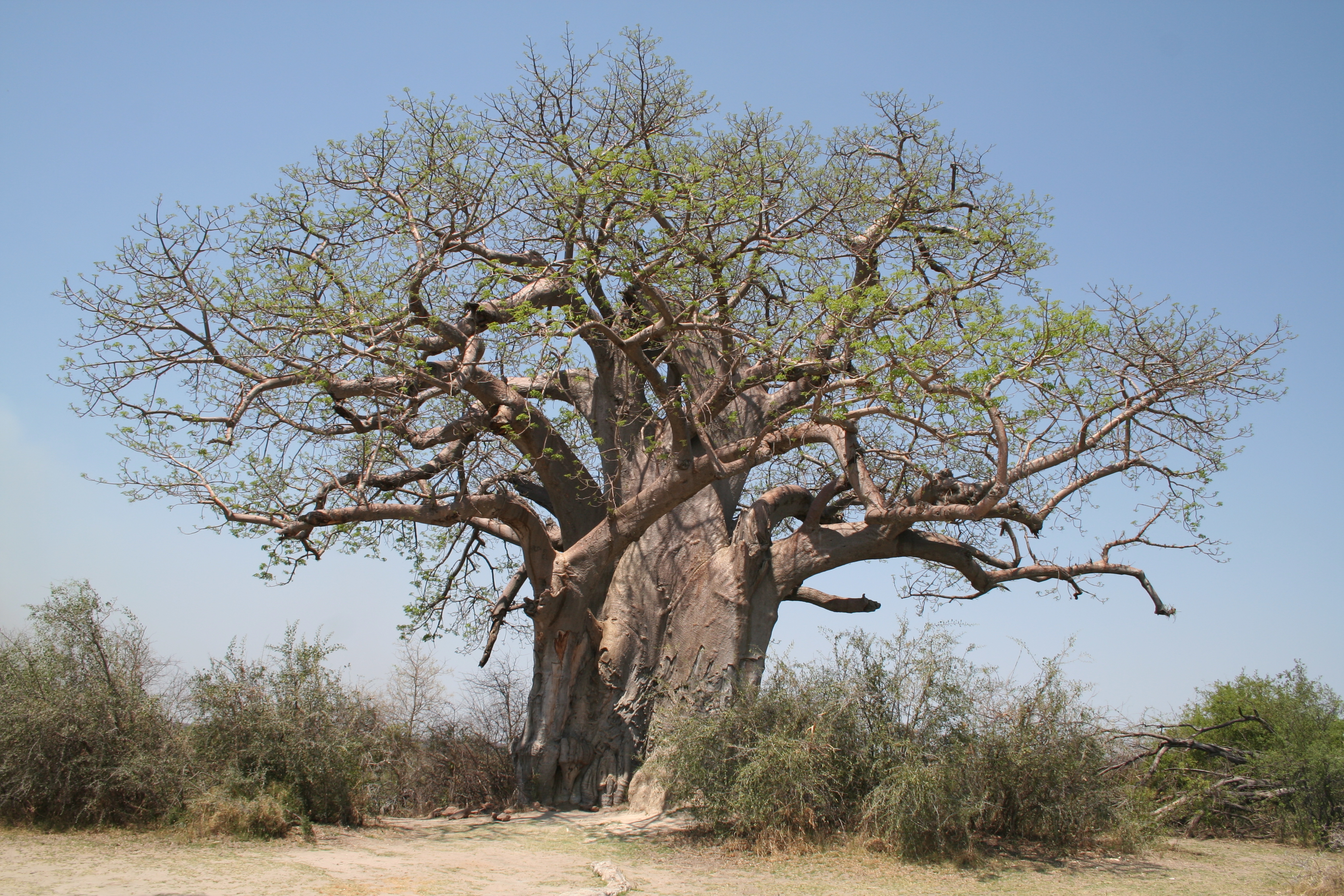
© Nevit Dilmen
CC BY-SA 3.0
Overview
| Category | Classification |
|---|---|
| Family | Malvaceae |
| Genus | Adansonia |
| Growth Habit | Large deciduous tree with a massive trunk and spreading crown. Slow to moderate growth under optimal conditions. |
| Conservation Status | Least Concern (IUCN), though some populations are threatened by deforestation, climate change, and the mysterious die-off observed in ancient specimens. |
| pH Target | 6.0–7.5 |
| Type | Sandy or sandy-loam, well-drained, poor to moderate in organic matter. Perfect drainage is essential. |
Origin & Habitat
Morphology
Extremely thick trunk, often bulbous or irregularly shaped, with smooth silvery-gray bark. The inner wood is spongy and fibrous, lacking defined growth rings, making traditional aging difficult. Diameter can exceed 10–14 m in ancient specimens.
ecoDigitately compound leaves with 5–9 obovate or elliptic leaflets, bright green, emerging only during the brief wet season. Leaflets measure 5–15 cm in length with entire margins. The plant remains leafless for most of the year.
ecoLarge, solitary, cream-white flowers measuring 12–20 cm in diameter. They have numerous stamens forming a characteristic central column. They hang from long peduncles and open at dusk, being pollinated by bats and nocturnal moths. The fragrance is intense and sweet.
ecoLarge fruits (15–25 cm), ovoid to spherical in shape, with a hard woody brownish shell. Inside they contain a white, dry pulp rich in vitamin C and calcium, surrounding large reddish-brown seeds embedded in fibers. They are highly valued as food and are popularly known as 'monkey bread'.
ecochevron_right edit_note Proposed edits auto-approved at +3 net votes
No pending proposals for this section.
Requirements
Soil & Substrate
Type
Sandy or sandy-loam, well-drained, poor to moderate in organic matter. Perfect drainage is essential.
groups Beneficial Associations
chevron_right edit_note Proposed edits auto-approved at +3 net votes
No pending proposals for this section.
Propagation Strategy
- 1 Manually scarify the seeds by sanding the hard coat with 80-grit sandpaper for 30–60 seconds until the light endosperm is exposed.
- 2 Soak scarified seeds in warm water (35–40 °C) for 24 hours. Discard any that float.
- 3 Sow individually in small pots (7–10 cm) with a mix of 70% coarse sand + 30% universal substrate.
- 4 Cover the seed with 1 cm of substrate and keep the pot at 28–35 °C with moderate humidity.
- 5 Germination occurs within 1–4 weeks. Once the first true leaves emerge, progressively reduce watering.
- 6 Repot to a final container once the base trunk measures at least 2 cm in diameter.
The most important trick is the wet-dry cycle: water abundantly during the growing season (when it has leaves) and keep completely dry during winter dormancy.
Overwatering during winter: this is the number one cause of death through root rot.
Every 3–5 years, or when roots push through drainage holes. Preferably at the start of the growing season.
Fertilize once a month during active growing season (spring–summer) with a balanced NPK fertilizer diluted to half the recommended dose. Do not fertilize during dormancy.
Uses & Applications
Precautions / Toxicity
No significant toxicity for humans. The seeds contain high-quality edible oil. Cooked leaves are consumed as a vegetable in several regions of Africa.
chevron_right edit_note Proposed edits auto-approved at +3 net votes
No pending proposals for this section.
Plant Health
Root rot caused by Phytophthora spp.: caused by excess soil moisture. Symptoms include yellowing, softening of the basal trunk, and tree collapse. Treatment: improve drainage immediately, apply metalaxyl-based systemic fungicide, and drastically reduce watering.
Mealybugs (Planococcus spp.): accumulate in branch axils and on bark. They produce honeydew that promotes sooty mold. Treatment: apply neem oil or systemic insecticides containing imidacloprid.
Foliar anthracnose (Colletotrichum spp.): necrotic spots on leaves during humid periods. Generally not life-threatening to the tree. Treatment: remove affected foliage and apply preventive copper-based fungicide at the start of the wet season.
chevron_right edit_note Proposed edits auto-approved at +3 net votes
No pending proposals for this section.
"The oldest known African baobabs have begun to die in recent decades, possibly linked to climate change. A specimen grown in a large container can live many years and flower in Mediterranean climates if kept dry during winter. The trunk accumulates water and reserve carbohydrates, allowing it to tolerate periods of extreme drought that would kill other species."
chevron_right edit_note Proposed edits auto-approved at +3 net votes
No pending proposals for this section.
Scientific Integrity
🟡 MediumVote to help validate this record
Sources
Loading…
Discussion
Disclaimer
This species record is provided for educational and informational purposes only. Jardín Roca Negra does not guarantee the accuracy or completeness of the data. Content is community-curated and may be subject to revision; it should not replace advice from a qualified botanist. This species may be toxic, invasive, or subject to legal restrictions — verify before handling or cultivating. Jardín Roca Negra accepts no liability for any harm arising from reliance on this information. Images are reproduced under Creative Commons or equivalent free licenses; credits are noted below each image.